Commercial LED Retrofit in Fort Worth: The Guide to Upgrading Fluorescent, Metal Halide & HID Lighting
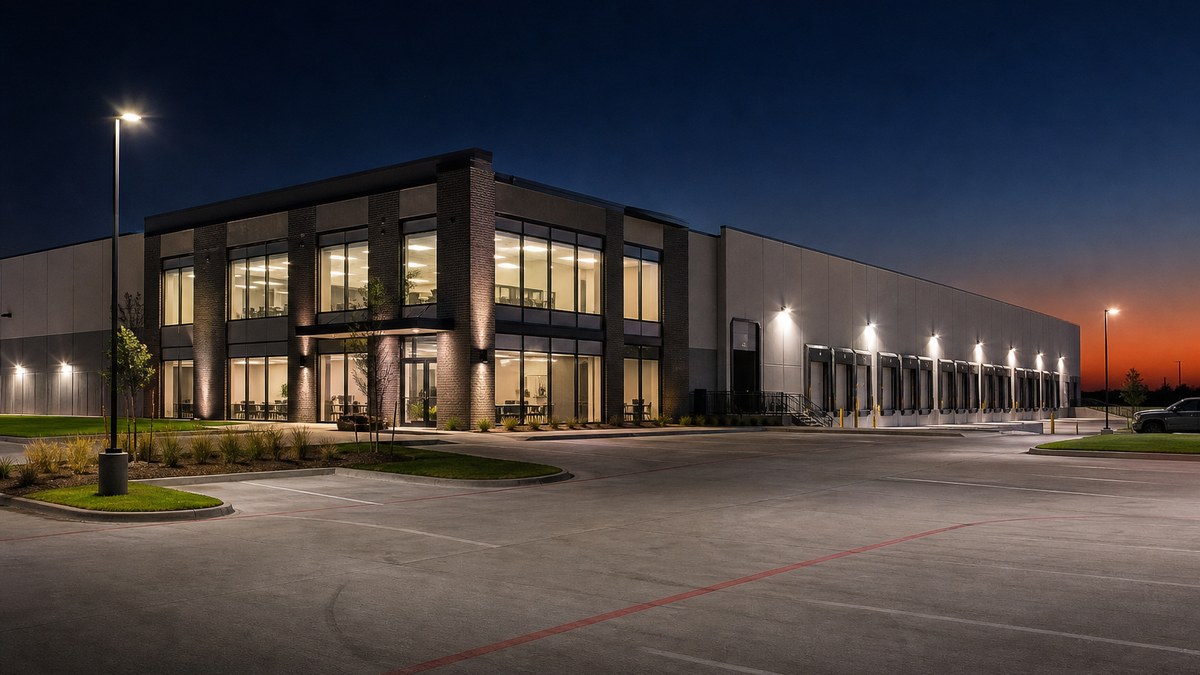
A commercial LED retrofit in Fort Worth replaces the old fluorescent tubes, metal halide high bays and high-pressure sodium poles in an existing building with LED lighting, usually without tearing out ceilings or rebuilding the electrical system. Done well, it gives you brighter, more even light, lower energy and maintenance load, quieter fixtures that turn on instantly, and a lighting system that can finally be controlled properly. Done badly, it gives you flicker, glare, dead tubes, failed inspections and a second project two years later.
Fort Worth LED Lights plans and coordinates LED retrofits for offices, warehouses and distribution centers, retail, restaurants, hotels, churches, schools, parking garages and outdoor sites across Fort Worth and Tarrant County. We walk the building, count and document what is there, recommend the right retrofit method for each space and coordinate licensed installation, controls and commissioning.
This guide is for owners, property and facility managers, and tenants who are staring at a ceiling full of aging fluorescent troffers, a warehouse of metal halide high bays or a dark parking lot and wondering what to do. It explains the retrofit options in plain language, how to choose between them, what the Fort Worth energy code and Oncor programs mean for your project, and how a retrofit actually runs from audit to switch-on.
A smart commercial LED retrofit in Fort Worth usually comes down to these decisions:
- Audit first: count every fixture, lamp and ballast type, note hours of use and problem areas, and measure existing light levels
- Pick the method per space: LED tubes (Type A, B or C), retrofit kits that reuse the housing, or new LED fixtures
- Replace HID: metal halide and high-pressure sodium high bays, wall packs, canopies and poles usually get dedicated LED fixtures, not lamp swaps
- Add controls: occupancy sensors, schedules, daylight dimming and exterior photocells, designed to meet the code that applies
- Check code and permits: Fort Worth uses the 2015 IECC with local amendments; work is done by TDLR-licensed electricians
- Plan incentives early: some projects may qualify for Oncor programs, which require pre-approval before old equipment comes out
- Pricing: a project-specific proposal after a site walk and fixture audit
What a commercial LED retrofit actually is
"Retrofit" is used loosely. In commercial lighting it means upgrading the light source and its electronics inside an existing building, as opposed to lighting a new building from scratch. The scope can be as small as swapping fluorescent tubes for LED tubes in a few offices, or as large as replacing every fixture, adding networked controls and relighting the parking lot of a multi-building campus.
Most Fort Worth retrofits fall into one or more of these buckets:
- Linear fluorescent interiors: 2x4, 2x2 and 1x4 troffers, wraparounds, strip lights and pendants using T8, T5 or older T12 tubes. Offices, schools, clinics, churches and retail back-of-house are full of them.
- High-intensity discharge (HID) interiors: metal halide and fluorescent high bays in warehouses, gyms, manufacturing and big-box retail.
- Exterior HID: metal halide and high-pressure sodium parking lot poles, wall packs, flood lights, fuel and drive-thru canopies, and garage fixtures.
- Compact fluorescent and halogen: recessed cans, track heads and decorative fixtures in lobbies, corridors, restaurants and hotels.
- Controls: moving from wall switches and old time clocks to occupancy sensors, scheduling, dimming, daylight response and, where it makes sense, networked lighting controls.
Each bucket has its own best retrofit method. The mistake we see most often is applying one method to the entire building because it looked simplest on a spreadsheet. If you are planning a full renovation rather than a retrofit, our commercial lighting design guide covers that process.
Why Fort Worth buildings are retrofitting now
LED technology has been mature for years, so why is the retrofit question so pressing for so many Fort Worth owners right now? A few reasons keep coming up on our site walks.
Fluorescent and HID parts are getting harder to live with
Federal efficiency standards have steadily narrowed the lamps that can be made and sold. Most T12 linear lamps were eliminated years ago, later rules tightened standard T8 and T5 lamps, and the U.S. Department of Energy's 2024 general service lamp rule effectively phases out compact fluorescent lamps made from July 2028. Mercury vapor ballasts have not been allowed to be manufactured or imported since 2008 under the Energy Policy Act of 2005. The DOE's own 2024 guide to upgrading linear fluorescent fixtures warns that fluorescent ballasts "may become more expensive or more challenging to find" as manufacturers reduce production. Every failed ballast in an old building becomes a small emergency.
Maintenance is a hidden cost
Fluorescent tubes, ballasts and HID lamps fail on their own schedules, and high bays, garage fixtures and parking poles need lifts to service. LED fixtures last far longer and degrade gradually instead of failing suddenly, which means fewer lift rentals, fewer service calls and fewer dark spots in the meantime. For a warehouse with 40-foot ceilings or a parking lot with tall poles, that matters as much as the energy line.
Light quality and safety
Old HID lighting takes minutes to warm up and restrike, shifts color as it ages and often leaves dark patches between poles. Aging fluorescent fixtures hum, flicker and yellow. Tenants notice. Customers notice. Security teams notice. LED fixtures turn on instantly, hold their color, and can be designed to put light where it is needed, with less glare and spill.
Controls and code
Modern energy codes expect lighting to switch off or dim when spaces are empty and when daylight is available. LED fixtures dim smoothly and work well with sensors, so a retrofit is the natural moment to bring controls up to date. We explain what that means in Fort Worth in our commercial lighting controls guide.
Fluorescent to LED: tubes, kits or new fixtures
For linear fluorescent fixtures there are three main upgrade paths. The DOE's November 2024 guide (prepared by Pacific Northwest National Laboratory) describes them as lamps (LED tubes, often called TLEDs), retrofit kits and new luminaires, and that is a useful way to think about your building.
LED tubes (TLEDs): Type A, Type B and Type C
LED tubes replace fluorescent tubes in the existing fixture. They come in three types, defined by how they are powered:
- Type A ("plug and play"): the LED tube runs on the existing fluorescent ballast. No rewiring, quick installation and the lowest first cost. The catch is that you still depend on the old ballast. When it fails, the tube goes dark, and you need a compatible replacement ballast. Compatibility between tube and ballast has to be checked, and dimming is often limited. The DOE guide says Type A is "not recommended" where the ballast has been in service five years or more, which describes most older buildings.
- Type B (ballast bypass or direct wire): the ballast is removed and line voltage is wired directly to the sockets. No ballast to fail, but the fixture has to be rewired by an electrician, labeled, and the wrong tube in the wrong fixture later can be a shock hazard. The DOE guide rates Type B as the highest safety risk of the tube options.
- Type C (external driver): the ballast is replaced with a separate LED driver that powers the tubes at low voltage. It requires rewiring, but it is safer than Type B, has no ballast compatibility issues, manages heat better and makes adding dimming and controls easier. The trade-offs are a higher first cost than other tubes and, often, being tied to one manufacturer's tubes and drivers.
LED retrofit kits
A retrofit kit keeps the existing housing, the metal box in the ceiling, and replaces everything inside it: the lamps, ballast and sockets come out, and an LED light engine, driver and often a new door or lens go in. Kits usually look better than tubes in a troffer, handle heat better and fail less, and they can be ordered with dimming drivers and integrated sensors. An electrician is required, and some older housings with contoured reflectors are awkward to retrofit.
New LED fixtures
Replacing the whole fixture costs more in equipment and labor than tubes or kits, but the gap to a quality kit is often smaller than people expect. New fixtures give the longest life, the lowest failure risk, the best optics and the widest control options. They are the natural choice when fixtures are damaged, yellowed or poorly placed, when the ceiling is being replaced anyway, or when the layout itself needs to change.
| Option | How it works | Strengths | Watch-outs | Often best for |
|---|---|---|---|---|
| Type A LED tube | Runs on the existing fluorescent ballast | Fastest install, no rewiring | Still depends on old ballast; compatibility and dimming limits | Newer ballasts, short-term or low-use spaces |
| Type B LED tube | Ballast bypassed, line voltage to sockets | No ballast to fail | Rewiring and labeling; highest safety risk of the tubes | Simple strip and wrap fixtures with good documentation |
| Type C LED tube | External low-voltage driver | Safer than Type B, easier dimming and controls | Higher first cost; often one-manufacturer system | Offices and schools that want controls without new fixtures |
| Retrofit kit | New light engine and driver in the existing housing | Better look, heat management and controls than tubes | Electrician required; some housings are hard to adapt | Troffers and high-use spaces with sound ceilings |
| New LED fixture | Whole fixture replaced | Longest life, best optics, widest control options | Highest first cost; above-ceiling access and disposal | Damaged fixtures, renovations, layout changes |
Our view: there is no single right answer for a whole building. A typical Fort Worth office retrofit might use kits or new fixtures in open offices and conference rooms, Type C tubes in back-of-house strip lights, and new fixtures with integrated sensors in restrooms and stairwells. The audit decides, not the catalog.
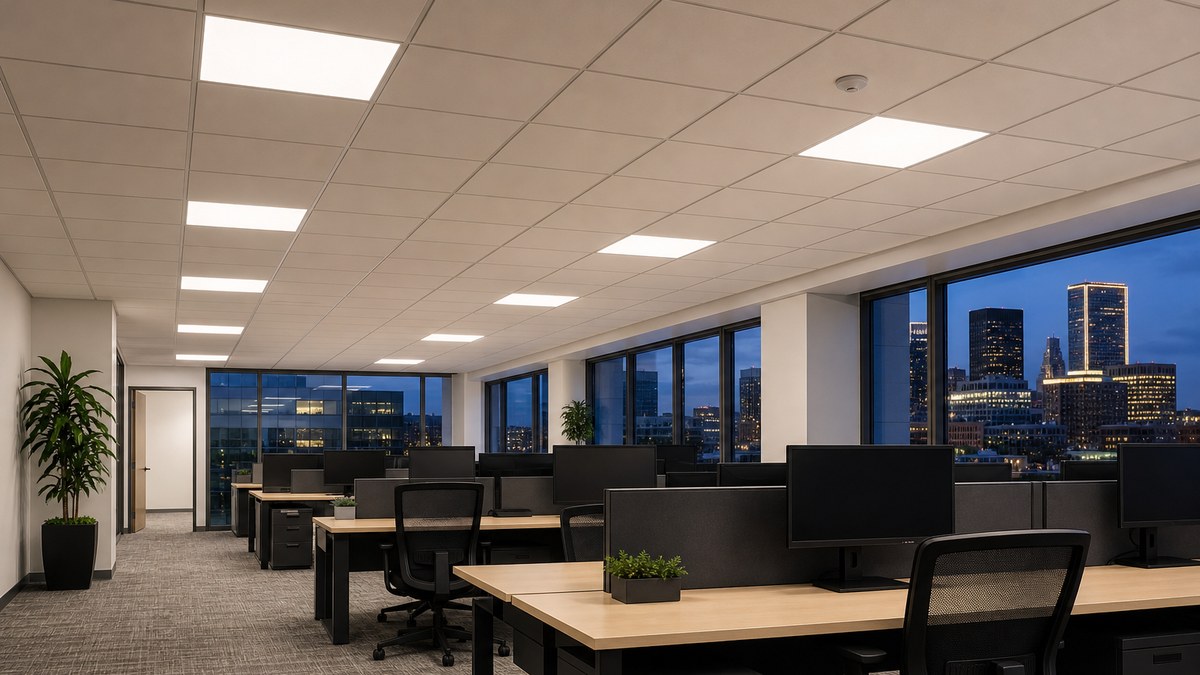
Metal halide and HID to LED: high bays, poles and wall packs
HID lighting, metal halide and high-pressure sodium, is where many Fort Worth properties see the most dramatic change from a retrofit. Here we rarely recommend lamp-only swaps. "Corn cob" style LED lamps that screw into an HID socket can overheat inside a fixture designed for a different light source, may require ballast bypass, and keep the old optics that were designed around an HID lamp. In most cases a dedicated LED fixture is the better long-term choice.
Warehouse and industrial high bays
Metal halide high bays are typically replaced with LED high bays, round "UFO" style for open areas or linear high bays for racking aisles. The right optic matters: a narrow aisle optic puts light down the face of the racks where pickers need it, while a wide distribution suits open floor and staging. Integrated occupancy sensors are common, and the code expects aisle and open-area lighting in warehouses to reduce automatically when spaces are empty. Our warehouse LED lighting guide covers Alliance and I-35W distribution centers in detail.
Parking lots and site lighting
Metal halide and high-pressure sodium poles are usually replaced with LED area lights, either full fixture replacements on the existing poles or, where poles are in poor shape or badly spaced, a redesigned layout. A photometric layout confirms light levels and uniformity across the lot and checks light at property lines before fixtures are ordered. See our outdoor LED lighting guide for more.
Wall packs, floods and canopies
Old HID wall packs are a common source of glare and dark doorways. Full-cutoff LED wall packs put light on the walkway and the door instead of into drivers' eyes. Canopy and drive-thru lighting gets low-profile LED canopy fixtures, and flood lights on facades can be replaced with properly aimed LED floods or, where the building deserves it, a true architectural lighting design.
Parking garages
Garages run around the clock, so they are often among the highest-use lighting in a portfolio. LED garage fixtures with integrated sensors that dim when areas are empty are standard practice. Our parking garage LED lighting guide explains layouts, entrances and stairwells.
| Existing lighting | Common LED retrofit | Key design checks |
|---|---|---|
| Metal halide high bays | LED round or linear high bays | Mounting height, rack layout, aisle optics, sensors |
| Fluorescent high bays (T5HO/T8) | LED linear high bays | Vertical light on racks, glare, controls |
| MH / HPS parking poles | LED area lights on existing or new poles | Photometrics, uniformity, light at property lines, pole condition |
| HID wall packs | Full-cutoff LED wall packs | Glare, door and walkway coverage, photocells |
| Canopy and drive-thru HID | Low-profile LED canopy fixtures | Even light on the drive, glare for drivers |
| Garage HID or fluorescent | LED garage fixtures with sensors | Ramps, entrances, stairwells, emergency lighting |
| CFL and halogen cans, track | LED downlight retrofits or new trims, LED track heads | Color temperature, color rendering, dimming compatibility |
Find out what your building really needs
Request a site walk and fixture audit. We will document your existing lighting, recommend the right retrofit method for each space and prepare a project-specific proposal.
The retrofit process: from audit to switch-on
A well-run commercial LED retrofit in Fort Worth follows a predictable sequence. Every step exists because skipping it causes a specific, expensive problem later.
- Site walk and fixture audit. We count every fixture by type, note lamp and ballast types, mounting heights, ceiling types, hours of use, existing controls and any failed or damaged fixtures. We take light-level readings in representative spaces and photos of problem areas.
- Goals and constraints. We confirm what matters to you: lower operating load, less maintenance, better light for staff or customers, security, a tenant improvement deadline, or incentive eligibility. We also note constraints like occupied hours, high ceilings, hazardous areas and access.
- Retrofit method by space. For each area we recommend tubes, kits, new fixtures or a redesign, with color temperature, color rendering and optics chosen for the use.
- Light levels and photometrics. Where spacing, mounting height or fixture type changes, and on most exterior and warehouse work, we check the design against Illuminating Engineering Society (IES) recommended practices with photometric calculations.
- Controls plan. Sensors, schedules, dimming and daylight zones are laid out to match how the building is used and what the code requires.
- Code, permits and incentives. We confirm permit and documentation needs with the city and, where relevant, coordinate incentive applications before any equipment is removed.
- Installation. Licensed electricians install the work, often in phases or after hours so tenants, shoppers and operations are not disrupted. Old lamps and ballasts are collected for proper disposal.
- Commissioning and closeout. Sensors, timeouts, dimming levels and photocells are set and tested, light levels are spot-checked, and you receive fixture schedules, warranty information and control settings.
Our LED light installation guide goes deeper on the installation and commissioning stages.
Fort Worth code, permits and licensed installation
A retrofit is still electrical work on a commercial building, and in Fort Worth it happens inside a specific code framework.
- Energy code: the City of Fort Worth's Building and Energy Codes page lists the 2015 International Energy Conservation Code (IECC) with local amendments for commercial buildings, with ASHRAE 90.1 as an alternative path. When lighting is altered or replaced, the new work generally has to meet the code's lighting power and control requirements, with limited exceptions for small changes. How far that reaches on your project depends on scope, so we confirm it with the city during planning.
- Electrical code: the city lists the 2026 National Electrical Code as effective September 1, 2026.
- Licensing: electrical work is performed by electricians licensed by the Texas Department of Licensing and Regulation (TDLR). Type B and Type C tubes, kits and new fixtures all involve rewiring and should be installed by licensed professionals.
- Listings: retrofit kits and modified fixtures should carry the appropriate safety listing for the conversion, and Type B fixtures need clear labels so nobody later installs a fluorescent tube into a line-voltage socket.
- Documentation: depending on scope, the city may ask for lighting compliance documentation such as a COMcheck report, fixture schedules and controls information.
Exterior changes on historic properties have their own approval step. If your building is in a local historic district, read our historic building lighting guide before changing facade or site fixtures.
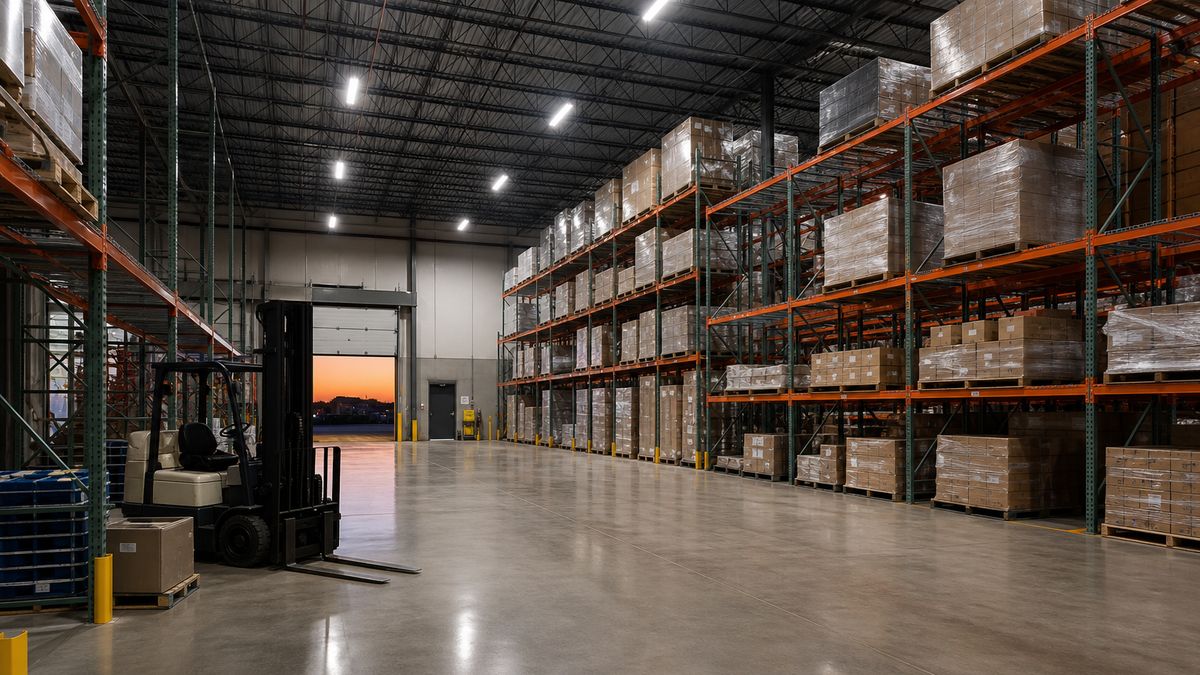
Controls: the half of the retrofit people skip
Swapping light sources without touching controls leaves a lot on the table, and in many cases the code expects controls to be part of the upgrade anyway. The DOE's 2024 retrofit guide notes that virtually all energy codes require control beyond a simple local switch.
- Occupancy and vacancy sensors in offices, conference rooms, restrooms, break rooms, storage and warehouse aisles.
- Time scheduling so lights follow business hours, with local override for after-hours work.
- Daylight-responsive dimming near windows and skylights.
- High-end trim and task tuning so new LED fixtures run at the light level the space needs, not the maximum they can produce.
- Exterior photocells and schedules so parking and facade lighting turns off in daylight and reduces late at night where the use allows.
- Networked lighting controls for larger buildings and portfolios that want zoning, scheduling and reporting from one system.
Not every LED product dims smoothly with every control. We specify drivers and controls together and test samples before a full rollout, which is how you avoid flicker and dropouts at low dim levels. For buildings that are also upgrading network infrastructure, PoE lighting is worth considering, though electrical codes and licensing still apply.
Oncor programs and energy-efficiency incentives
Some commercial properties may qualify for energy-efficiency incentives through Oncor programs, depending on the property's electric service and program availability. Oncor's commercial programs work through approved service providers, and the rules reward planning ahead. Based on Oncor's 2026 Commercial Standard Offer Program manual:
- Pre-approval comes first. Projects must be approved before they start, and existing equipment must not be removed until Oncor completes its pre-inspection.
- A physical site survey is required before a project is submitted, with fixture counts that match what is actually installed.
- LED products must be listed by the DesignLights Consortium (DLC) or ENERGY STAR, with certification documentation.
- Light levels matter: lighting projects must meet IES recommended light levels to qualify.
- Controls count when paired with an upgrade, but controls alone without an equipment efficiency upgrade are not eligible.
- Program years and funding are limited, so timing and availability change from year to year.
The practical lesson: if incentives matter to your project, tell us before anything is ordered or removed. We plan product selection, documentation and scheduling around program requirements so eligibility is not lost by accident. We do not quote incentive amounts or promise eligibility; that is decided by the program.
Choosing the right LED products for a retrofit
Two LED products with similar spec sheets can perform very differently in a real building. When we select retrofit products we look at:
Listings and documentation
DLC or ENERGY STAR listings are often required for incentives and are a useful quality screen. Safety listings for the specific conversion matter for kits and modified fixtures.
Color temperature and color rendering
As typical design practice, warmer whites around 2700K to 3000K suit hospitality, restaurants and lobbies; 3500K to 4000K is common in offices, schools and retail; 4000K to 5000K is common in warehouses, garages and exterior sites. Keeping color temperature consistent across a space matters more than the exact number. Higher color rendering makes merchandise, food and finishes look right. Our restaurant lighting and hotel lighting guides go deeper on hospitality spaces.
Glare and optics
LEDs are bright point sources. A cheap LED tube in an open strip fixture can be harsher than the fluorescent it replaced. Good lenses, louvers and optics, and the right lumen output for the space, keep the result comfortable.
Drivers, flicker and dimming
The driver is the heart of an LED fixture. Quality drivers reduce flicker, dim smoothly and survive power quality issues. If your building has frequent surges or interruptions, that affects the choice between tube types too.
Texas heat and serviceability
Exterior fixtures, canopies and unconditioned warehouses see real heat in a Fort Worth summer. We look at thermal design, finishes and how easy each fixture is to reach and service.
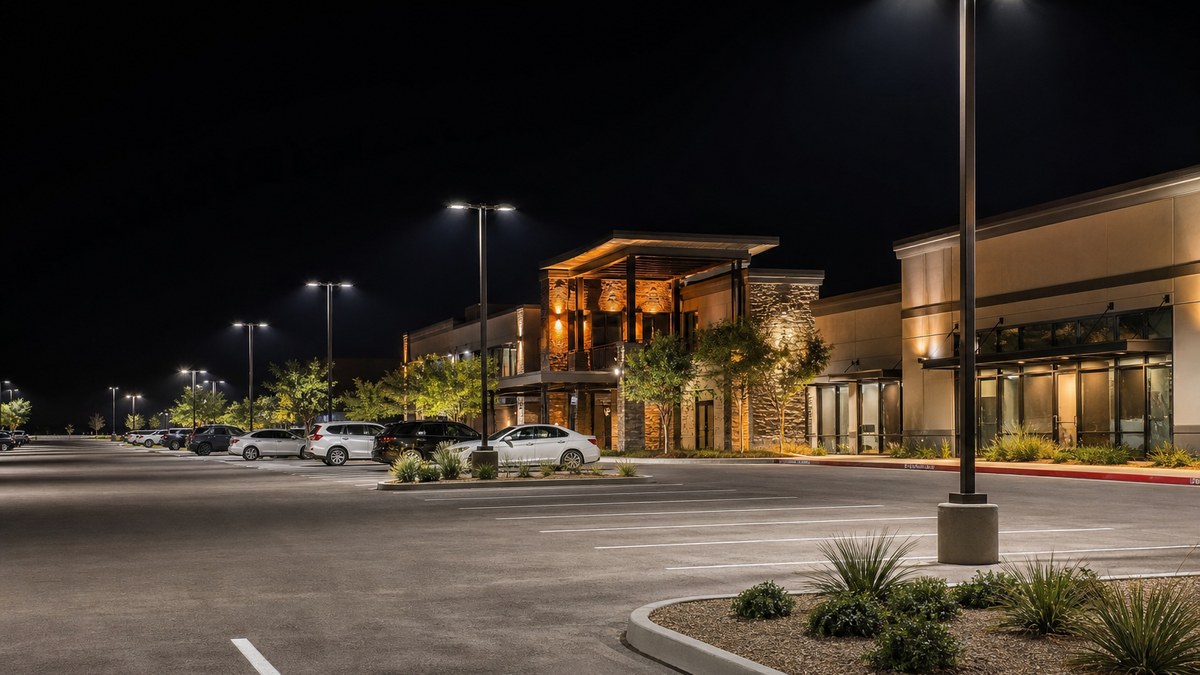
Retrofit pitfalls we see in Fort Worth buildings
- No audit. Ordering by guesswork leads to wrong lengths, wrong sockets, missing fixtures and change orders.
- Plug-and-play tubes on old ballasts. The first year looks fine; then ballast failures start and every one is a service call.
- Over-lighting. Replacing lumen-for-lumen without checking current recommended levels can leave spaces glaring and controls underused.
- Ignoring controls. Missing sensors and schedules can leave the job short of code and leave savings on the ceiling.
- Mixed color temperatures. Patchwork retrofits over several years produce rooms with three shades of white.
- Removing equipment too early. Pulling fixtures before a utility pre-inspection can cost incentive eligibility.
- Improper disposal. Fluorescent and HID lamps contain mercury and are typically handled as universal waste, and older magnetic ballasts may contain PCBs. Both need proper handling and recycling.
- Working around tenants without a plan. Night and phased work schedules should be agreed up front.
What determines your retrofit proposal
We do not publish prices because no two retrofits are the same. Instead, every project gets a project-specific proposal after a site walk and fixture audit. These are the factors that shape it:
| Factor | Why it matters | Pricing |
|---|---|---|
| Fixture count and types | Mix of troffers, strips, high bays, cans, wall packs and poles | Project-specific proposal after audit |
| Retrofit method | Tubes, kits, new fixtures or redesign, by space | Project-specific proposal after audit |
| Mounting height and access | Lifts, high ceilings, racking, occupied spaces | Project-specific proposal after site walk |
| Controls scope | Sensors, schedules, daylight dimming, networked controls | Project-specific proposal after review |
| Exterior and site work | Pole condition, photometrics, layout changes | Project-specific proposal after photometric check |
| Schedule and phasing | After-hours or phased work around operations | Project-specific proposal |
| Code and incentive paperwork | Compliance documentation, utility program requirements | Included in the project-specific proposal where applicable |
Retrofit ideas by building type
Offices and medical offices
Troffer kits or new flat panels with dimming drivers, sensors in private offices, conference rooms and restrooms, daylight zones along windows, and consistent 3500K to 4000K color. See our commercial LED lighting services guide.
Warehouses and distribution
LED high bays with aisle optics and integrated sensors, dock lighting, and exterior yard and wall pack upgrades along the I-35W, I-20 and Alliance corridors. Our Southlake, Keller and Alliance guide covers northeast Tarrant County.
Retail and restaurants
High color rendering LED for merchandise and food, accent track retrofits, separate control of display lighting, and upgraded storefront and sign lighting.
Churches and schools
Sanctuary and classroom fluorescent and HID retrofits, dimmable house lighting, and sensors in classrooms and fellowship halls. Our church lighting guide covers sanctuaries and stages.
Hotels and multifamily
Corridor and stairwell LED with sensors, garage and parking upgrades, warm lobby lighting and exterior facade refreshes. Lobbies and event spaces can also add an LED video wall during a renovation.
How to prepare for a retrofit audit
You do not need drawings to start, but these help us move faster and give you a more accurate proposal:
- The property address, so we can confirm the jurisdiction, utility and adopted codes
- Floor plans or reflected ceiling plans if you have them, or a simple sketch
- Photos of typical fixtures, lamp labels and problem areas
- Hours of operation for each area and any spaces that run around the clock
- Recent maintenance history: frequent ballast or lamp failures, dark poles, complaints
- Whether incentives, a lease, an inspection or an opening date are driving the timeline
For larger or multi-site retrofits, our Luminance design-build program combines audit, design, products, controls and installation coordination under one plan.
Why work with Fort Worth LED Lights
We focus on commercial, architectural and outdoor LED lighting in Fort Worth and Tarrant County. Our team brings 15+ years as an authorized architectural lighting dealer and project coordinator. Our licensed installation partner has completed over 200 major sports and commercial projects across the US and Canada — NFL, NBA, NHL, MLS, NCAA and NASCAR.
For you, that means one team that can take a retrofit from audit and product selection through controls, code documentation, installation coordination and service. We also handle commercial LED retrofits, architectural and facade lighting, LED video walls, signage and repair and service. Learn more about our services, the areas we serve or browse more guides on our blog.
Areas we serve
We plan and coordinate commercial LED retrofits across Fort Worth, including Downtown, Sundance Square, West 7th, the Near Southside, the Stockyards, Clearfork and the Cultural District, along with the I-35W and I-20 corridors and the Alliance area. We also work in Arlington, Southlake, Keller, Grapevine and the rest of Tarrant County. If you are not sure whether your property is in our area, send us the address.
Frequently Asked Questions
What is a commercial LED retrofit?
Do you do LED retrofits in Fort Worth?
Should I use LED tubes or replace the whole fixture?
What is the difference between Type A, Type B and Type C LED tubes?
Can I replace metal halide high bays with LED?
Do I need a permit for an LED retrofit in Fort Worth?
Does an LED retrofit have to meet the energy code?
Are there rebates for LED retrofits in Fort Worth?
How much does a commercial LED retrofit cost?
Can the retrofit be done without shutting down my business?
Brighter light, less maintenance
Request a site walk and fixture audit. We will review your existing lighting, controls and goals, then prepare a project-specific proposal for your LED retrofit.
Related
Our DFW lighting network: Dallas commercial LED lighting, Arlington LED lighting, Irving LED lighting, Plano LED lighting, statewide Texas LED lighting, wholesale LED components, fiber optic starlight ceilings, 360° fiber optic lighting, American LED signage, commercial pool lighting, modular building solutions, and Dallas modular structures.