LED Video Walls in Fort Worth: The Commercial Guide to Pixel Pitch, Brightness & Installation
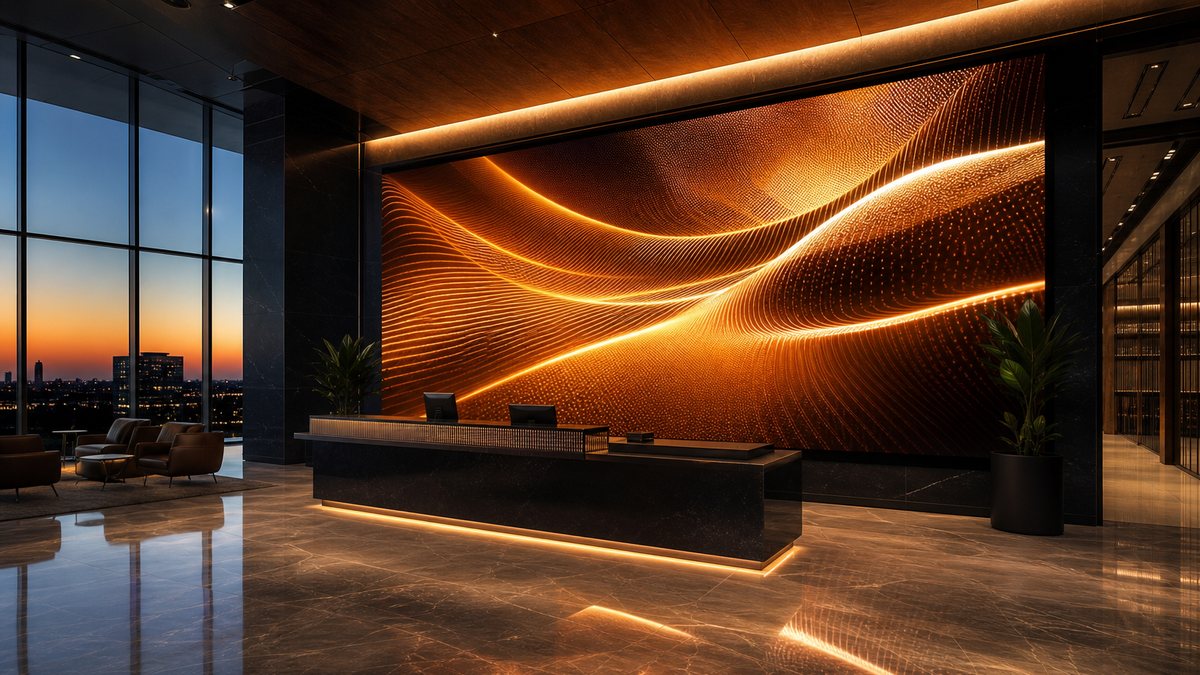
LED video walls in Fort Worth have moved from stadiums and concert stages into everyday commercial buildings: hotel lobbies near Sundance Square, corporate headquarters in Clearfork, church auditoriums across Tarrant County, restaurants and bars on West 7th, retail centers, and control rooms at distribution sites along the Alliance corridor. A direct-view LED wall has no bezels, scales to almost any size or shape, and stays bright enough to hold attention even in sunlit atriums. Done well, it becomes the centerpiece of a space. Done poorly, it becomes an expensive screen that looks pixelated, washes out, overheats, or fails without a service plan.
This guide explains how commercial LED video walls work, how to choose the right pixel pitch and brightness, what the structure, power, and data infrastructure behind the wall involve, how indoor and outdoor displays differ, and how to plan a project from first site visit to content on screen. It is written for Fort Worth property owners, facility managers, architects, church leaders, and business owners who want to make a confident decision before they ask for a proposal.
One note up front: every video wall is a custom system. Size, pixel pitch, mounting, structure, power, processing, and content all change the scope, so Fort Worth LED Lights prepares a project-specific proposal after a site review rather than quoting a one-size-fits-all number.
A commercial LED video wall is a seamless display built from modular LED panels. To plan one in Fort Worth:
- Pixel pitch: a common rule of thumb is about one meter of minimum viewing distance for each millimeter of pitch
- Brightness: indoor walls are tuned to the room; outdoor displays generally need several thousand nits to stay readable in daylight
- Structure: walls, floors, or steel frames must be checked to carry the weight and allow service access
- Power and data: dedicated circuits, a video processor, and a content source (media player or switcher)
- Environment: outdoor cabinets need weather sealing, heat management, and surge protection for North Texas storms
- Codes and permits: electrical work by TDLR-licensed electricians; exterior digital displays follow city sign rules
- Pricing: a project-specific proposal after a site review
What is an LED video wall?
An LED video wall, also called a direct-view LED display, is made of many small LED modules mounted into cabinets. Each pixel is a cluster of red, green, and blue LEDs that produce light directly, rather than a backlight shining through an LCD panel. The cabinets lock together into one continuous canvas, so there are no black seams between screens. Because the wall is modular, it can be built in wide panoramic formats, tall portrait columns, curves, corners, ribbons, and even ceilings.
Behind the panels sits the rest of the system: a mounting structure, power distribution, data cabling, a video processor that maps content to every pixel, and a content source such as a media player, digital signage server, camera feed, or presentation switcher. Thinking of the wall as a complete system, not just a screen, is the most important step in getting a project right.
Where Fort Worth businesses use video walls
- Corporate lobbies and headquarters: brand storytelling, wayfinding, visitor welcome, and live data in reception areas across Downtown and Clearfork.
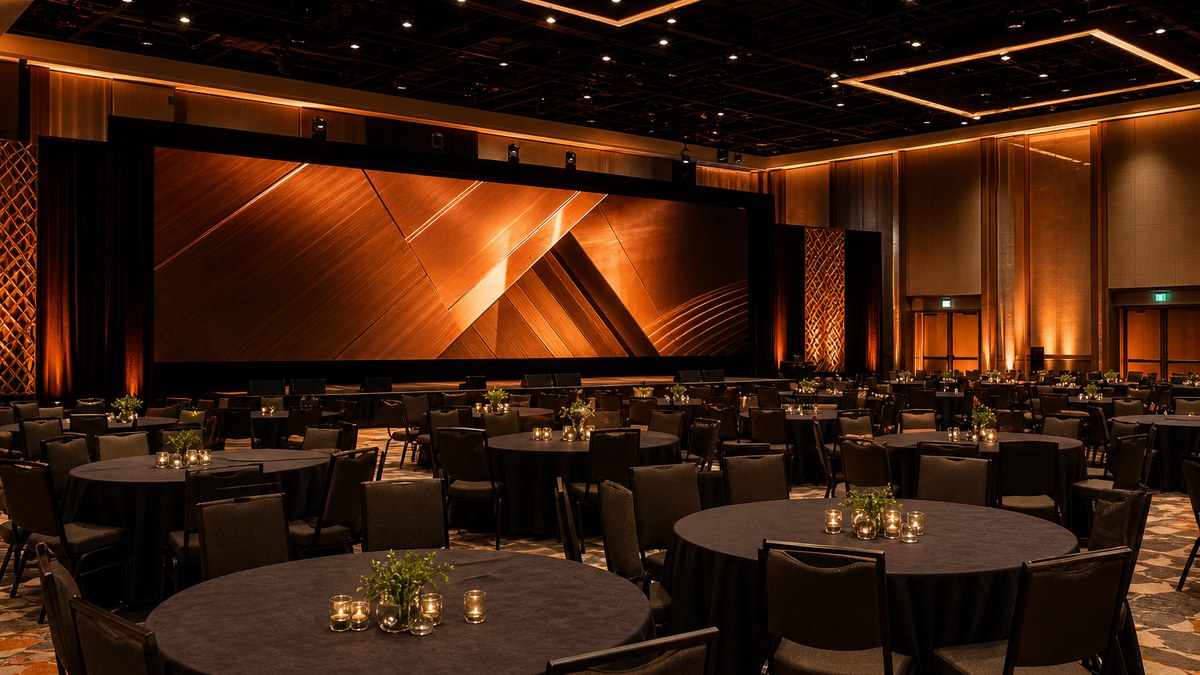
- Hotels and hospitality: lobby feature walls, ballroom and meeting-room displays, and event backdrops near Sundance Square, the Convention Center, and the Stockyards.
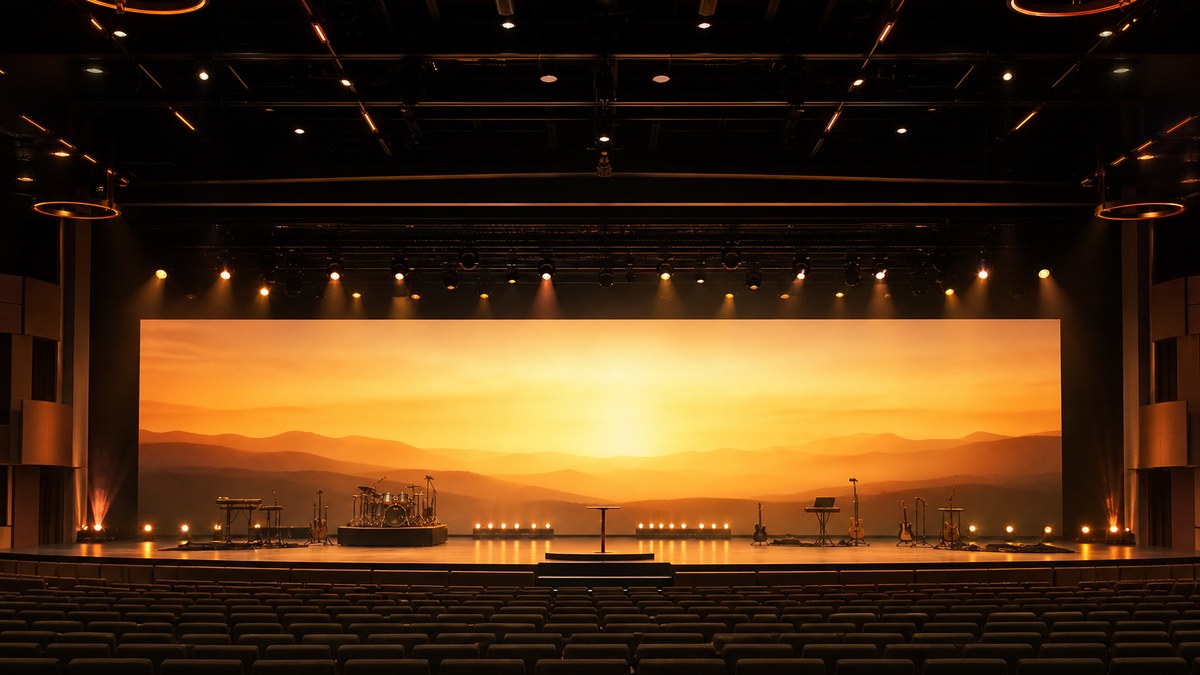
- Churches and worship centers: lyrics, sermon notes, live camera feeds, and immersive stage backdrops that stay visible from the back row.
- Restaurants, bars, and entertainment venues: sports, menus, and atmosphere on West 7th, Near Southside, and in the Stockyards.
- Retail and showrooms: product launches and promotions that catch shoppers from across the floor.
- Control and operations rooms: dashboards and camera feeds for logistics, utilities, and security teams along I-35W and Alliance.
- Schools, universities, and arenas: lecture halls, athletic facilities, and event spaces.
- Exterior displays: digital signage on facades, monuments, and pylons, where city sign rules apply.
In many of these spaces, the video wall works alongside architectural lighting. A lobby wall looks its best when the surrounding light is controlled so it does not wash out the screen, which is why we plan video and lighting together. Our architectural LED lighting guide covers the lighting side, and our LED video wall services cover design, installation, and support.
Pixel pitch: the decision that shapes everything
Pixel pitch is the distance, in millimeters, from the center of one pixel to the center of the next. A smaller pitch means pixels are closer together, which produces a sharper image at close range and a higher resolution for the same wall size. It also means more LEDs packed into the same area, more processing, and a higher investment. A larger pitch has fewer pixels and is better suited to audiences that are farther away.
A widely used rule of thumb is to allow roughly one meter of minimum viewing distance for each millimeter of pixel pitch. A 2.5mm wall, for example, looks smooth from about 2.5 meters (a little over 8 feet) and beyond. Closer than that, viewers may start to see individual pixels. The rule is a starting point, not a law: the type of content, the size of the wall, and how people move through the space all matter.
| Typical application | Closest viewers | Pitch range often considered |
|---|---|---|
| Boardrooms, control rooms, close-up lobby walls | Within a few feet | Fine pitch, roughly 1.2mm–1.9mm |
| Corporate lobbies, retail feature walls | Several feet to across the room | Roughly 1.9mm–2.9mm |
| Worship centers, auditoriums, ballrooms | Front rows to the back of the room | Roughly 2.6mm–3.9mm |
| Arenas, large venues, building facades | Well back from the screen | Roughly 4mm and up |
| Roadside and highway digital signs | Passing vehicles | Larger outdoor pitches |
Resolution follows from pitch and size. A wall's pixel count is its width and height divided by the pitch, so a larger wall at the same pitch has more pixels. Matching the wall's native resolution to your content, or designing content for the wall's exact pixel map, keeps text crisp and avoids awkward scaling.
Stand where your closest viewers will stand. In a lobby that is the reception desk; in a church it is the front row; in a restaurant it is the nearest booth. That distance, more than the size of the room, usually decides the pitch.
Brightness, contrast and refresh rate
LED brightness is measured in nits. More is not always better. An indoor wall that is too bright causes eye strain and washes out skin tones on camera, while an outdoor display that is too dim disappears in Texas sun. The goal is brightness matched to the environment, with automatic or scheduled adjustment.
- Indoor walls are tuned to the room. A dim auditorium needs far less output than a glass-walled atrium with afternoon sun. Good systems can run well below their maximum without losing color quality.
- Outdoor displays generally need several thousand nits to stay readable in direct daylight, and should dim at night with an ambient light sensor so they are not glaring or out of step with local rules.
- Contrast depends on black surface treatments, mask design, and how ambient light falls on the screen. Darker modules and good light control make colors pop.
- Refresh rate matters whenever cameras are involved. Churches that livestream, venues that broadcast, and corporate studios should specify a high refresh rate to avoid flicker and scan lines on video.
- Grayscale and color calibration keep gradients smooth and every cabinet matching its neighbors, especially at low brightness.
Indoor vs. outdoor LED displays
Indoor and outdoor walls look similar in a brochure, but they are built for very different conditions.
| Factor | Indoor video wall | Outdoor LED display |
|---|---|---|
| Brightness | Tuned to room lighting | High output for daylight, with night dimming |
| Pixel pitch | Fine to medium for close viewers | Medium to large for distant viewers |
| Enclosure | Lightweight, slim cabinets | Sealed, weather-rated cabinets |
| Heat | Room HVAC and airflow | Designed for sun load and North Texas summers |
| Protection | Front surface care in public areas | Surge protection, grounding, impact resistance |
| Permits | Building and electrical | Building, electrical, and city sign rules |
Exterior digital displays in Fort Worth sit at the intersection of lighting and signage. For roadside message centers, pylons, and monument signs with digital faces, our partners at American LED Signage handle the sign side, and our guide to LED signs in Fort Worth explains channel letters, monuments, and digital displays in detail. For exterior lighting around the display, see our Fort Worth outdoor LED lighting guide.
LED technologies: SMD, COB and fine pitch
SMD (surface-mount device)
The most common indoor technology. Red, green, and blue diodes share one small package on the module surface. SMD offers wide viewing angles, good color, and a broad range of pitches, which makes it a versatile choice for lobbies, worship, and retail.
COB (chip-on-board)
LED chips are mounted directly to the board and covered with a protective layer. COB surfaces are more resistant to bumps and cleaning, run smoothly at very fine pitches, and suit high-traffic areas where people may touch the wall, such as lobbies and corridors.
DIP and outdoor-grade modules
Larger outdoor pitches often use rugged diode packages built for heat, weather, and very high brightness. Outdoor modules are paired with sealed cabinets and protective coatings.
MicroLED and emerging options
Ultra-fine-pitch technologies are pushing direct-view LED into boardrooms and home-theater-style spaces. They are worth evaluating when viewers sit very close, but the right answer depends on budget, content, and how close people really are.
Structure, mounting and service access
An LED wall is heavy, and it must stay perfectly flat. Uneven mounting causes visible seams and color shifts at the joints. Before any panel goes up, the structure has to be confirmed:
- Wall or floor capacity: drywall alone will not carry a video wall. Most projects need steel framing, a ground-stacked support, or anchors into structural members, verified by the right professionals.
- Flatness and alignment: mounting systems with fine adjustment keep cabinets in one perfect plane.
- Front or rear service: front-serviceable cabinets let technicians remove modules from the face, so the wall can sit flush against a surface. Rear-service walls need a walkway behind them.
- Ventilation: LED walls generate heat. Recessed and enclosed installations need airflow planning so electronics stay within their rated temperatures.
- Trim and integration: finished surrounds, millwork, and lighting coves make the wall look like part of the architecture instead of an add-on.
Power, data and content control
A video wall needs dedicated electrical circuits sized for its maximum draw, plus power distribution and, in many cases, surge protection. In Fort Worth, electrical work must be performed by electricians licensed by the Texas Department of Licensing and Regulation (TDLR), and the City of Fort Worth adopted the 2026 National Electrical Code effective September 1, 2026. Planning power early avoids surprises during construction.
On the data side, a video processor receives signals from your sources and maps them to every cabinet. From there, content control can be as simple or as sophisticated as your team needs:
- Digital signage players for scheduled playlists, menus, and brand loops.
- Presentation switchers for boardrooms, ballrooms, and worship services with multiple inputs.
- Live camera feeds for image magnification in auditoriums and churches.
- Data dashboards for control rooms and operations centers.
- Integration with lighting control so the room lighting and the wall change together for events and services.
Buildings that are already moving toward networked infrastructure can tie displays and lighting into the same plan. Our guide to PoE lighting systems in Fort Worth explains how smart-building lighting fits alongside AV and IT systems.
Planning a video wall in Fort Worth?
Tell us about your space, your viewers, and what you want on screen. We will review the site and prepare a project-specific proposal.
Video walls for churches and worship centers
Worship spaces are one of the fastest-growing uses for LED walls across Tarrant County. A single seamless backdrop replaces projectors and screens that struggle against stage lighting, and it stays readable from the back row. A few points matter more in churches than anywhere else:
- Camera-friendly performance: high refresh rates and careful brightness tuning so the wall looks right on livestreams.
- Sightlines: placement and height chosen so lyrics and scripture are visible from every seat, including balconies.
- Stage integration: coordination with stage lighting, haze, and set design so the wall supports worship rather than overpowering it.
- Volunteer-friendly control: simple presets that a weekend volunteer team can run confidently.
Video walls for hotels, lobbies and venues
In hospitality and corporate settings, the wall is part of the brand. A lobby feature wall can welcome guests by name for events, show art and ambient loops during quiet hours, and switch to presentations for meetings. Ballroom walls replace rented screens and projection for conferences and weddings. Close viewing distances in lobbies often call for finer pitches and durable surfaces, and warm architectural lighting around the wall keeps the space inviting. Our Luminance design-build approach combines video, architectural lighting, and controls into one coordinated project.
Restaurants, bars and retail
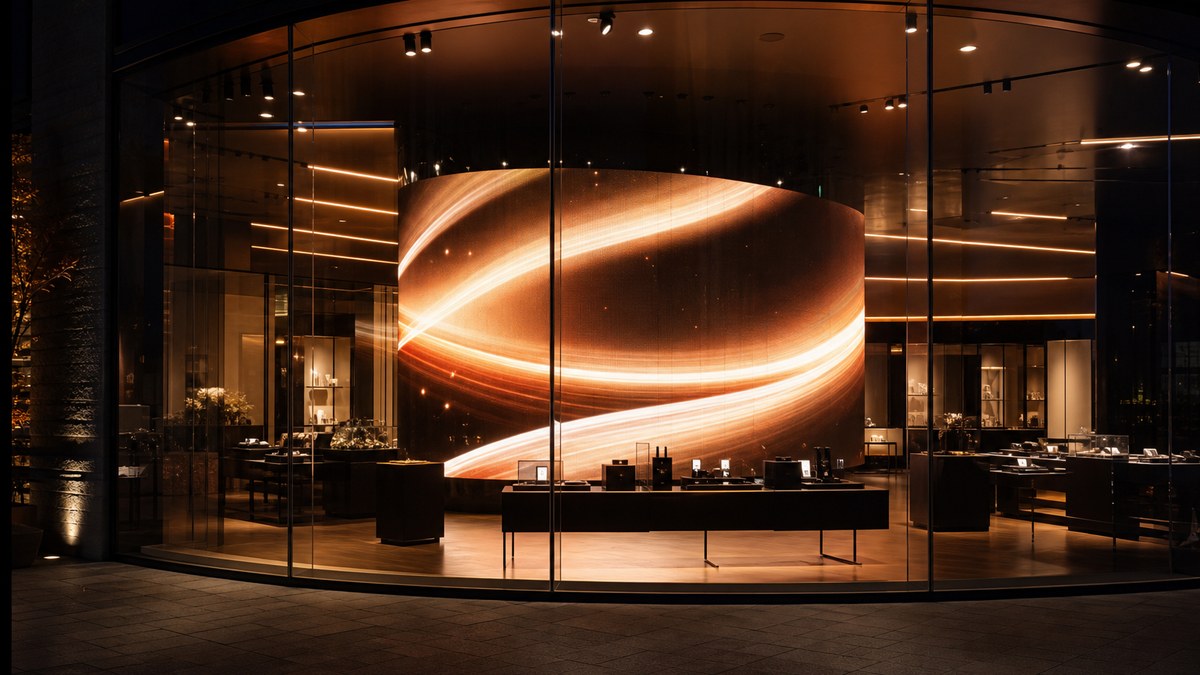
On West 7th, in Near Southside, and in the Stockyards, a video wall can turn a bar into the place to watch the game, give a restaurant a signature design element, or make a retail promotion visible from the entrance. These spaces mix high ambient light, close viewers, and long operating hours, so durable surfaces, good thermal design, and brightness scheduling all pay off. Pairing the wall with warm, dimmable interior lighting from our commercial LED lighting services keeps the room comfortable rather than screen-dominated.
Planning a video wall project
- Discovery. We learn what you want to show, who will watch, and how the space is used day to day.
- Site review. Viewing distances, sightlines, ambient light, structure, power, data paths, and access are measured and documented.
- Design. Pixel pitch, size, aspect ratio, cabinet layout, mounting, processing, and control are selected and drawn.
- Proposal. A clear scope and project-specific price, including structure, electrical, and integration.
- Coordination. We work with your architect, general contractor, electrician, and IT team on framing, circuits, and network needs.
- Installation. Structure, cabinets, power, and data are installed and aligned so the wall sits perfectly flat.
- Calibration and commissioning. Brightness, color, and uniformity are calibrated, inputs are tested, and presets are built.
- Training and support. Your team learns day-to-day operation, and a service plan covers spare modules and maintenance.
Questions to ask before you buy
- What is the closest viewing distance, and how was pixel pitch chosen for it?
- What brightness will the wall run at day to day, and can it dim automatically?
- Is the wall front-serviceable or rear-serviceable, and how are modules replaced?
- Who is responsible for the structure, and has the wall or floor been verified for the load?
- What electrical circuits are required, and who will install them?
- What processor and content system are included, and who will run it?
- Are spare modules from the same production batch included for color matching?
- What does the warranty cover, and what does ongoing service look like?
- For outdoor displays, what permits and sign rules apply to the location?
Common video wall mistakes
- Choosing pitch from a spec sheet instead of the room. A pitch that is too coarse looks pixelated up close; one that is finer than needed spends budget no viewer will notice.
- Ignoring ambient light. Uncontrolled sunlight and downlights falling on the screen reduce contrast. Lighting design around the wall matters.
- Underestimating structure. Weight, flatness, and service access must be designed, not improvised on site.
- Forgetting heat and airflow. Recessed walls without ventilation shorten electronic life.
- No content plan. A beautiful wall showing low-resolution, wrong-aspect content looks worse than a smaller screen.
- No spares. Modules from a later batch can look slightly different. Keeping matched spares on hand keeps repairs invisible.
- Running at full brightness all the time. It wastes energy, can shorten LED life, and is uncomfortable for viewers.
Maintenance, service and lifespan
LED walls are durable, but they are electronics working hard every day. A simple maintenance routine keeps them looking new: periodic inspection of modules and connections, gentle surface cleaning with approved methods, checks on power supplies and fans, firmware and processor updates, and recalibration when needed. Running at sensible brightness levels and keeping the wall within its temperature range help protect its life. When a module fails, a front-serviceable design and matched spare modules mean a quick swap rather than a long outage. Our service team supports both lighting and display systems.
Energy use and incentives
Energy use depends on size, pitch, brightness, and how many hours the wall runs. Scheduling, ambient light sensors, and sensible brightness settings reduce consumption without hurting the image. When a video wall is part of a broader lighting upgrade, the lighting portion of a project in the Oncor service area may qualify for energy-efficiency incentive programs, depending on the project and current program availability. Commercial lighting in Fort Worth follows the 2015 IECC with local amendments, so we plan lighting controls around the wall to meet code.
Why choose Fort Worth LED Lights
We treat a video wall as part of the building, not an appliance hung on a wall. Our team brings 15+ years as an authorized architectural lighting dealer and project coordinator. Our licensed installation partner has completed over 200 major sports and commercial projects across the US and Canada — NFL, NBA, NHL, MLS, NCAA and NASCAR. That combination of display experience and lighting design means the wall, the room lighting, and the controls are planned together. Learn more about our full range of services, see the areas we serve, or read how we approach LED light installation in Fort Worth from site walk to switch-on. For more guides, visit the Fort Worth LED Lights blog.
Frequently Asked Questions
What is an LED video wall?
How much does an LED video wall cost in Fort Worth?
What pixel pitch do I need?
How bright should an LED video wall be?
Is an LED wall better than a projector or LCD video wall?
Can an LED video wall be installed outdoors in Fort Worth?
Do LED video walls work well on camera for church livestreams?
What is the difference between front-service and rear-service walls?
How do I maintain an LED video wall?
What areas do you serve?
Put your message on the big screen
Request a consultation and we will follow up to schedule a site review for your LED video wall.
Related
Our DFW lighting network: Dallas commercial LED lighting, Arlington LED lighting, Irving LED lighting, Plano LED lighting, statewide Texas LED lighting, wholesale LED components, fiber optic starlight ceilings, 360° fiber optic lighting, premium pool lighting, modular building solutions, and Dallas modular structures.