Restaurant Lighting in Fort Worth: The LED Guide for Dining Rooms, Bars, Kitchens & Patios
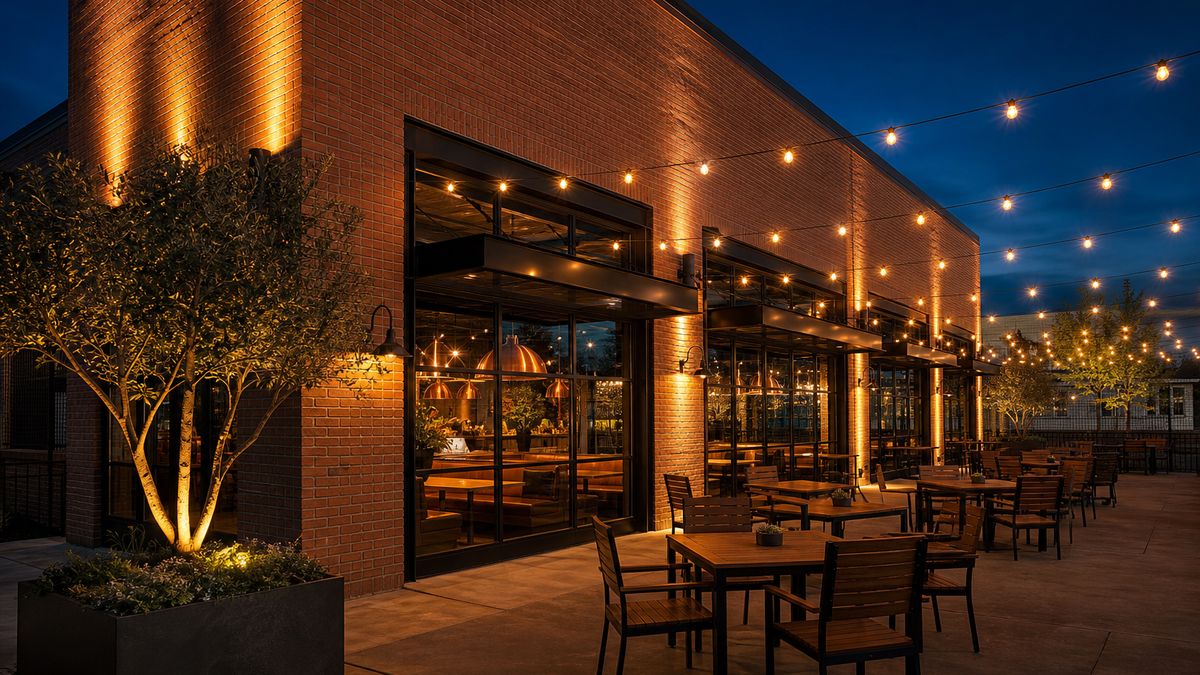
Restaurant lighting in Fort Worth is one of the few design decisions that guests feel in every second of their visit. Light tells people whether a place is a quick lunch stop or a three-hour dinner, makes food look fresh or flat, flatters faces or washes them out, and decides whether a patio full of empty chairs looks inviting from the street. It also runs for long hours every day, which makes it one of the larger energy loads in a restaurant after cooking and refrigeration.
This guide is written for owners, operators, general managers, designers and developers opening or refreshing restaurants, bars and patios across Fort Worth and Tarrant County. It walks through every zone of a restaurant: the facade and entry, the host stand, the dining room, the bar, private dining, restrooms, the kitchen and back of house, and the outdoor patio or rooftop. You will learn which LED fixtures fit each area, how to choose color temperature and color rendering, how dimming and scene control work, what Fort Worth's energy code and food safety rules expect from lighting, and how to plan an upgrade without closing your doors.
Fort Worth has one of the most active dining scenes in Texas. West 7th, the Near Southside and Magnolia Avenue, Sundance Square, the Stockyards, Clearfork, Crockett Row and the growing districts along the Trinity all rely on evening traffic, and outdoor dining is part of the city's identity for much of the year. The restaurants that stand out after dark almost always have one thing in common: lighting that was planned as part of the concept, not added at the end.
Good restaurant LED lighting in Fort Worth is built in layers and controlled by scene:
- Dining room: warm (about 2700K–3000K), high color rendering (90+ CRI), dimmable light focused on tables rather than the floor
- Bar: back-bar accent lighting, under-counter LED tape and task light for bartenders
- Kitchen: bright, even, shielded task lighting that meets food code light levels
- Patio and rooftop: outdoor-rated string, linear and post lighting with glare control and weatherproof dimming
- Facade and sign: lighting that makes the building and entry easy to find from the street
- Controls: preset scenes for lunch, dinner, late night and cleaning, plus code-required automatic shutoff
- Pricing: every project receives a project-specific proposal after a site review
Why lighting matters so much in restaurants
Restaurant lighting works on several levels at once:
- Atmosphere and concept. Warm, low, focused light signals a place to linger. Brighter, more even light signals speed and energy. The lighting should match the menu, price point and service style.
- Food and drink presentation. High color rendering makes steaks, greens, sauces and cocktails look the way the chef intended. Poor color rendering makes the same plate look dull or grey.
- Guest comfort. Light at the table should let guests read the menu and see each other's faces without glare from bare sources overhead.
- Social media. Guests photograph food, drinks and interiors constantly. Flattering, consistent light turns those photos into free marketing.
- Staff safety and speed. Kitchens, prep lines, dish areas and service corridors need bright, even task light to work safely and quickly.
- Street presence. A glowing facade and a lit patio are the most effective sign a restaurant has after sunset.
- Operating cost. Restaurants often run lights from early prep through late close. Efficient LED and good controls reduce energy use and maintenance across those long hours.
The four layers of restaurant lighting
Professional restaurant lighting design almost always combines four layers, each on its own control zone so the room can be tuned through the day.
1. Ambient light
Ambient light sets the base level of the room. In casual and quick-service spaces it may come from recessed downlights or linear fixtures. In full-service and fine dining it often comes from indirect sources: cove lighting, wall washing, and light bounced off ceilings and architectural surfaces, which feels softer than direct light from above.
2. Task light at the table
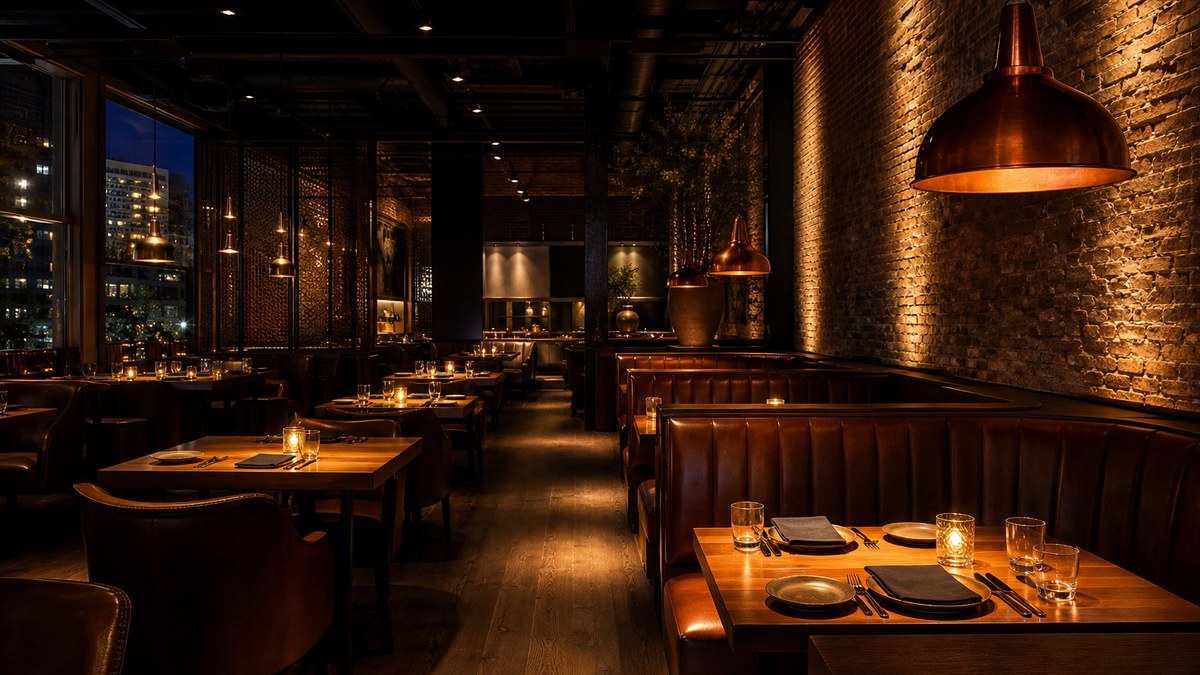
The table is the stage. Narrow-beam adjustable downlights, pendants over booths and banquettes, and table lamps put light on plates and menus while keeping the floor and aisles darker. Aiming light at tables rather than the floor is the single biggest difference between a room that feels designed and one that feels like an office.
3. Accent light
Accent lighting draws the eye to what makes the restaurant memorable: a brick wall, artwork, a wine wall, a mural, a display kitchen, greenery or a feature ceiling. Grazing brings out the texture of brick and stone, which suits many of Fort Worth's older buildings.
4. Decorative light
Decorative pendants, chandeliers, sconces and exposed-filament style LED lamps are part of the interior design. They should look good but usually should not be the main source of light, since bright bare sources create glare. Dimmable LED decorative lamps let you keep the look while controlling brightness.
Color temperature and color rendering for dining
Two specifications matter more than any others when choosing LED for a restaurant: correlated color temperature (CCT) and color rendering (CRI, and ideally the R9 value for deep reds).
| Area | Typical color temperature | Why |
|---|---|---|
| Fine dining and steakhouse | About 2200K–2700K | Candle-like warmth, flattering skin tones, intimate mood |
| Full-service casual dining | About 2700K–3000K | Warm but bright enough for families and groups |
| Fast casual and counter service | About 3000K–3500K | Clean, energetic, easy to read menu boards |
| Bar and lounge | About 2200K–2700K, with accent color | Low, warm glow with highlighted back bar |
| Kitchen and prep | About 3500K–4000K | Neutral, bright light for food quality checks and safety |
| Patio and rooftop | About 2200K–3000K | Warm evening glow, comfortable for neighbors |
For color rendering, specify 90+ CRI in dining rooms, bars and display kitchens, with a strong R9 value so reds in meat, tomatoes, wine and skin tones look natural. Lower-CRI LED can save a little up front but makes food look less appetizing, which defeats the purpose of the upgrade. Keep color temperature consistent within each room so mixed fixtures do not look patchy, and consider warm-dim LED, which shifts warmer as it dims, just like an incandescent lamp, so a dinner scene glows instead of turning grey.
Dimming, scenes and controls
A restaurant is not one room. It is a lunch room, a dinner room, a late-night lounge and a cleaning crew's workspace, sometimes all in one day. Scene control makes that easy:
- Prep and cleaning: full output everywhere for staff before open and after close.
- Lunch: brighter dining levels, balanced with daylight from storefront windows.
- Dinner: lower ambient light, tables and accents emphasized.
- Late night: the bar becomes the focus, dining room dims further.
- Private event: separate control for private dining or a buyout.
Simple keypads at the host stand or manager's office let staff pick a scene with one button instead of adjusting a wall of dimmers. Astronomical time clocks can change scenes automatically at sunset. The key technical point is compatibility: LED drivers and dimmers must be matched (0–10V, phase dimming, DALI or wireless) to avoid flicker, buzzing and lights that drop out at low levels. Good dimming down to low levels without flicker is what separates a refined dinner scene from a frustrating one, and it is also important on camera, since flicker shows up in guests' phone videos.
Energy code note: Fort Worth uses the 2015 IECC with local amendments (with ASHRAE 90.1 as an alternative path), and the 2026 NEC took effect September 1, 2026. The 2015 IECC sets interior lighting power allowances for dining areas (for example, under the building area method, 1.01 W/ft² for bar lounge/leisure dining, 0.95 W/ft² for family dining and 0.90 W/ft² for cafeteria/fast food). It also requires controls such as occupant sensors in spaces like break rooms, storage and restrooms, time-switch or automatic shutoff controls, the ability to reduce lighting in a space, daylight-responsive controls in daylight zones, separate controls for display and accent lighting, and automatic dusk-to-dawn and late-night reduction controls for exterior facade and landscape lighting. The compliance path for each project is confirmed with the design team and the City of Fort Worth during permitting, and electrical work is performed by electricians licensed through TDLR.
The entry, facade and host stand
The first impression starts at the curb. Facade lighting, a lit sign and a glowing entry tell guests where to go and set expectations before they open the door. Wall grazers on brick, uplights on columns, linear accents on canopies and a lit address or sign make a restaurant easy to find on a busy street like West 7th or Magnolia Avenue. Our architectural LED lighting guide covers facade techniques in detail, and our LED signs guide explains channel letters, halo-lit signs and blade signs.
Inside, the host stand and waiting area act as a transition zone. Slightly brighter light here helps eyes adjust when guests come in from bright afternoon sun, and helps staff read reservations and seat guests. At night, the entry should glow warmly without being brighter than the dining room beyond it.
The dining room: light the table, not the floor
Most restaurant lighting problems show up in the dining room. Common symptoms include a flat, evenly bright room that feels like a cafeteria, glare from bare downlights overhead, dark tables where guests use phone flashlights to read the menu, and orange or grey light that makes food look unappetizing.
The fixes are usually straightforward with LED:
- Adjustable, narrow-beam downlights aimed at tables so light lands on plates, not aisles.
- Deep-regressed or low-glare optics so guests see light on surfaces, not the bright source itself.
- Pendants over booths and banquettes hung low enough to create intimacy, high enough not to block sightlines.
- Wall washing and grazing to brighten vertical surfaces, which makes rooms feel more spacious and lively.
- Separate zones for perimeter seating, center tables, booths and feature walls so each can be tuned.
When a restaurant moves tables for events or reconfigures its layout, track lighting or adjustable monopoints make re-aiming easy without new wiring.
Make your dining room glow after dark
Tell us about your concept, space and opening date. We will review the site and prepare a project-specific proposal.
Bar and lounge lighting
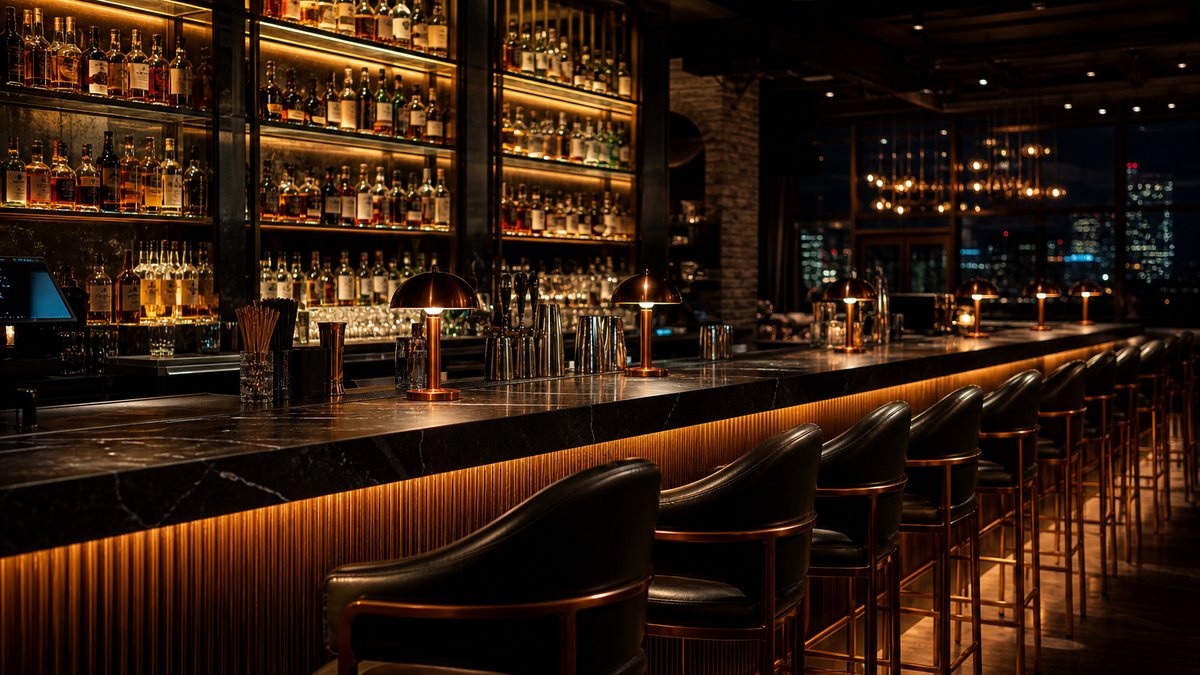
The bar is often the most photographed part of a restaurant, and its lighting has a few jobs at once. The back bar should glow: LED tape or linear fixtures behind and under bottle shelves light the bottles from below and behind so glass and liquid sparkle. The bar top needs soft task light so bartenders can pour, read tickets and see payments, without shining into guests' eyes. Under-counter LED along the bar front and foot rail adds depth and makes the bar visible from across the room.
Color-changing LED can add energy for late-night service, game days and events, but it works best as an accent rather than the main light. Programmed, subtle color scenes look intentional; constant color cycling quickly feels dated. For bars that also show games, our LED video walls guide covers screens that stay bright and sharp without overpowering the room.
Private dining, restrooms and corridors
Private dining rooms need their own scene control and often their own AV, since the same room may host a rehearsal dinner one night and a business presentation the next. Restrooms are a surprisingly important part of the guest experience: flattering, warm mirror lighting and clean, even general light make a strong impression. Restrooms, corridors, storage and break rooms are also where code-required occupant sensors usually apply, saving energy in spaces nobody needs lit full time.
Kitchen and back-of-house lighting
Kitchen lighting is about safety, food quality and code compliance rather than atmosphere. Cooks need to see the true color of proteins, sauces and produce, read tickets, and work safely around knives, slicers and hot equipment. Dish areas and storage need enough light for cleaning and inspection.
The FDA Food Code, on which the Texas Food Establishment Rules are based, sets minimum light levels that inspectors check:
| Area | Minimum light level (Food Code model) |
|---|---|
| Surfaces where employees work with food, knives, slicers, grinders or saws | 50 foot-candles (540 lux) |
| Self-service and buffet surfaces, inside reach-in and under-counter refrigerators, handwashing, warewashing, utensil storage and toilet rooms | 20 foot-candles (215 lux) |
| Walk-in coolers, dry storage and other rooms during cleaning | 10 foot-candles (108 lux), measured 30 inches above the floor |
Fixtures over exposed food and clean equipment must also be shielded, coated or otherwise shatter-resistant so broken lamps cannot contaminate food. Sealed, gasketed LED fixtures rated for wet and greasy locations are easy to clean, run cooler than older fluorescent fixtures, and last much longer in hot kitchens. Walk-in coolers and freezers need fixtures rated for cold temperatures. Always confirm current requirements with the City of Fort Worth's health inspection team during plan review.
Patio, courtyard and rooftop lighting
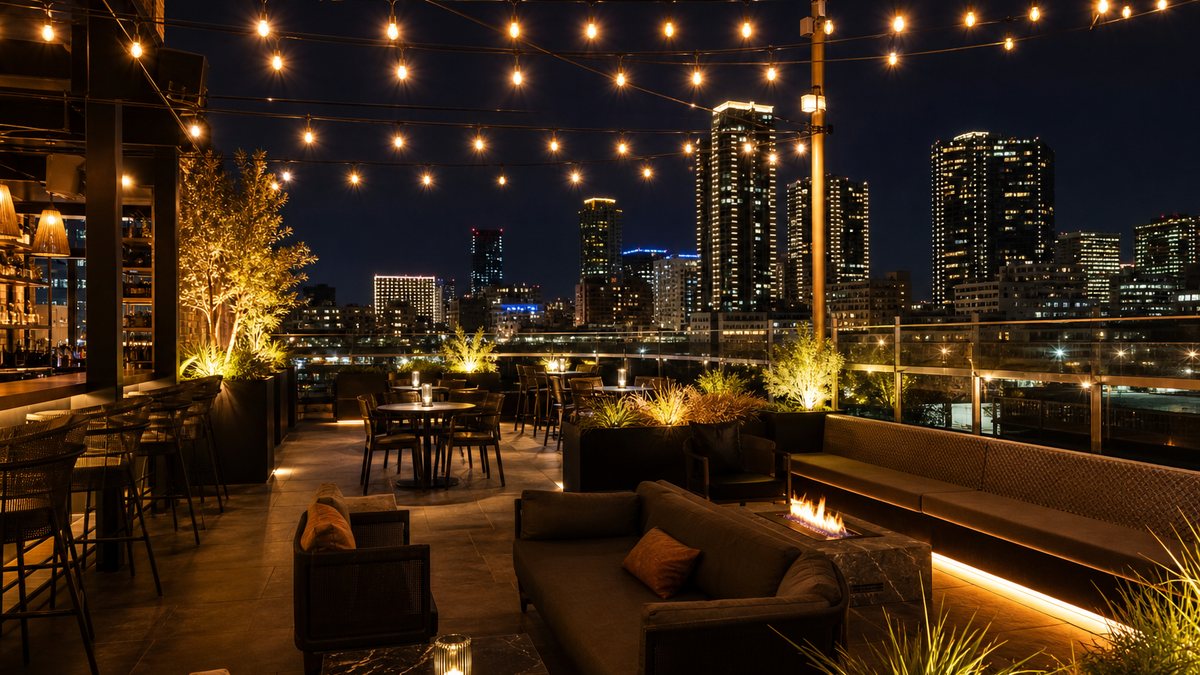
In Fort Worth, a patio can be the most profitable seat in the house for much of the year. Good outdoor lighting keeps those seats full after sunset and makes the patio visible from the street.
- Commercial-grade string and festoon lighting. Outdoor-rated, shatter-resistant LED lamps on properly supported catenary cable, not consumer string lights tied to railings. Warm color temperature and dimming keep the glow comfortable.
- Linear LED under rails, benches and bar tops for a modern look and safe edges and steps.
- Downlights and wall lights under pergolas, shade structures and covered areas so tables have usable light.
- Uplighting on trees, planters and walls to create depth and define the space.
- Step and path lights at level changes, ramps and paths to the parking lot.
- Integration with heaters, fans and shades so lighting works with the comfort systems guests use from spring through late fall.
Rooftop bars add wind loads, exposure and views to consider. Fixtures should be secured for wind, and lighting should be low and warm enough that guests can enjoy the skyline instead of looking into glare. Where patios face apartments or homes, as they often do in mixed-use districts, shielded fixtures and warm light reduce complaints about light trespass.
Built for Texas heat and storms
Outdoor restaurant lighting in Fort Worth faces intense heat, sun, wind, hail and lightning. Specify accordingly:
| Challenge | What to specify |
|---|---|
| Summer heat on rooftops and patios | Drivers and fixtures rated for high ambient temperatures |
| Rain, hoses and power washing | Wet-location and appropriate IP ratings, sealed connectors and boxes |
| Wind on rooftops | Secure catenary systems, rated mounts and strain relief |
| Hail and impact | Shatter-resistant lamps and durable lenses |
| Lightning and surges | Surge protection at fixtures and panels |
| Grease and smoke near grills | Easy-clean, sealed fixtures away from direct exhaust |
For more on site lighting, parking lots and exterior controls, see our Fort Worth outdoor LED lighting guide.
Lighting by restaurant concept
Steakhouses and fine dining
Low ambient light, tightly focused table light, warm-dim LED, rich accent lighting on wine displays and materials, and very careful glare control.
Full-service casual and family dining
Warm, comfortable light that is bright enough for families and large groups, with booths and feature walls highlighted and simple scene control for lunch and dinner.
Fast casual and counter service
Bright, clean light at the counter and menu boards, energetic accents, and well-lit pickup shelves for online orders. Daylight controls near storefront windows help save energy.
Bars, breweries and music venues
Back-bar glow, color accent scenes, task light for staff, and lighting that works with stage lighting and screens. Taprooms in converted warehouses benefit from LED high bays with dimming so the space can shift from daytime brightness to evening mood.
Hotel restaurants and rooftop bars
Coordinated lighting from lobby to restaurant to rooftop. Our hotel lighting guide covers lobbies, ballrooms and rooftop pools.
Food halls and multi-tenant dining
Common-area lighting that unifies the space while letting each vendor's counter stand out, with controls the landlord can manage centrally.
Planning a restaurant lighting project
- Concept conversation. We learn your brand, menu, service style, hours and how the space should feel at lunch, dinner and late night.
- Site review. Ideally both in daylight and after dark, to see existing fixtures, ceilings, power, controls, glare and dark spots.
- Lighting layout and fixture selection. Layers, zones, color temperature, color rendering and dimming planned room by room, inside and out.
- Controls design. Scenes, keypads, time clocks and code-required controls.
- Proposal. A clear scope and a project-specific price.
- Permitting and coordination. Coordination with your architect, general contractor and the City of Fort Worth where permits apply.
- Installation. Scheduled around service, often overnight or on closed days for existing restaurants.
- Aiming and scene setting. Fixtures aimed at the real table layout and scenes tuned at night with your team.
- Service. Ongoing support for repairs, re-aiming and changes as menus and layouts evolve.
Our LED light installation guide explains each step in more detail.
Upgrading an existing restaurant
Many Fort Worth restaurants are in older buildings with a mix of halogen, compact fluorescent, incandescent and early LED lamps. Upgrading does not have to mean a full renovation. Common phased approaches include:
- Lamp and fixture retrofits with high-CRI, dimmable LED in existing housings where they are in good condition.
- Dimmer and control upgrades to fix flicker and add scene control.
- Re-aiming and adding table light to transform the dining room without changing the ceiling.
- Kitchen fixture replacement with sealed LED for brighter, easier-to-clean light.
- Patio and facade upgrades to add curb appeal and extend outdoor seating hours.
Work can usually be scheduled overnight or on closed days so service continues. Replacing hot halogen and incandescent lamps with LED also reduces heat in the dining room, which helps comfort during Texas summers.
Common restaurant lighting mistakes
- Lighting the floor instead of the table. Wide downlights spread light everywhere except where guests need it.
- Choosing low-CRI LED. Food and faces look dull, and the room loses warmth.
- Mismatched dimmers and drivers. The result is flicker, buzzing and lights that cut out at low levels.
- Mixed color temperatures. Fixtures from different eras and brands make a room look patchy.
- Glare from bare decorative lamps. Bright exposed lamps at eye level make guests squint.
- Consumer-grade patio lights. They fail quickly in Texas weather and can create safety issues.
- Under-lit kitchens. Poor light slows the line, hides cleaning problems and can lead to inspection issues.
- No scene control. Staff forget to adjust lights, and the dinner room ends up at lunch brightness all night.
Energy savings, maintenance and incentives
Restaurants often run lighting for long hours, from early prep through late close, so efficient LED and controls make a meaningful difference over time. LED also reduces heat from lighting and cuts the number of lamp replacements, which matters in high ceilings, over bars and on patios where access is difficult. Some commercial LED and lighting control projects in the Oncor service area may qualify for energy-efficiency incentive programs, depending on the project and program availability; DLC-listed or ENERGY STAR products are typically required. We can help you check what applies to your project.
Why choose Fort Worth LED Lights
We handle restaurant lighting from concept to service: site reviews, lighting layouts, high-CRI and warm-dim fixture selection, scene and control design, kitchen lighting, patio and rooftop systems, facade and sign coordination, installation scheduled around your service, and ongoing support. Our team brings 15+ years as an authorized architectural lighting dealer and project coordinator. Our licensed installation partner has completed over 200 major sports and commercial projects across the US and Canada — NFL, NBA, NHL, MLS, NCAA and NASCAR. Explore our commercial lighting services, our architectural lighting services, repair and service, our commercial LED lighting services guide, and our Luminance design-build program for complete transformations. For smart-building projects, see our guide to PoE lighting, and for restaurants inside logistics and industrial conversions, our warehouse LED lighting guide.
Frequently Asked Questions
What is the best color temperature for restaurant lighting?
What CRI should restaurant LED lighting have?
How much does restaurant lighting cost in Fort Worth?
How do I stop LED lights from flickering when dimmed?
How bright does a restaurant kitchen need to be?
What lighting works best for a restaurant patio?
Can lighting be upgraded without closing the restaurant?
Does Fort Worth's energy code apply to restaurant lighting?
Can restaurant LED upgrades qualify for incentives?
What areas do you serve?
Let's light your restaurant
Opening a new concept or refreshing your dining room or patio? Request a consultation and we will follow up to schedule a site review.
Related
Our lighting network: Dallas commercial LED lighting, Arlington LED lighting, Irving LED lighting, Plano LED lighting, statewide Texas LED lighting, wholesale LED components, fiber optic starlight ceilings for private dining rooms and lounges, fiber optic lighting for water features, American LED Signage for restaurant signs, premium pool lighting for rooftop and hotel pools, modular building solutions, and Dallas modular structures.