Fort Worth Outdoor LED Lighting: The Commercial Guide to Facades, Parking Lots & Site Lighting
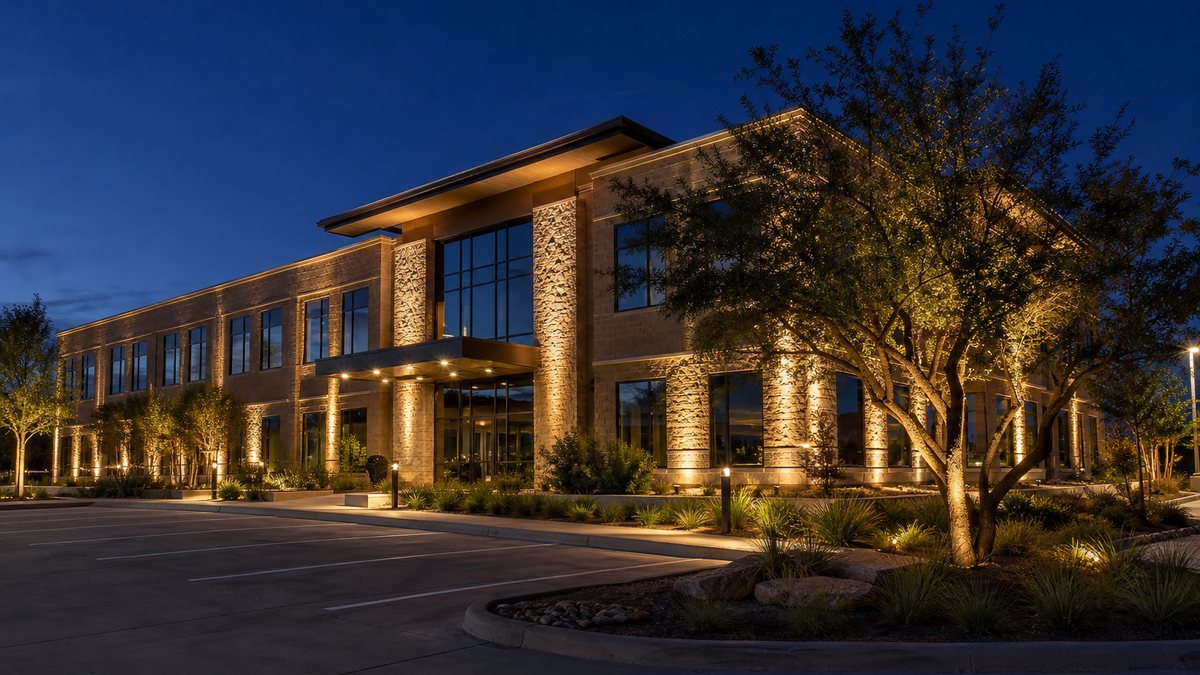
Fort Worth outdoor LED lighting does more work than most business owners realize. It is the first thing customers see when they pull into your lot at night, it keeps employees and visitors safe on the walk to their cars, it makes your building visible from the highway, and it gives security cameras the light they need. It also has to survive some of the toughest conditions any lighting faces: triple-digit summer heat, violent spring storms, hail, and years of UV exposure.
This guide covers every part of commercial exterior lighting in Fort Worth, from parking lots, garages, and building perimeters to facades, signage, landscapes, and outdoor dining. You will learn what each application needs, how to choose fixtures that last in North Texas, how controls cut energy use, and how to plan an upgrade without disrupting your business.
Whether you manage a single storefront, a hotel near Sundance Square, an office campus in Clearfork, or a distribution center in the Alliance corridor, the principles are the same: light the right places evenly, choose equipment built for Texas weather, control it intelligently so it only runs as bright and as long as needed, and maintain it so it keeps working year after year. The sections below show how to apply those principles to each part of your property, and what to ask before you choose a lighting contractor.
Commercial outdoor LED lighting in Fort Worth covers several connected systems:
- Parking lots and garages: LED area lights and garage fixtures for safe, uniform light
- Building perimeters: wall packs, canopy lights, and entrance lighting
- Facades and architecture: wall washing, grazing, outlining, and color-changing systems
- Signage and landscape: sign lighting, path lights, uplighting on trees and features
- Controls: photocells, schedules, dimming, and motion sensors
- Durability: outdoor-rated fixtures, surge protection, sealed connections, and heat-rated drivers
- Pricing: quoted per property after a site review
Why outdoor lighting matters for Fort Worth businesses
Exterior lighting shapes safety, security, and first impressions all at once:
- Safety: even light across lots, walkways, and entrances reduces trips, falls, and accidents.
- Security: well-lit properties discourage crime and give cameras usable footage.
- Visibility: lit facades and signs help customers find you from the road.
- Brand: a building that looks cared for at night signals a business that cares.
- Operating cost: exterior lights run all night, every night, so efficient LED and controls make a real difference.
Parking lot lighting
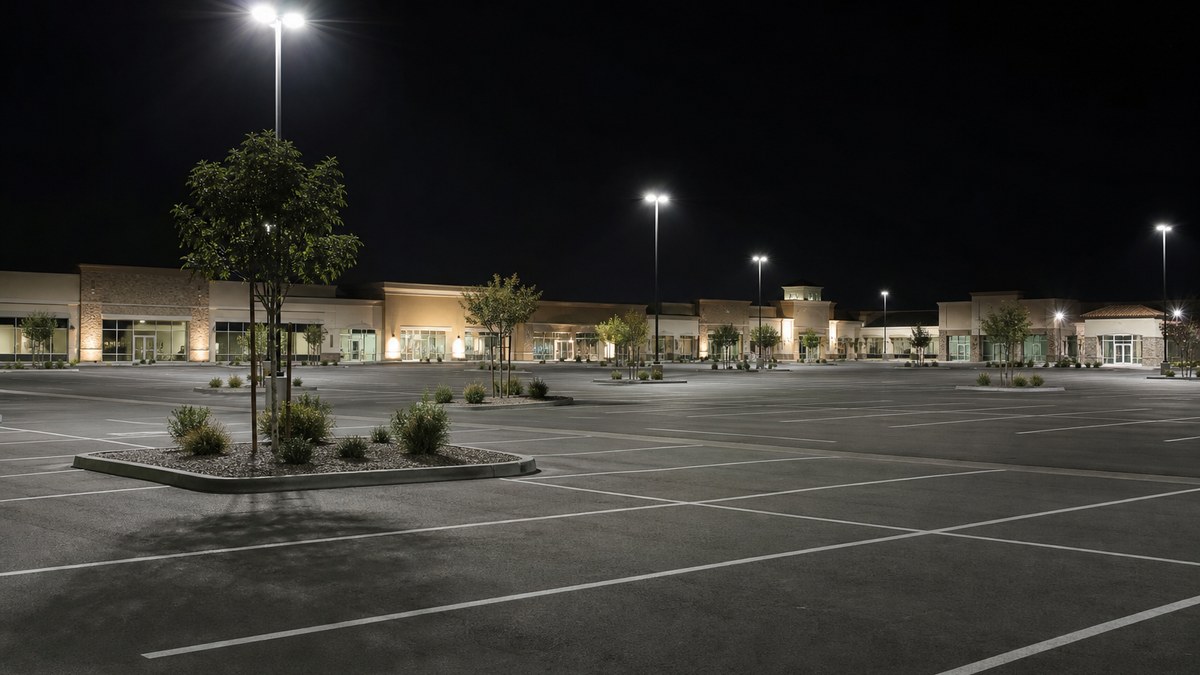
Parking lots are one of the most common and most valuable outdoor upgrades. Older high-pressure sodium and metal halide fixtures give off orange or harsh light, take minutes to warm up, and lose brightness as they age. LED area lights improve every part of that:
- Uniformity: precise optics spread light evenly, reducing dark spots between poles.
- Color: whiter light helps people and cameras see colors and details.
- Glare control: modern optics and shielding keep light off neighbors and drivers' eyes.
- Instant on: no warm-up delay after power interruptions.
- Long life: far fewer bucket-truck visits for lamp replacements.
Good design starts with a photometric layout that shows light levels across the lot, so fixtures, pole heights, and aiming deliver the right coverage. Existing poles can often be reused with new LED heads, keeping costs and disruption down, as long as poles, bases, and wiring are in good condition.
Parking garages
Garages need consistent light around the clock. LED garage fixtures with wide distribution light ramps, drive aisles, and parking stalls evenly, while motion sensors dim unoccupied areas and brighten them as cars and people arrive. Brighter, whiter light makes garages feel safer, and lower heat and long fixture life reduce maintenance in hard-to-reach spaces.
Building perimeters, entrances and loading docks
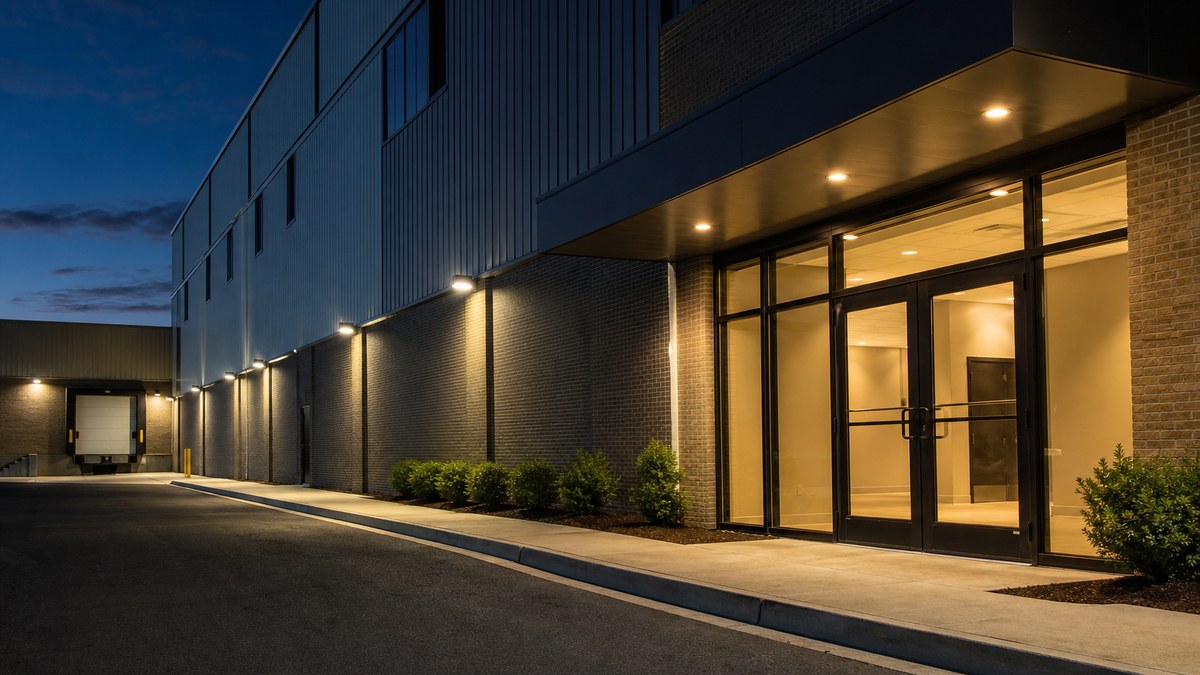
- Wall packs light the building perimeter, service areas, and walkways.
- Entrance lighting makes doors easy to find and welcoming.
- Canopy lights brighten drive-throughs, fuel stations, and covered drop-offs.
- Loading dock lights help crews work safely during early and late shifts.
Full-cutoff and shielded fixtures keep light where it is needed and reduce glare for neighbors and passing traffic.
Facade and architectural lighting
Facade lighting turns a building into a landmark. Wall washers spread light across broad surfaces, grazers bring out the texture of brick and stone, linear fixtures outline rooflines and bands, and color-changing systems let a building celebrate holidays and events. In Fort Worth, where historic masonry sits beside modern glass, the right technique depends on the building. Our architectural LED lighting guide covers these techniques in depth, and our architectural services include design, programming, and repair of existing facade systems.
Brighten your property after dark
Tell us about your lot, building and goals. We will review the site and prepare a project-specific proposal.
Sign and landscape lighting
Monument signs, pylon signs, and building letters need clear, even light to stay readable at night. External sign lighting or internally lit LED signs keep your name visible to passing traffic. For new signs and sign repairs, our partners at American LED Signage handle channel letters, monuments, and message centers.
Landscape lighting adds depth and safety: path lights guide visitors, uplights on trees and architectural features add drama, and step lights prevent trips. For water features and pools at hotels and amenity decks, our network offers 360° fiber optic lighting and premium pool lighting.
Outdoor dining, patios and rooftops
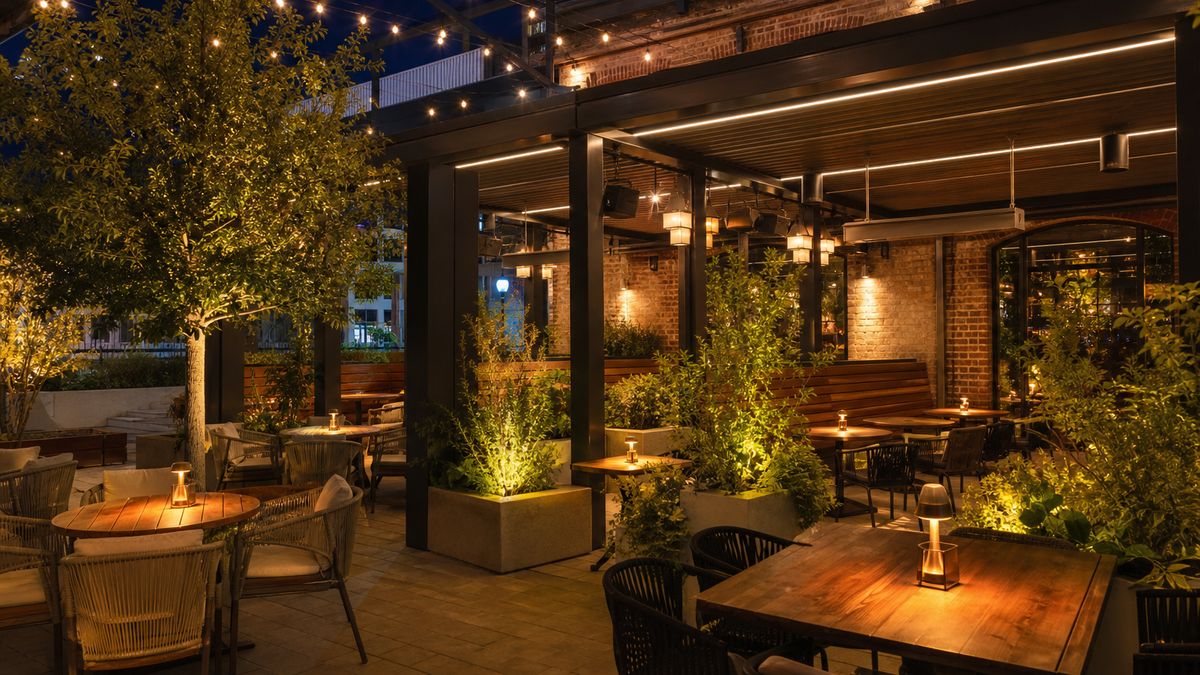
Restaurants and bars across West 7th, Near Southside, Sundance Square, and the Stockyards rely on patios and rooftops for business. Warm, dimmable LED, festoon and linear lighting, heaters integrated with lighting design, and careful glare control create spaces people want to stay in. Outdoor-rated fixtures and weatherproof controls keep these spaces reliable through Texas weather.
Built for North Texas weather
Exterior lighting in Fort Worth faces extreme conditions, so product and installation choices matter:
| Challenge | What to specify |
|---|---|
| Summer heat | Drivers rated for high ambient temperatures, fixtures with good heat sinking |
| Storms and rain | Proper IP ratings, sealed connections and junction boxes |
| Hail and debris | Durable housings and impact-resistant lenses |
| Lightning and surges | Surge protection devices in fixtures and panels |
| Wind | Poles, bases and mounts rated for local wind loads |
| UV exposure | UV-stable lenses, finishes and cable jackets |
Controls that cut energy use
Outdoor lights run for many hours every night, so controls offer big savings:
- Photocells turn lights on at dusk and off at dawn automatically.
- Astronomical time clocks follow sunrise and sunset through the seasons.
- Scheduled dimming lowers light levels late at night when lots are nearly empty.
- Motion sensors brighten areas when people or vehicles arrive.
- Networked controls let multi-site owners monitor and manage exterior lighting remotely.
Commercial energy codes also require exterior lighting controls in many situations, so modern control strategies help meet code while saving energy.
Choosing the right color temperature outdoors
Color temperature changes how an outdoor space feels. Around 3000K, light is warm and inviting, a good fit for restaurants, hotels, historic districts, and properties near homes. Around 4000K, light is neutral and crisp, a common choice for parking lots, retail centers, and offices where visibility is the priority. Cooler options can suit industrial yards and truck courts. Keeping one consistent color temperature across a property looks intentional and professional, while mixing old orange sodium lights with new white LEDs looks patchy. Many owners upgrade the whole site at once for that reason.
Security lighting and camera performance
Security cameras are only as good as the light they have to work with. Dark areas, harsh glare, and strong shadows all hide details that matter after an incident. Uniform LED lighting with good color rendering helps cameras capture faces, clothing colors, and license plates. When planning an upgrade, it helps to walk the property with your security provider and place fixtures so camera views are evenly lit, entrances and exits are covered, and lights do not shine directly into lenses. Motion-activated brightening can also draw attention to activity in quiet areas late at night.
Owners with multiple properties
Property managers and owners with several sites across Fort Worth and DFW benefit from a consistent approach: the same fixture families, color temperatures, and control strategies at every location. Standardizing makes maintenance simpler, spare parts easier to stock, and brand presentation consistent. Networked exterior controls can let a central team monitor outages and adjust schedules across sites without driving to each one. We can plan portfolio-wide upgrades in phases so budgets and schedules stay manageable.
Being a good neighbor
Outdoor lighting should light your property, not your neighbors' bedrooms or the night sky. Full-cutoff fixtures, house-side shields, correct aiming, and appropriate light levels reduce light trespass and glare. Warmer color temperatures in residential-adjacent areas feel more comfortable. These details matter in mixed-use neighborhoods where businesses and homes sit side by side, and they help properties comply with any local lighting requirements.
Planning an outdoor lighting upgrade
- Night survey. We walk the property after dark to see dark spots, glare, outages, and problem areas.
- Photometric design. Fixture selection and placement modeled to deliver the right light levels.
- Infrastructure check. Poles, bases, wiring, and controls inspected for reuse or replacement.
- Proposal. A clear scope and project-specific price.
- Installation. Scheduled to keep lots and entrances usable, with lifts and bucket trucks as needed.
- Aiming and commissioning. Fixtures aimed at night, controls programmed, and light levels verified.
- Maintenance. Periodic checks keep everything working, especially after storms.
Common outdoor lighting mistakes
- Replacing fixtures one-for-one without a layout. LED optics are different from old HID lamps. A photometric layout often shows you can improve coverage and sometimes use fewer fixtures.
- Choosing the brightest option. Over-lighting wastes energy, creates glare, and can make areas outside the light feel darker. The goal is uniform, comfortable light.
- Ignoring surge protection. North Texas lightning can wipe out drivers across a lot in one storm.
- Skipping controls. Lights burning at full output all night in an empty lot waste money for years.
- Overlooking pole condition. Rusted bases or damaged poles should be addressed before new fixtures go up.
- Mixed color temperatures. Partial upgrades leave properties looking patchy.
Timeline for an outdoor upgrade
Most commercial exterior projects move quickly once the design is approved. A night survey and photometric layout come first, followed by a proposal. After product arrives, installation on a typical parking lot or building perimeter often takes days rather than weeks, depending on the number of poles, access, and any wiring repairs. Larger campuses, multi-site portfolios, and facade projects are scheduled in phases. Work can be arranged around business hours so lots and entrances stay usable.
Outdoor lighting for different property types
Retail centers
Bright, uniform parking lots, well-lit storefronts, and visible signage bring customers in and keep them safe after dark.
Office buildings and campuses
Entrances, walkways, garages, and facade accents that support safety and a professional image.
Hotels
Facade lighting, porte-cochères, pool decks, and parking that create a welcoming arrival experience.
Warehouses and distribution centers
Truck courts, loading docks, and perimeter lighting for safe night operations across the Alliance and I-35W corridors.
Apartments and mixed-use
Parking, walkways, amenity areas, and building exteriors that help residents feel safe and at home.
Churches and schools
Parking lots, entrances, and grounds lit for evening services, events, and activities.
Maintenance after storms and seasons
After a major storm, it pays to walk the property at night. Look for dark poles, flickering fixtures, damaged lenses, leaning poles, and water in fixtures or junction boxes. Surge damage from lightning can knock out drivers without visible damage. Regular inspections, clean lenses, and quick repairs keep lots safe and prevent small issues from becoming larger failures. A maintenance plan takes this off your list entirely.
Energy savings and incentives
Replacing HID exterior lighting with LED commonly reduces energy use substantially, and adding dimming and scheduling increases savings further. Long LED life also cuts maintenance costs, which are high for exterior fixtures that require lifts. Many commercial LED projects in the Oncor service area may qualify for energy-efficiency incentive programs, depending on the project and current program availability, and DLC-listed fixtures are typically required.
Why choose Fort Worth LED Lights
We handle outdoor lighting from design to service: night surveys, photometric layouts, commercial-grade outdoor fixtures, installation with the right access equipment, controls programming, and maintenance. Our team brings 15+ years as an authorized architectural lighting dealer and project coordinator, and our licensed installation partner has completed over 200 major sports and commercial projects across the US and Canada. For interiors too, see our commercial LED lighting services, and for smart buildings, our guide to PoE lighting.
Frequently Asked Questions
What is commercial outdoor LED lighting?
How much does outdoor LED lighting cost in Fort Worth?
Can existing parking lot poles be reused?
How do I make outdoor lighting last in Texas heat and storms?
Do outdoor lights need controls?
How can I reduce glare and light trespass?
Is LED better than metal halide for parking lots?
Can you light a building facade?
What areas do you serve?
Let's light up your property
Request a consultation and we will follow up to schedule a site review.
Related
Our DFW lighting network: Dallas commercial LED lighting, Arlington LED lighting, Irving LED lighting, Plano LED lighting, statewide Texas LED lighting, wholesale LED components, fiber optic starlight ceilings, modular building solutions, and Dallas modular structures.