PoE Lighting Systems in Fort Worth, TX: A Practical Guide to Power over Ethernet Lighting
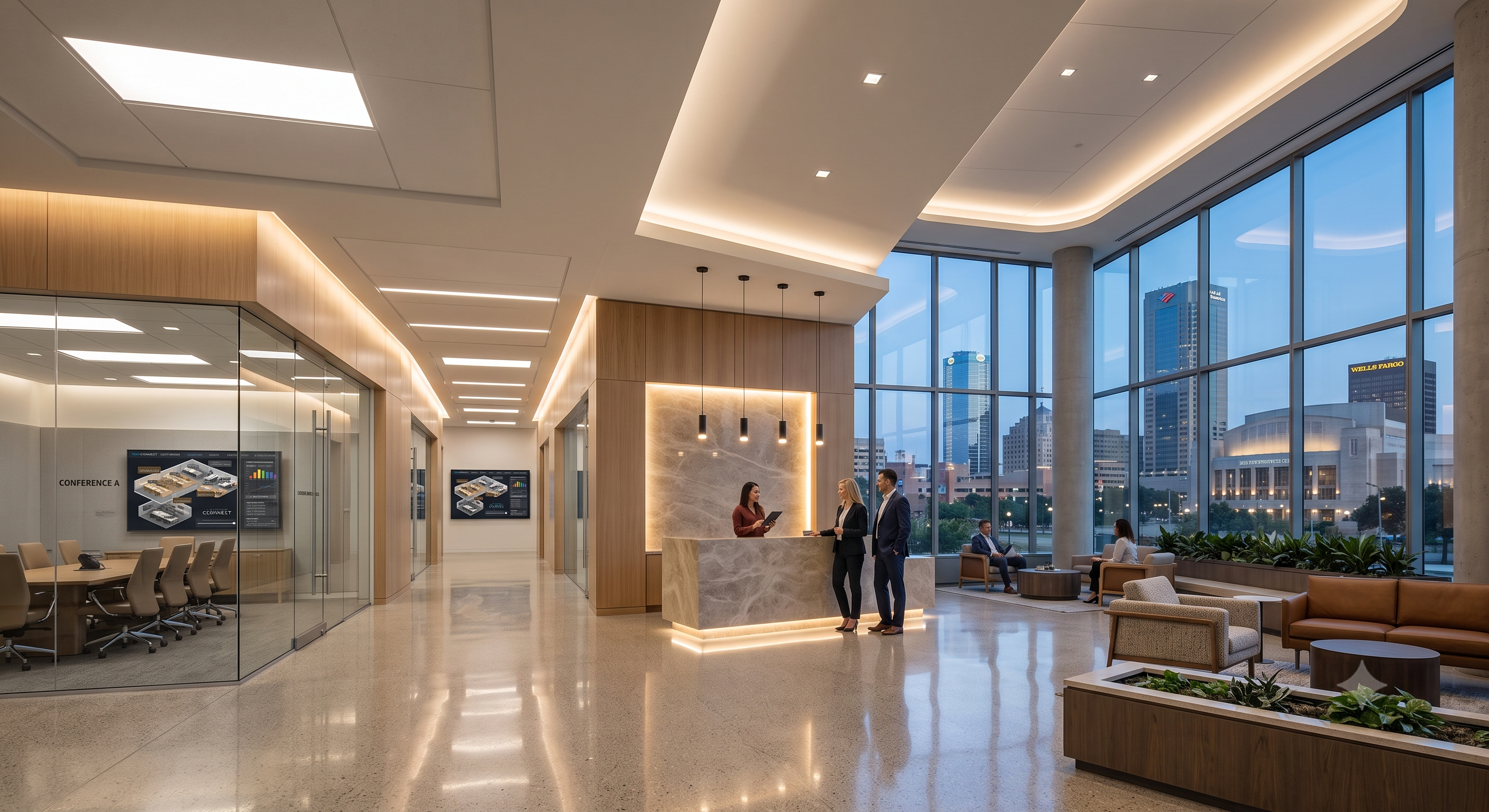
PoE lighting systems power and control LED fixtures through standard network cable instead of traditional line-voltage wiring. For Fort Worth offices, schools, healthcare spaces, and new commercial buildings, Power over Ethernet lighting turns every fixture into a connected device that can be dimmed, scheduled, monitored, and integrated with other building systems from one network.
PoE is not the right answer for every building, but when it fits, it can simplify controls and open the door to smart-building features. This guide explains how PoE lighting works, where it makes sense, how it compares with conventional lighting and controls, and what to plan for before choosing it.
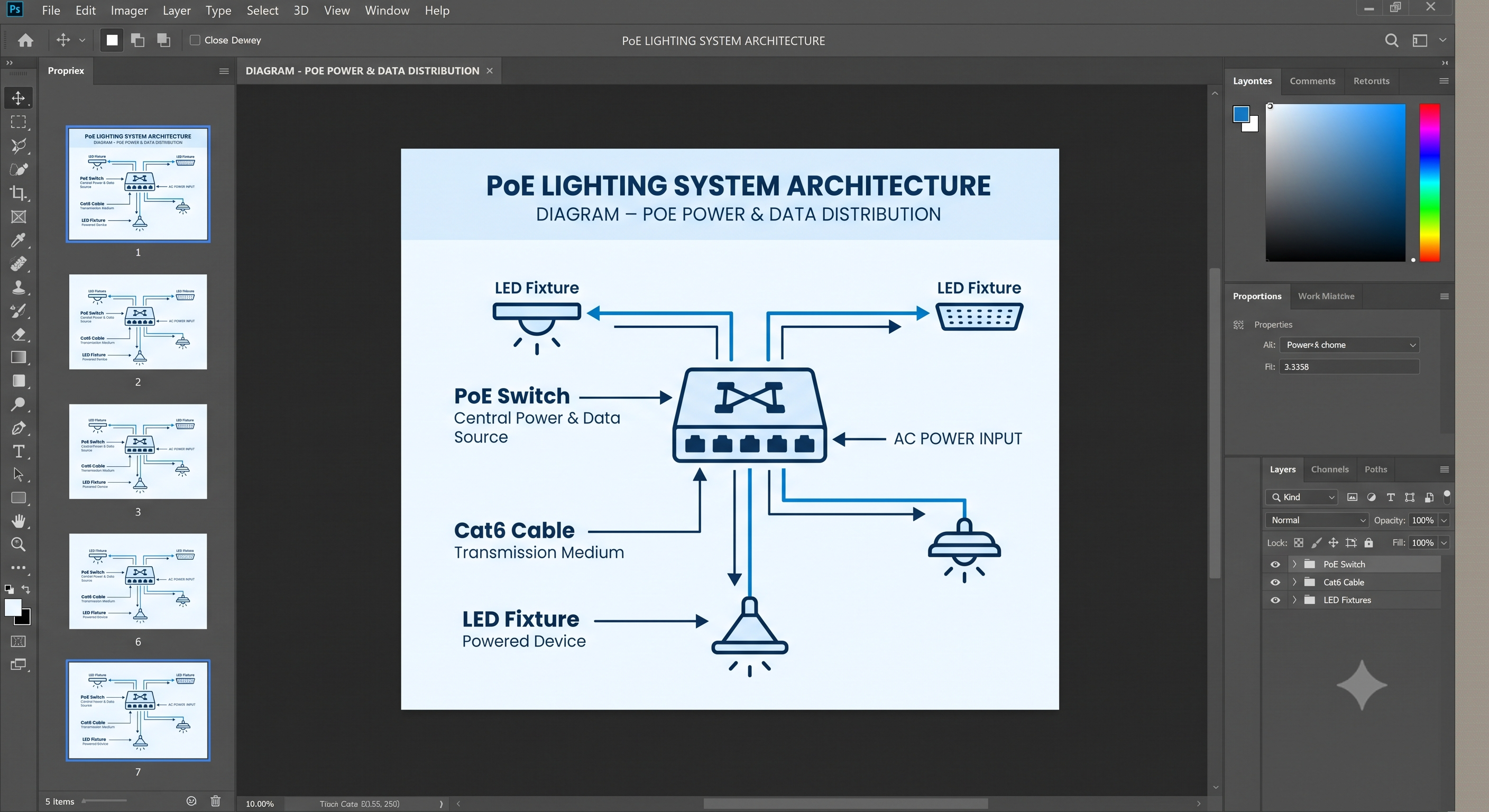
PoE lighting sends low-voltage DC power and data to LED fixtures over Ethernet cable from network switches.
- How it works: PoE switches power fixtures and sensors through Cat6-class cabling
- Standards: IEEE 802.3bt (often called PoE++) supports higher-power fixtures
- Strengths: fixture-level control, rich sensor data, easy reconfiguration, and IT integration
- Best fits: offices, schools, healthcare, labs, and new or gutted interiors
- Considerations: network design, switch capacity, cable run limits, cybersecurity, and code requirements
- Pricing: quoted per project after reviewing plans or the existing building
How PoE lighting works
In a conventional system, fixtures are fed by line-voltage electrical circuits, and controls are added on top with separate wiring or wireless devices. In a PoE system, each fixture connects to a PoE network switch with a single Ethernet cable. The switch sends DC power and data over that cable, so every fixture is individually addressable on the network.
Key components include:
- PoE switches that supply power and data to each port
- PoE LED fixtures and drivers designed to run on network power
- Sensors for occupancy, daylight, and sometimes temperature or air quality
- Wall stations and apps for local control
- Management software for scheduling, scenes, monitoring, and integration
Where PoE lighting makes sense
- Offices and corporate interiors where flexible layouts and data on space use matter
- Schools and universities with many rooms and schedules to manage
- Healthcare spaces that benefit from tunable light and detailed control
- Labs and technology spaces already built around strong network infrastructure
- New construction and full renovations, where cabling can be planned from scratch
PoE is usually less practical for very high-output applications, large outdoor areas, or buildings where existing line-voltage wiring and controls can simply be upgraded. For those, conventional LED with modern controls is often the better value.
PoE vs conventional LED lighting
| Feature | PoE lighting | Conventional LED + controls |
|---|---|---|
| Power delivery | DC over Ethernet from network switches | Line-voltage circuits |
| Control granularity | Every fixture addressable | Zones, or fixture-level with networked controls |
| Data and analytics | Built in, often detailed | Depends on control system |
| Reconfiguration | Change in software | May require rewiring or reprogramming |
| High-output and exterior use | Limited | Well suited |
| Dependency | Relies on network switches and IT | Independent of IT network |
| Best fit | Smart offices, schools, healthcare, new builds | Most retrofits, industrial, exterior |
Benefits of PoE lighting
Fixture-level control
Every light can be dimmed, grouped, and scheduled individually, so spaces can be tuned for the way people actually use them.
Data about how spaces are used
Sensors in the lighting grid can show which rooms and areas are occupied, helping facility teams plan space and reduce waste.
Easy changes
When a floor is reconfigured, lighting groups can be changed in software rather than rewired.
Integration
PoE systems can integrate with building management, HVAC, and room booking systems, supporting smart-building strategies.
Energy efficiency
Efficient LED fixtures combined with occupancy and daylight control keep lighting energy low.
Is PoE right for your building?
We will review your plans or existing space and recommend PoE, conventional LED, or a hybrid approach, with a project-specific proposal.
What to plan for before choosing PoE
- Network design: switch locations, port counts, and power budgets must be sized for the lighting load.
- Cable run lengths: Ethernet has distance limits, which affects where switches go.
- Heat in cable bundles: higher-power PoE can warm large cable bundles, which designers must account for.
- Backup power: if switches lose power, lights go out, so emergency lighting and backup strategies need careful design.
- Cybersecurity: lighting on the network must be segmented and managed like any other connected device.
- IT coordination: facilities and IT teams need clear ownership of the system.
- Codes and licensing: energy code, life-safety requirements, and local licensing rules still apply, so work should be planned with qualified contractors.
Understanding PoE power levels
PoE has evolved through several IEEE standards, each supporting more power per port. Early PoE was designed for phones and cameras. IEEE 802.3at (PoE+) raised the power available, and IEEE 802.3bt (PoE++) raised it further with Type 3 and Type 4 classes, making it practical to run commercial LED fixtures, sensors, and even some higher-output luminaires from network switches. Lighting designers match each fixture's power draw to the switch port class and plan each switch's total power budget so that every fixture gets what it needs at full output.
Because power travels over the cable, run length and cable quality matter. Designers place switches so that runs stay within Ethernet distance limits and specify cable suited to the power levels involved.
Sensors and smart features
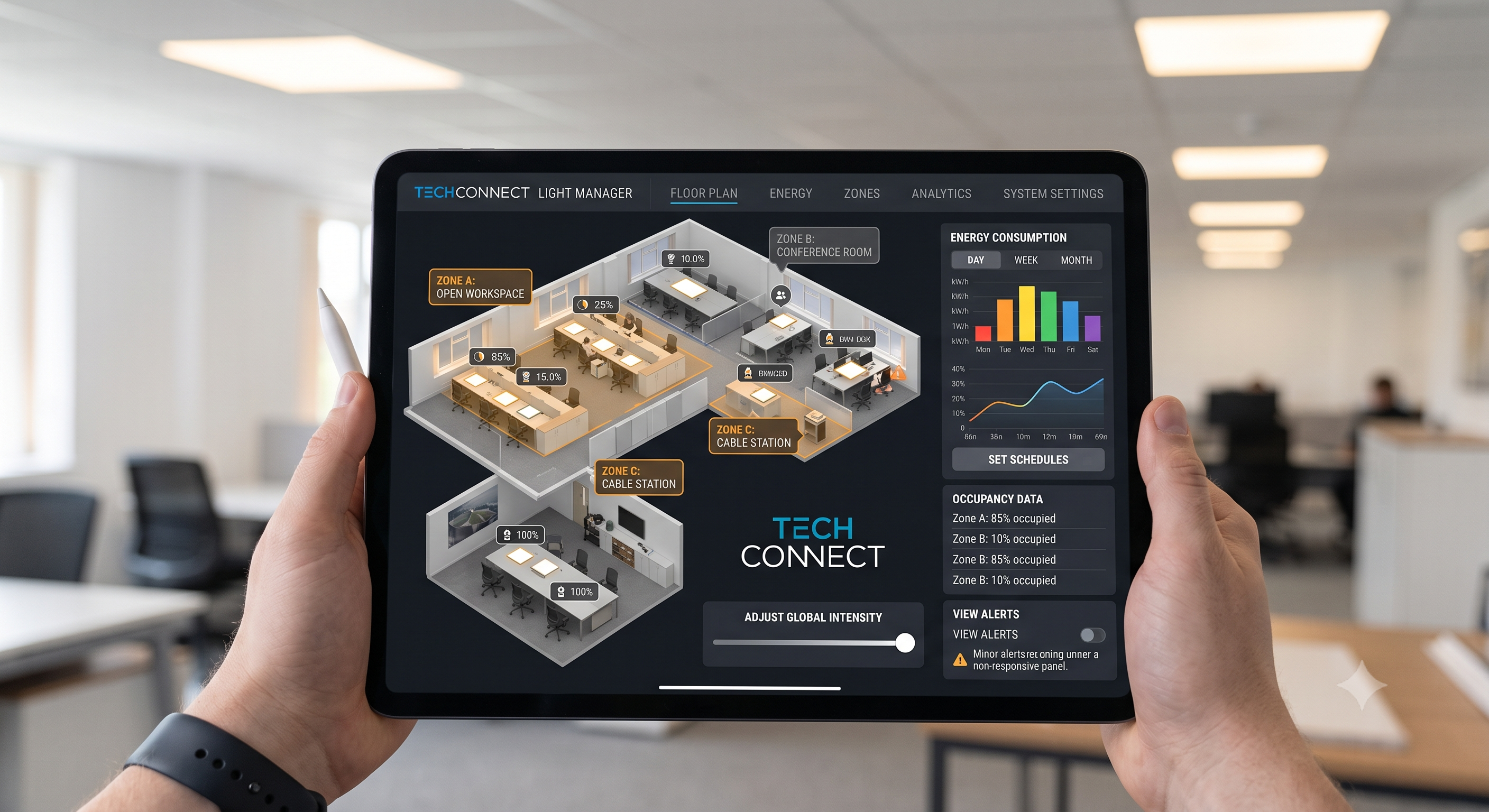
One of PoE lighting's strongest benefits is the sensor network it creates. With a sensor in many fixtures, a building gains a detailed picture of how it is used:
- Occupancy data that shows which rooms and desks are actually used
- Daylight measurements that drive automatic dimming
- Environmental readings, where supported, such as temperature or humidity
- Energy reporting by floor, zone, or fixture
Facility managers use this information to right-size spaces, adjust cleaning and HVAC schedules, and plan future moves, turning the lighting system into a building intelligence platform.
Tunable white and human-centric lighting
Many PoE fixtures support tunable white, which lets color temperature shift through the day, cooler in the morning and warmer in the evening. In offices, schools, and healthcare settings, tunable lighting can support comfort and help spaces feel more natural. With PoE, these changes can be scheduled for every fixture automatically, or adjusted by room for different tasks.
Retrofitting existing buildings with PoE
PoE works best when cabling can be planned from scratch, but it can also suit major renovations where ceilings are open and floors are being rebuilt. In occupied buildings where ceilings stay closed, running new network cable to every fixture can be disruptive. In those cases, conventional LED fixtures with wireless or networked controls often deliver similar control features with far less construction. A good lighting partner will tell you honestly which approach fits your building.
Maintenance and long-term support
PoE systems shift some maintenance from electrical to IT. Switch firmware, software updates, network monitoring, and security patches all become part of keeping the lighting healthy. Fixtures themselves are low-maintenance LEDs. Before choosing PoE, decide who owns the system day to day, how updates will be handled, and what support agreement covers the software. Clear ownership avoids the common problem of a smart system that nobody maintains.
Choosing PoE fixtures and platforms
PoE lighting platforms vary in fixture range, sensors, software, and how open they are to integration with other systems. When comparing options, look at:
- Fixture range: troffers, linear, downlights, and decorative options for every space type
- Sensor options: occupancy, daylight, and any environmental sensing you need
- Software: ease of use for facility staff, reporting, and remote access
- Integration: open protocols or APIs for building management and other systems
- Support: warranty terms, firmware update policy, and local support
We help owners compare platforms against their goals and IT standards, rather than steering every project to one product.
Emergency lighting considerations
Emergency and egress lighting is a critical part of any lighting design. With PoE, designers must plan how required emergency fixtures stay powered during an outage, for example by using backup power for the network switches that feed them or by providing separate emergency fixtures. These requirements should be addressed early in design and reviewed against applicable codes so the system meets life-safety obligations from day one.
Hybrid approaches: the best of both
Many buildings benefit from a hybrid design: PoE lighting in offices, conference rooms, and classrooms where fine control and data matter, and conventional LED with networked controls in warehouses, parking structures, exteriors, and high-output areas. A hybrid approach keeps each space on the technology that suits it and avoids forcing PoE into places it does not fit.
Questions to ask before you commit
- Which spaces truly benefit from fixture-level control and data?
- Who will own and maintain the system: facilities, IT, or both?
- How will emergency lighting be powered during outages?
- Do the switches have enough power budget and ports, with room to grow?
- How will the lighting network be secured and segmented?
- Does the platform integrate with our building management or booking systems?
- Would conventional LED with networked controls deliver the same goals more simply?
Clear answers to these questions lead to a system that works well for years rather than a clever installation that is hard to live with. We walk through them with every client considering PoE, and we are just as happy to recommend conventional LED when it is the better fit.
How a PoE project runs
- Discovery. Goals, space types, IT standards, and existing infrastructure.
- Design. Fixture layout, switch locations, power budgets, sensors, and controls.
- Coordination. With IT, electrical, and general contractors on pathways, power, and schedules.
- Installation. Cabling, switches, fixtures, sensors, and wall stations.
- Commissioning. Addressing, grouping, scenes, schedules, and sensor tuning.
- Training and support. Facility and IT teams learn to manage the system.
PoE in the Fort Worth market
Fort Worth's growth has brought new offices, medical facilities, schools, and mixed-use developments, especially around Downtown, Near Southside, Clearfork, and the Alliance corridor. Owners of these buildings increasingly want lighting that supports hybrid work, flexible layouts, and energy goals. PoE is one tool for that. For many existing buildings, a conventional commercial LED retrofit with modern controls delivers similar comfort and savings with less disruption.
Why work with a lighting specialist
PoE projects sit at the intersection of lighting design and IT. A lighting specialist makes sure light levels, glare, color, and controls are right for each space, while coordinating with IT and electrical teams on the network side. Our team brings 15+ years as an authorized architectural lighting dealer and project coordinator, with experience on complex control systems across commercial and architectural projects.
Frequently Asked Questions
What is PoE lighting?
Is PoE lighting better than conventional LED lighting?
What PoE standard is used for lighting?
What happens to PoE lights if the network goes down?
Can PoE lighting be used in warehouses?
Does PoE lighting need special cabling?
How much does a PoE lighting system cost?
Is PoE lighting secure?
Plan a smarter lighting system
Request a consultation and we will help you choose the right approach for your building.
Related
Our DFW lighting network: Dallas commercial LED lighting, Arlington LED lighting, Irving LED lighting, Plano LED lighting, statewide Texas LED lighting, wholesale LED components, fiber optic starlight ceilings, 360° fiber optic lighting, modular building solutions, and Dallas modular structures.