LED Signs in Fort Worth: The Business Guide to Sign Lighting, Channel Letters & Digital Displays
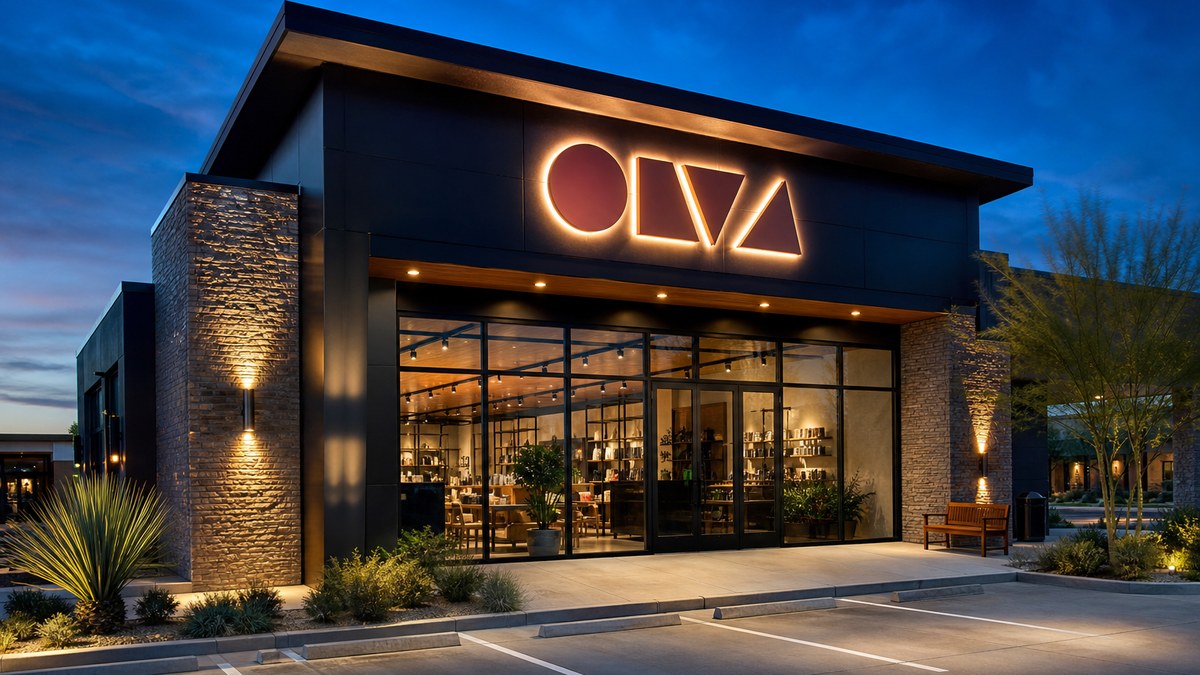
LED signs in Fort Worth work around the clock for the businesses behind them. A well-lit sign tells drivers on I-30, I-35W and Loop 820 exactly where to turn, helps first-time customers find your door after dark, and keeps your brand visible long after the sun goes down over Downtown, the Stockyards or the Alliance corridor. A dim, flickering or half-lit sign sends the opposite message, and many business owners do not notice until a customer mentions it.
This guide explains how LED sign lighting works for Fort Worth businesses: the main sign types, how to upgrade older neon and fluorescent signs to LED, when a digital message center makes sense, what the City of Fort Worth permit process involves, how to make signs survive North Texas weather, and how to keep them bright for years. It is written for owners, property managers, facility teams and marketing leads who want a clear picture before they call a sign or lighting company.
Whether you run a restaurant on West 7th, a retail center in Clearfork, a dealership on the south side, a church in Keller or a warehouse off I-35W, the same principles apply. Your sign should be readable from the distance and speed at which people approach it, evenly lit with no dark letters or hot spots, built for heat, storms and UV, controlled so it is bright when it needs to be, and installed by licensed professionals with the right permits. The sections below show how to get each of those right.
LED signs for Fort Worth businesses fall into a few main groups:
- Channel letters: individual lit letters on a building, front-lit, back-lit (halo) or both
- Cabinet and monument signs: lightboxes and ground signs lit from inside with LED modules
- Pylon signs: tall freestanding signs for highway and multi-tenant visibility
- Digital message centers: programmable LED displays for changing messages
- External sign lighting: LED floodlights or wall washers aimed at non-lit signs
- Upgrades: retrofitting neon and fluorescent signs with LED modules and new power supplies
- Rules: Fort Worth requires sign permits for attached, detached and electronic changeable copy signs
- Pricing: quoted per project after a site review
Why LED sign lighting matters for Fort Worth businesses
Your sign is often the first part of your business a customer sees, and at night it may be the only part they see. Good LED sign lighting supports the business in several ways:
- Visibility: drivers need to read your name early enough to slow down and turn safely, especially on fast frontage roads and arterials.
- Wayfinding: lit signs help customers find entrances in large centers, office parks and campuses.
- Brand impression: a crisp, evenly lit sign signals a business that pays attention to detail.
- Extended hours: restaurants, hotels, gyms, clinics and retailers that open early or close late need signs that work in the dark.
- Operating cost: signs often run for many hours each night, so efficient LED lighting and controls matter.
- Maintenance: LED modules last far longer than fluorescent tubes and avoid the fragile glass and high-voltage transformers of neon.
For a broader look at lighting your whole property, including parking lots, wall packs and facades, see our Fort Worth outdoor LED lighting guide.
The main types of LED business signs
Channel letters
Channel letters are individual three-dimensional letters and logos mounted on a building facade or raceway. They are the most common storefront sign in shopping centers and on standalone buildings. LED modules inside each letter provide the light. There are three main styles:
- Front-lit: light shines through a translucent acrylic face. This gives the strongest readability at a distance.
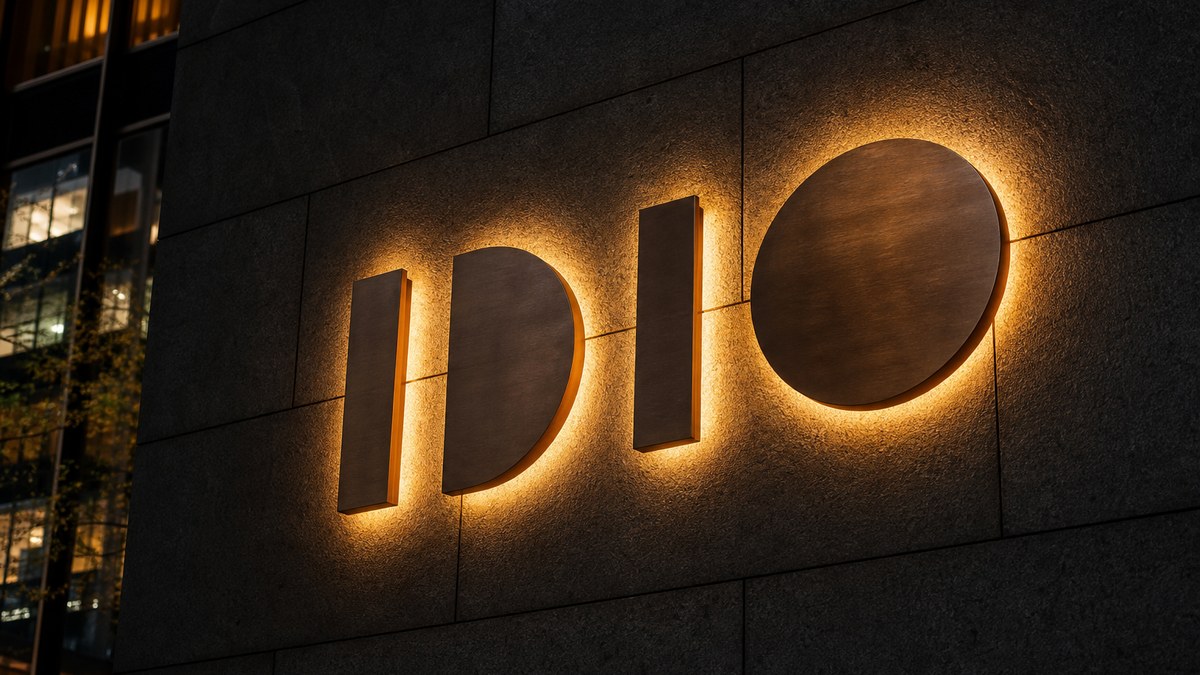
- Back-lit or halo-lit: letters have solid faces and light washes the wall behind them, creating a glowing outline. This style looks refined and works well for hotels, offices, salons and upscale retail.
- Combination: front-lit faces with a halo behind them for extra depth and impact.
Letters can be mounted directly to the wall with remote power supplies inside the building, or mounted on a raceway or wireway that holds the wiring and power supplies and reduces penetrations in the facade. Many shopping centers specify which method tenants must use, so check your lease and landlord sign criteria early.
Cabinet signs and lightboxes
Cabinet signs are enclosed boxes with a translucent face, lit from inside. Older cabinets typically use fluorescent tubes, which dim, flicker and leave dark bands as tubes fail. LED retrofit modules or LED light engines spread light more evenly across the face, use less energy and need far less maintenance. Many existing cabinets can be retrofitted with LED rather than replaced, if the cabinet structure is sound.
Monument signs
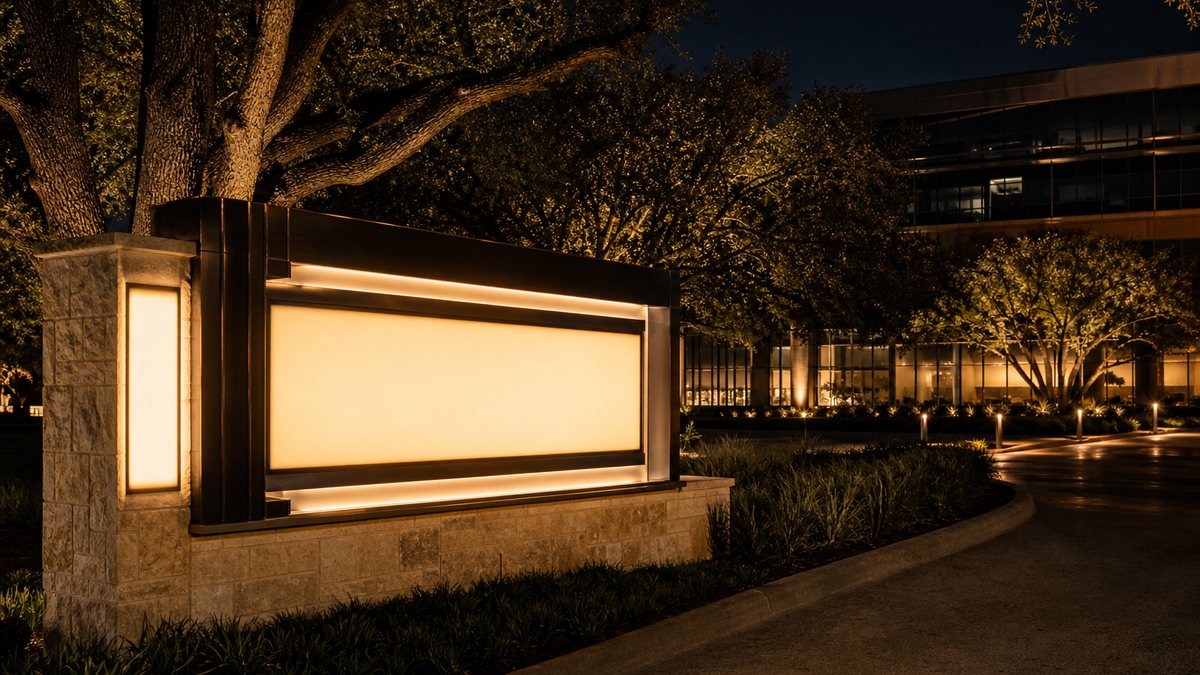
Monument signs are low ground signs near the entrance to a property, common at office parks, churches, schools, apartment communities, medical buildings and multi-tenant centers. They can include internally lit tenant panels, routed aluminum faces with push-through acrylic letters, halo-lit dimensional letters, or external ground-mounted LED lighting. Because they sit near eye level, even light and glare control matter more than raw brightness.
Pylon signs
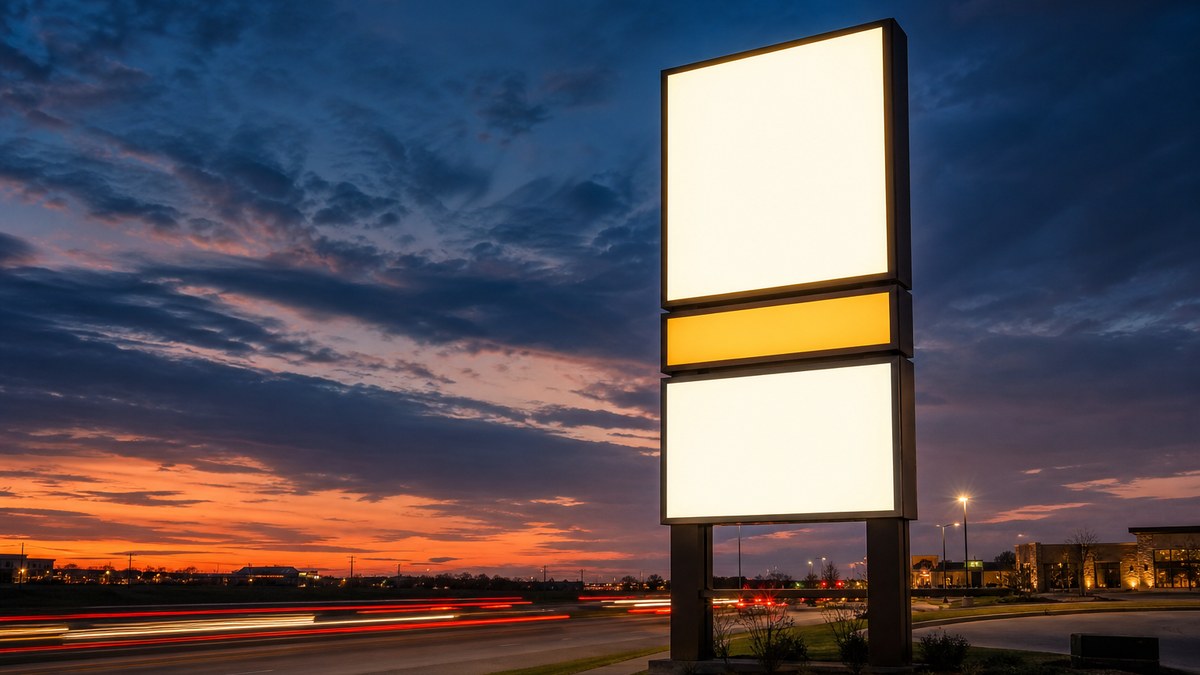
Pylon signs are tall freestanding signs designed to be seen from highways and major roads. They are common for fuel stations, restaurants, hotels, dealerships and retail centers along Fort Worth's interstates and loop. Height brings structural, engineering and permit requirements, and the lighting must be bright and even enough to read at highway speeds without overwhelming the surroundings.
Digital message centers
Digital message centers, also called electronic message centers (EMCs) or LED displays, let you change messages from a computer or phone. Churches use them for service times and events, schools for announcements, restaurants for specials, and retailers for promotions. They are covered in more detail below because they come with additional rules and design choices.
Externally lit signs
Some signs are not lit from inside at all. Painted wall signs, dimensional letters, carved stone or historic signs are lit by LED floodlights, gooseneck fixtures or linear wall washers aimed at the sign. This approach suits historic buildings and brands that want a classic look. The key is careful aiming and shielding so the light lands on the sign, not in drivers' eyes or neighbors' windows.
Sign types at a glance
| Sign type | Best for | Lighting approach |
|---|---|---|
| Front-lit channel letters | Storefronts, restaurants, retail centers | LED modules behind translucent faces |
| Halo-lit channel letters | Hotels, offices, salons, upscale retail | LED modules lighting the wall behind solid letters |
| Cabinet / lightbox | Tenant panels, older storefronts, pylons | LED light engines or retrofit modules |
| Monument sign | Office parks, churches, schools, apartments | Internal LED, push-through letters or ground lighting |
| Pylon sign | Highway-facing businesses and centers | Internal LED cabinets, sometimes with a message center |
| Digital message center | Churches, schools, restaurants, retail | Full-color or monochrome LED display with controls |
| Externally lit sign | Historic buildings, painted or dimensional signs | Aimed LED floodlights, goosenecks or wall washers |
Upgrading neon and fluorescent signs to LED
Many Fort Worth businesses still have signs lit by neon tubes or fluorescent lamps. They often still work, but they come with recurring problems: dim or dark sections, flicker, ballast and transformer failures, broken glass after storms, and service calls that require a bucket truck. Upgrading to LED solves most of these.
- Even light: modern LED modules with good optics spread light uniformly across letter faces and cabinets.
- Longer life: LED modules and quality power supplies need far fewer service calls than fluorescent lamps or neon.
- Lower energy use: LED typically uses substantially less power than the lamps it replaces.
- Cold and heat performance: LED starts instantly in any weather and, with the right power supplies, handles Texas heat.
- Low-voltage wiring: most LED sign systems run on low-voltage DC from a power supply, avoiding the high-voltage transformers used by neon.
A retrofit usually keeps the existing letter cans or cabinet, removes the old lamps, ballasts or transformers, installs LED modules laid out for even coverage, adds new power supplies, and reconnects the circuit. The sign is then checked for water intrusion, damaged faces and loose connections, which are often found during the upgrade. If faces are yellowed or cracked, this is a good time to replace them so the new light looks its best.
Neon still has a place for certain historic or artistic signs. LED neon-style flex products can recreate the look with lower maintenance, but for landmark signs it is worth weighing authenticity against upkeep before deciding.
Digital message centers: what to know first
An electronic message center can be a powerful tool, but it is a bigger decision than a static sign. Before you commit, consider these factors:
- Viewing distance and speed: the distance and speed at which people see the sign determine the display size, pixel pitch (the spacing between LEDs) and how much text fits on each message.
- Full color or monochrome: full-color displays show photos and graphics; single-color displays handle text and simple graphics.
- Brightness control: automatic dimming with a light sensor keeps the display readable in daylight and comfortable at night. Many cities regulate nighttime brightness.
- Message rules: cities often regulate how long a message must stay on screen, how it transitions, and whether animation is allowed. Plan content with those rules in mind.
- Software and connectivity: cloud-based or local software, scheduling, user permissions and remote monitoring all affect day-to-day use.
- Content effort: someone has to keep messages fresh. A display showing the same old promotion loses impact quickly.
The City of Fort Worth treats electronic changeable copy signs as their own permit category with a dedicated ordinance section, so check those rules before you design the sign. For larger indoor or outdoor screens, such as lobby displays, sports and event venues or building-mounted video, see our LED video wall services.
Make your business easy to find after dark
Tell us about your sign, building and goals. We will review the site and prepare a project-specific proposal.
Fort Worth sign permits and rules
Signs are regulated by the City of Fort Worth, and the rules are enforced by the Zoning section of Development Services. According to the city's sign permit information, permits are required for attached signs, detached (freestanding) signs, electronic changeable copy signs and certain other sign types. Applications are submitted online through the city's permitting system.
- Attached signs (such as channel letters and wall cabinets) generally need building elevations and a sign exhibit with measurements.
- Detached signs (monuments and pylons) generally need a site plan showing dimensions to property lines, easements, the plat and a sign exhibit. The city notes that engineering is required if any part of a detached sign is above 25 feet.
- Electronic changeable copy signs have their own ordinance section with additional requirements.
- Inspections are scheduled by the sign contractor as part of the permit.
Zoning district, special districts, overlays and historic designations can add requirements, and shopping centers usually have their own sign criteria on top of city rules. Suburbs such as Southlake, Keller, Grapevine and Arlington have their own sign codes too. Electrical sign work in Texas is also licensed: the Texas Department of Licensing and Regulation (TDLR) issues sign electrician licenses, and electric signs should be listed for their use. A qualified sign partner handles permits, engineering where needed and licensed electrical work as part of the project.
Rules change and every property is different. Before ordering a sign, confirm current requirements with the City of Fort Worth (or your suburb) and your landlord's sign criteria. It is much easier to design around a rule than to rebuild a sign that does not comply.
Designing a sign people can actually read
A bright sign is not automatically a readable one. These design choices make the biggest difference:
- Letter height for distance: letters must be large enough for the distance at which customers need to read them. Highway-facing signs need much larger copy than a storefront facing a parking lot.
- Contrast: strong contrast between letters and background matters more than color choice. White or light faces on dark backgrounds read well at night.
- Simple copy: drivers have only a few seconds. A name and one key word or logo beat a long list of services.
- Even illumination: modules laid out properly avoid hot spots and dark corners, especially in letters with thin strokes or tight curves.
- Color accuracy: brand colors can shift when backlit. Test translucent vinyls and acrylics with the chosen LED color before full production.
- Brightness balance: a sign that is too bright for its surroundings causes glare and can wash out letter shapes. Dimming helps tune it.
Built for North Texas weather
Signs in Fort Worth face extreme summer heat, strong sun, hail, high winds, heavy rain and lightning. Product and installation choices determine how long they last:
| Challenge | What to specify |
|---|---|
| Summer heat | LED modules and power supplies rated for high temperatures, with ventilation where needed |
| Rain and humidity | Weep holes, sealed connections, outdoor-rated wiring and enclosures |
| Hail and debris | Durable faces and housings, protected displays |
| Lightning and surges | Surge protection for power supplies and digital displays |
| Wind | Engineered structures, footings and mounts for detached and tall signs |
| UV exposure | UV-resistant faces, vinyls and finishes to prevent fading and yellowing |
Power supplies are the most common failure point in LED signs. Placing them where they can shed heat, protecting them from water, and using quality, properly sized units goes a long way toward a sign that stays fully lit.
Controls that save energy
Business signs often run from dusk until late at night, and some run all night. Simple controls reduce energy use and extend LED life:
- Photocells turn signs on at dusk and off at dawn.
- Astronomical time clocks follow sunrise and sunset through the year and can switch signs off after closing.
- Automatic dimming for digital displays adjusts brightness to ambient light.
- Remote monitoring for message centers alerts you to outages or communication problems.
Commercial energy codes may also require controls for exterior and sign lighting in some situations. Building these into the design from the start is easier than adding them later.
Signs as part of the whole building
The best results come when sign lighting is planned with the rest of the exterior. A brilliantly lit sign on a dark building, or a sign competing with harsh wall packs, never looks quite right. Coordinating color temperature, brightness and placement across signs, facade lighting, entrances and parking areas gives the property a polished, consistent look. Our architectural LED lighting guide explains facade techniques such as wall washing, grazing and outlining that pair well with lit signage, and our architectural lighting services cover design and programming. For a full transformation of a property's lighting, from signage and facade to interiors, our Luminance design-build service brings everything into one plan.
LED signs by business type
Restaurants and bars
In busy districts such as West 7th, Near Southside, Sundance Square and the Stockyards, signs compete with neighbors for attention. Halo-lit letters, blade signs and warm externally lit signs suit the character of many of these areas, while patios and rooftops benefit from coordinated lighting.
Retail centers
Multi-tenant pylons and monuments help customers find each tenant, while consistent channel letters across storefronts keep a center looking cared for. Landlords often standardize sign criteria for this reason.
Hotels
Hotels need signs that read from the highway and look premium up close, plus lit arrival areas and facades. Our guide to commercial LED lighting services covers interiors and common areas.
Churches and schools
Monument signs with digital message centers are popular for service times, events and announcements. Brightness control and simple, readable messages are essential near homes.
Offices, medical and professional buildings
Halo-lit letters, lit monuments and clear tenant directories support a professional image and help visitors find the right entrance.
Warehouses and logistics
Distribution centers in the Alliance and I-35W corridors need clear building identification, dock numbers and wayfinding that drivers can read at night, along with well-lit truck courts.
Maintaining LED signs
LED signs need much less attention than neon or fluorescent, but they are not maintenance-free. A simple routine keeps them looking their best:
- Check at night. Drive by after dark regularly. Look for dark letters, dim sections, flicker or color differences.
- Inspect after storms. Look for cracked faces, loose letters, water inside cabinets, leaning structures and surge damage.
- Clean faces. Dust and grime dull a sign. Clean faces with products safe for acrylic and polycarbonate.
- Keep weep holes clear. Blocked drainage traps water inside letters and cabinets.
- Watch power supplies. A section that goes dark at once often points to a failed power supply rather than failed LEDs.
- Update digital content and software. Keep message center software current and messages fresh.
Our repair and service team can troubleshoot sign lighting alongside the rest of your exterior lighting, so one call covers the property.
Planning a sign project
- Site review. We look at the building, approach routes, viewing distances, existing signs and power.
- Requirements check. City and suburb sign codes, overlays and landlord criteria are reviewed.
- Design. Sign type, size, lighting method, colors and controls are chosen to match your brand and the site.
- Proposal. A clear scope and project-specific price.
- Permits and engineering. Applications and engineering are prepared and submitted where required.
- Fabrication and installation. Signs are built and installed by licensed professionals, scheduled around your business hours.
- Commissioning. Lighting is checked at night, controls set, and digital displays programmed and dimmed.
- Service. Ongoing maintenance keeps the sign bright and compliant.
For new signs, channel letters, monuments and message centers, we work with our partners at American LED Signage, so design, fabrication and lighting stay coordinated from start to finish.
Common sign lighting mistakes
- Choosing size before checking the code. Ordering a sign before confirming allowed size, height and placement can mean costly changes.
- Too much copy. Long lists of services become unreadable at driving speed.
- Over-brightness. Excessively bright signs and displays cause glare, look harsh and may violate local rules.
- Cheap power supplies. Undersized or low-quality supplies are the most common cause of dark signs in Texas heat.
- Ignoring water management. Missing or blocked weep holes and poor seals lead to corrosion and failures.
- Partial upgrades. Mixing old fluorescent cabinets with new LED letters on one building looks inconsistent.
- No controls. Signs left on all night when not needed waste energy for years.
Energy savings and incentives
Replacing neon and fluorescent sign lighting with LED commonly reduces energy use substantially, and adding photocells, schedules and dimming saves more. Longer life also reduces service visits, which matter for signs that need lifts or bucket trucks. Some commercial lighting upgrades in the Oncor service area may qualify for energy-efficiency incentive programs, depending on the project and current program availability. We can help you check what applies to your project.
Why choose Fort Worth LED Lights
We look at your sign as part of the whole property: how people approach it, how it works with the facade and parking lot lighting, and how it will hold up in North Texas weather. Our team brings 15+ years as an authorized architectural lighting dealer and project coordinator. Our licensed installation partner has completed over 200 major sports and commercial projects across the US and Canada — NFL, NBA, NHL, MLS, NCAA and NASCAR. For smart-building projects, our guide to PoE lighting systems shows how lighting and controls can share the building network. You can see all of our signage and commercial lighting services, along with the areas we serve.
Frequently Asked Questions
What types of LED signs are available for Fort Worth businesses?
How much does an LED sign cost in Fort Worth?
Do I need a permit for a business sign in Fort Worth?
Can an old neon or fluorescent sign be converted to LED?
What is the difference between front-lit and halo-lit channel letters?
Are digital message centers allowed in Fort Worth?
Why does part of my LED sign go dark?
How can I make my sign last in Texas heat and storms?
Should my sign be on a timer?
What areas do you serve?
Let's light up your sign
Request a consultation and we will follow up to schedule a site review.
Related
Our DFW lighting network: Dallas commercial LED lighting, Arlington LED lighting, Irving LED lighting, Plano LED lighting, statewide Texas LED lighting, wholesale LED components, fiber optic starlight ceilings, 360° fiber optic lighting, modular building solutions, and Dallas modular structures. Planning a new sign? Browse more lighting guides or contact our team.