LED Light Installation in Fort Worth: The Commercial Guide from Site Walk to Switch-On
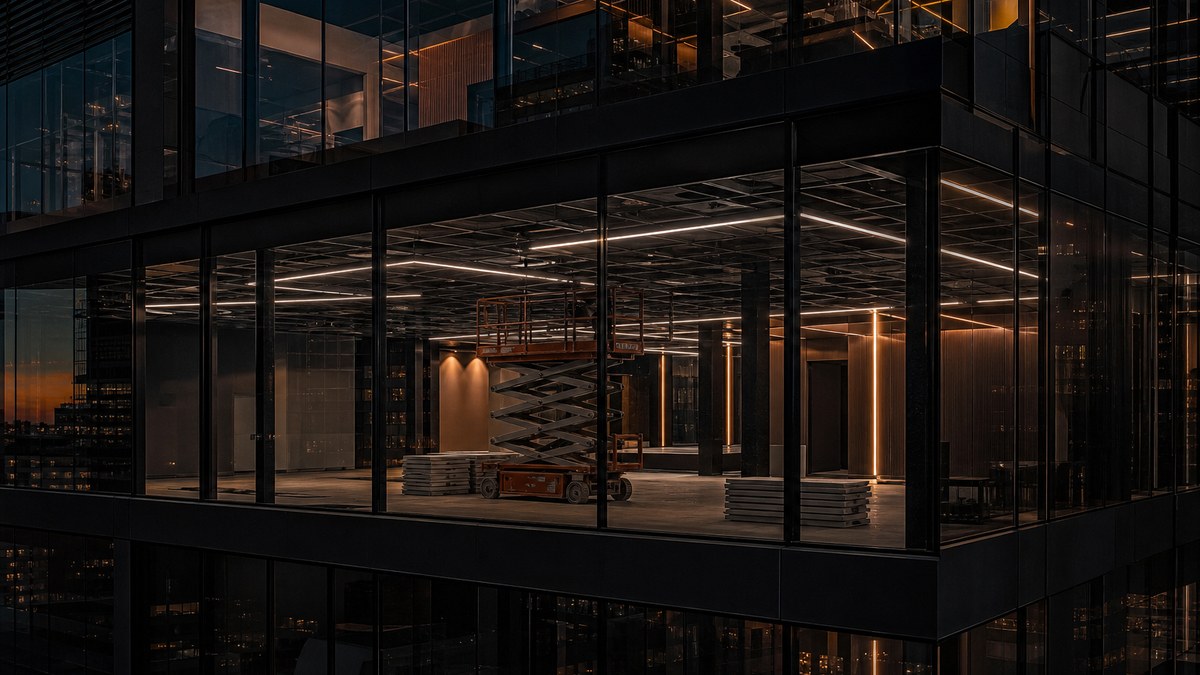
LED light installation in Fort Worth is about much more than swapping old tubes for new ones. A good commercial installation starts with a careful look at how a space is used, follows the electrical and energy codes the City of Fort Worth enforces, and ends with fixtures that are aimed, programmed and tested so they work the way the building actually needs them to. Done well, it is a one-time disruption that pays you back in better light, lower energy use and far fewer service calls for years.
If you have been searching for "LED light installation near me" or "commercial lighting near me," you have probably noticed that the answers range from handymen to national retrofit companies. This guide explains what a professional commercial installation involves, step by step, so you can compare options with confidence. It covers retrofit kits versus new fixtures, permits and licensing, controls and energy code, scheduling around your business, how projects are quoted, and the questions to ask before you hire anyone.
Whether you manage an office tower downtown, a retail center in Clearfork, a restaurant on West 7th, a church in Keller, or a distribution building along the Alliance and I-35W corridors, the same process applies. The details change by building type, and we point those out along the way.
A professional commercial LED installation in Fort Worth typically follows these steps:
- Site walk and lighting audit: count fixtures, check wiring, ceilings and controls, and note how each space is used
- Design: choose retrofit kits or new fixtures, color temperature, light levels and controls, with a photometric layout where needed
- Proposal: a clear scope with a project-specific price (no one-size-fits-all pricing)
- Permits and code: work performed under a Texas-licensed electrical contractor, with permits pulled where required
- Installation: scheduled after hours, in phases or by zone to keep your business open
- Commissioning: controls programmed, sensors tested, light levels verified and old lamps recycled
- Support: warranty documentation, spare parts and ongoing service
What "LED light installation" really includes
For commercial buildings, an LED installation project usually falls into one of four categories. Knowing which one you need is the first step to getting comparable proposals.
- Lamp replacement: swapping fluorescent tubes or HID lamps for LED lamps in the existing fixtures. Fastest, but the old fixture housings and sometimes ballasts stay in place.
- Retrofit kits: new LED components installed inside existing fixture housings or troffers. The ceiling stays intact while the light engine and driver are new.
- Fixture replacement: old fixtures removed and new LED fixtures installed in the same locations, often with new controls.
- New installation or redesign: a new layout for a renovated space, tenant finish-out, or new construction, including circuits, controls and sometimes architectural or decorative lighting.
Most real projects mix these. A warehouse might replace high-bay fixtures outright while the office area gets retrofit kits; a hotel might retrofit back-of-house areas and redesign the lobby. Our commercial LED lighting services overview describes each service, and this guide focuses on how the installation itself is planned and carried out.
Step 1: The site walk and lighting audit
Every good installation starts with someone walking the building. A thorough site walk records:
- Fixture inventory: type, count, mounting, lamp and ballast type in every area.
- Ceiling conditions: grid ceilings, hard lids, open structure, heights, and access above the ceiling.
- Electrical conditions: voltage, circuits, panel capacity, the age of the wiring and any existing problems such as flickering, tripping or warm connections.
- Existing controls: switches, occupancy sensors, time clocks, photocells, dimmers and any building automation system.
- How each space is used: hours of operation, tasks performed, safety concerns, and any areas that are too dark, too bright or glaring.
- Access constraints: lift or scaffold needs, racking, equipment, occupied areas, and security requirements.
For exterior lighting, a night visit is essential, because dark spots, glare and failed fixtures only show up after sunset. Our outdoor LED lighting guide explains what we look for in parking lots, perimeters and facades.
Pull a year of utility bills and any old lighting drawings before the site walk. They help the designer understand how many hours the lights run and how circuits are laid out, which makes the proposal more accurate.
Step 2: Retrofit kits or new fixtures?
This is the most common decision in any LED installation, and the right answer depends on the condition of what you already have and what you want the space to look like.
| Factor | Retrofit kits | New LED fixtures |
|---|---|---|
| Existing housings | Best when housings are in good condition | Best when housings are damaged, yellowed, rusted or outdated |
| Ceiling disruption | Minimal; ceiling tiles and grid stay in place | More work, especially with hard ceilings or different fixture sizes |
| Appearance | Improves light quality; old frame remains visible | Completely fresh, modern look |
| Optics and layout | Limited to existing locations | Can change layout, spacing, and distribution |
| Controls | Dimming and sensors possible with the right driver | Easier to integrate integral sensors and networked controls |
| Install speed | Usually faster per fixture | Varies with ceiling type and access |
| Typical fit | Offices, schools, corridors with good grid ceilings | Warehouses, garages, renovations, exteriors, older buildings |
Simple LED tubes that run on existing ballasts are sometimes sold as the cheapest route, but they leave an aging ballast as the weak link. For most commercial work, a ballast-bypass approach installed by a licensed electrician, a retrofit kit, or a new fixture is a more reliable long-term choice. A good contractor will explain the trade-offs for your building rather than pushing one product.
Step 3: Designing the light, not just the fixtures
LED fixtures are directional and efficient, so replacing old fixtures one-for-one without thinking about the design can leave some spaces over-lit and others patchy. Design decisions include:
Light levels
Offices, classrooms, warehouses, retail floors, and parking areas each have recommended light levels based on the tasks performed there. A photometric layout models those levels before anything is ordered, which is especially useful for warehouses, gyms, parking lots and any space where fixture counts may change.
Color temperature and color quality
Warmer light (around 2700K to 3000K) suits hospitality, restaurants, churches and lobbies. Neutral light (around 3500K to 4000K) is the common choice for offices, retail and schools. Cooler light can suit industrial spaces. Color rendering (CRI) matters in retail, healthcare, and any space where people judge colors. Keeping one consistent color temperature throughout a space looks intentional and professional.
Glare and comfort
LEDs are bright point sources. Good diffusers, proper shielding, and correct mounting heights prevent glare on screens and in people's eyes, which is one of the most common complaints after a poor retrofit.
Special areas
Lobbies, facades, feature walls and event spaces often deserve more than standard fixtures. Our architectural LED lighting guide covers accent, wall washing and color-changing techniques, and the Luminance design-build program handles full lighting transformations from concept to completion.
Step 4: Controls and energy code
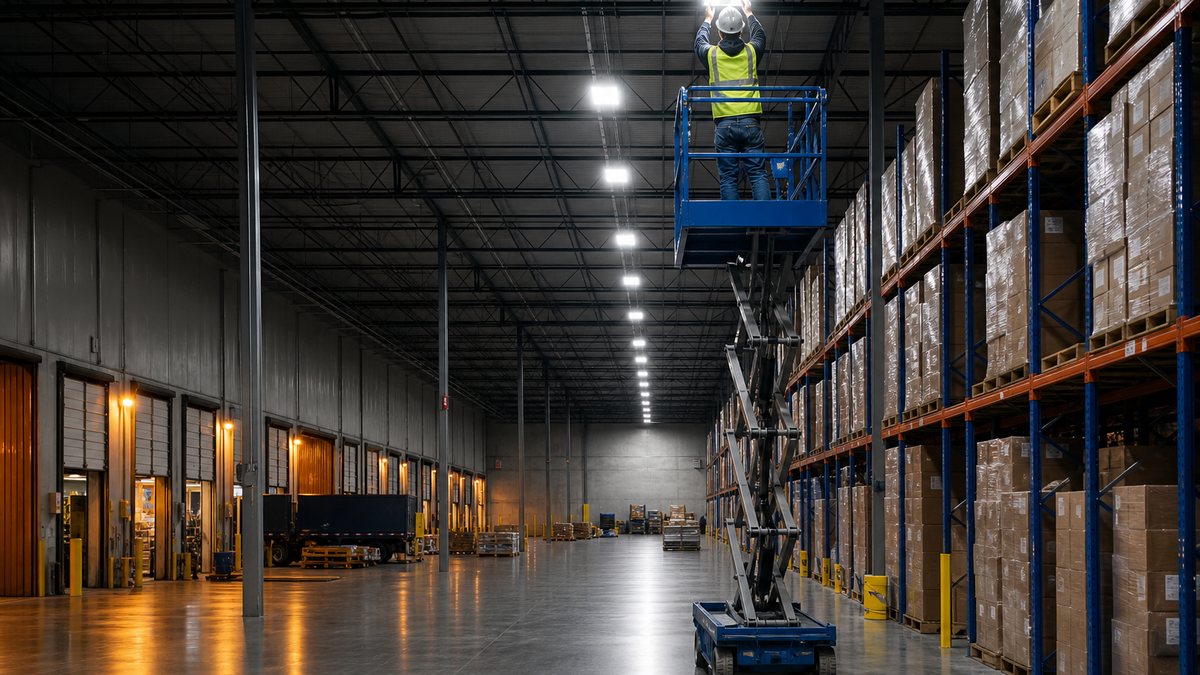
Controls decide how much energy your new lighting actually saves. They are also part of the energy code requirements that apply to many commercial lighting projects. According to the City of Fort Worth Development Services building and energy codes page, the city has adopted the 2015 International Energy Conservation Code with local amendments, with ASHRAE 90.1 as an alternative compliance path. Commercial energy codes generally require lighting controls such as occupancy sensing, automatic shutoff, daylight-responsive controls in certain areas, and exterior lighting controls, though exactly what applies depends on the scope of your project.
Common control strategies include:
- Occupancy and vacancy sensors in offices, restrooms, break rooms, storage and warehouse aisles.
- Daylight harvesting that dims fixtures near windows and skylights when daylight is available.
- Time schedules that turn lighting off after hours with local override.
- Dimming for conference rooms, worship spaces, restaurants and lobbies.
- Photocells and astronomical clocks for exterior lighting.
- Networked lighting controls that let facility teams monitor, schedule and adjust lighting from one interface.
For new office space and smart-building projects, Power over Ethernet lighting is another option. It combines power and data on network cabling, but it still requires proper design and the applicable codes and licensing still apply. Our PoE lighting guide explains when it makes sense.
Step 5: Permits, licensing and inspections
Commercial lighting work is electrical work. In Texas, electrical contractors and electricians are licensed through the Texas Department of Licensing and Regulation (TDLR), and the City of Fort Worth issues electrical permits and performs inspections for work that requires them. The city's Development Services page lists the 2026 National Electrical Code, with local amendments, as effective September 1, 2026, so new work is expected to follow current requirements.
Whether a permit is needed depends on the scope. Simple lamp replacements usually do not need one, while new circuits, new fixture locations, tenant finish-out, exterior pole work and many fixture replacements often do. Your installer should know the difference and handle permits as part of the project rather than leaving it to you.
Be cautious of any offer to install commercial lighting without a licensed electrician or without permits where they are required. Unpermitted electrical work can create insurance and safety problems and may need to be redone before a sale, refinance or tenant move-in.
Get a site walk and a clear proposal
Tell us about your building, your hours and your goals. We will review the site and prepare a project-specific proposal.
Step 6: Scheduling the work around your business
Most Fort Worth businesses cannot shut down for a lighting upgrade, so scheduling is a big part of a successful installation:
- After-hours and weekend work for offices, retail and restaurants, so staff and customers are not disrupted.
- Zone-by-zone phasing for hotels, hospitals, schools and multi-tenant buildings, keeping most areas open while one area is upgraded.
- Shift coordination for warehouses and manufacturers, working around picking, loading and production schedules.
- Event calendars for churches and venues, finishing sanctuaries and halls between services and events.
- Lead times for specialty fixtures, controls and custom architectural products, so product is on site before work begins.
A clear schedule should also cover access equipment, staging areas for materials, protection of floors and furniture, and how debris and old lamps will be removed.
Step 7: Installation day on site
On a well-run project, installation follows a predictable rhythm:
- Safety setup. Circuits are identified and de-energized, work areas are marked off, and lifts are inspected.
- Removal. Old lamps, ballasts or fixtures are removed and staged for recycling.
- Installation. Retrofit kits or new fixtures are installed, wiring is corrected where needed, and connections are made to code.
- Controls. Sensors, dimmers, control wiring and network devices are installed.
- Testing. Each circuit is energized and every fixture checked before the crew moves on.
- Clean-up. Ceiling tiles are replaced, surfaces wiped down and the space returned ready for business.
Fluorescent lamps contain mercury and older ballasts may need special handling, so responsible disposal and recycling of old lighting is part of the job, not an afterthought.
Step 8: Commissioning and handover
Commissioning is where many installations fall short. It means making sure everything works the way it was designed:
- Occupancy sensors set to appropriate time delays and sensitivity.
- Daylight sensors calibrated so spaces near windows do not dim too much or too little.
- Schedules set to your actual business hours, including holidays.
- Exterior lights aimed at night and controls verified at dusk.
- Light levels spot-checked against the design.
- Documentation handed over: fixture schedules, control settings, warranty information and spare parts.
Good commissioning prevents the most common post-installation complaints: lights turning off on people, rooms that feel too dim, and sensors that never seem to work.
Installation by building type
Offices and corporate campuses
Retrofit kits or new flat panels in grid ceilings, glare control for screens, occupancy sensors and daylight dimming. Work is typically done after hours, floor by floor.
Warehouses and distribution centers
High-bay LED fixtures, aisle-specific optics for racking, motion sensors that dim empty aisles, and lift work coordinated with operations. Facilities along the Alliance, I-35W and I-20 corridors often run multiple shifts, so phasing matters.
Retail and restaurants
Good color rendering for merchandise and food, track and accent lighting, dimmable dining-room lighting, and exterior and sign lighting that keeps the business visible at night. For sign upgrades, see our LED signs guide.
Hotels and hospitality
Warm, layered lighting in lobbies, corridors, ballrooms and guest areas, plus back-of-house efficiency upgrades. Work is phased floor by floor to keep rooms available.
Churches and venues
Dimmable house lighting, stage and video-friendly lighting, and exterior lighting for evening services and events, scheduled around the calendar.
Parking lots and garages
LED area and garage fixtures, often on existing poles, with photocells, dimming and motion sensing. See our Fort Worth outdoor LED lighting guide for details.
How LED installation projects are quoted
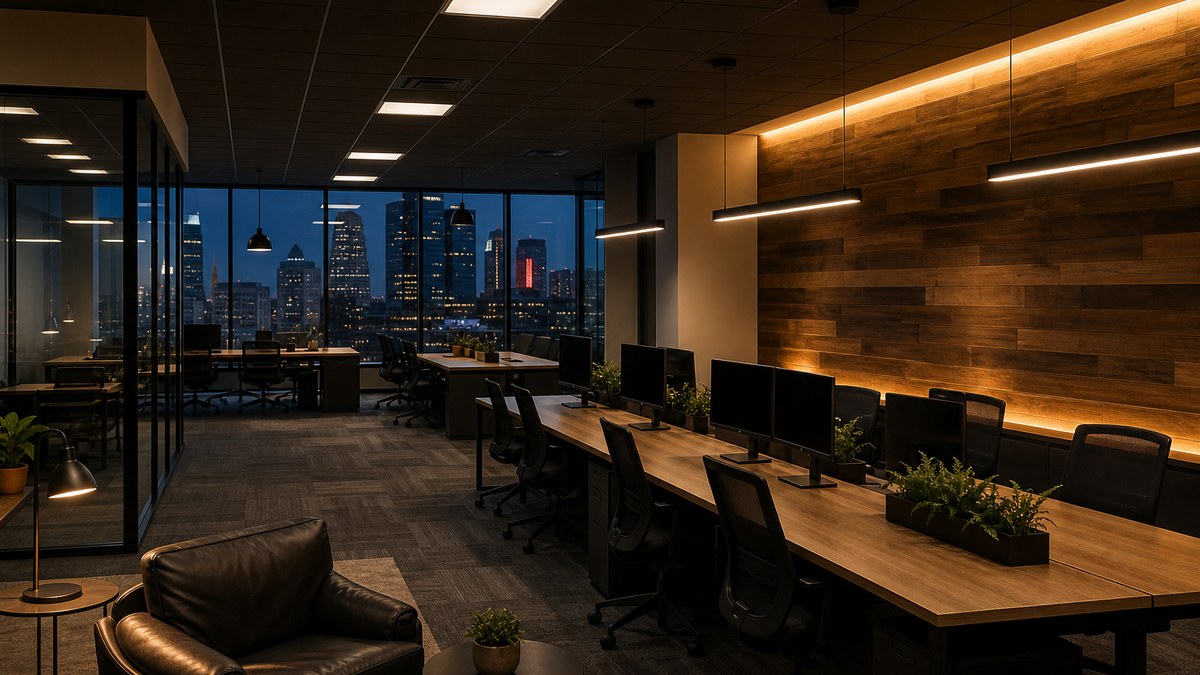
We do not publish price lists, because no two buildings are the same. Every Fort Worth LED Lights project is quoted as a project-specific proposal after a site review. These are the factors that shape the scope:
| Factor | Why it matters |
|---|---|
| Fixture count and type | Retrofit kits, panels, high-bays, exterior and decorative fixtures all differ in product and labor |
| Retrofit vs. new fixtures | New fixtures and layout changes involve more ceiling and electrical work |
| Mounting height and access | High ceilings, racking and exterior poles require lifts or bucket trucks |
| Electrical condition | Old wiring, overloaded circuits or damaged poles may need repair first |
| Controls | Basic sensors and networked control systems differ in equipment and programming |
| Schedule | After-hours, weekend or phased work affects labor planning |
| Permits and design | Photometric layouts, drawings and permits where required |
| Disposal | Recycling of lamps, ballasts and old fixtures |
When comparing proposals, make sure each one covers the same scope: product specifications, controls, permits, commissioning, disposal and warranty. A lower number that leaves out controls or commissioning is not a like-for-like comparison.
Energy savings and incentives
Replacing fluorescent, metal halide and high-pressure sodium lighting with LED commonly reduces lighting energy use substantially, and well-commissioned controls increase savings further. LED's long life also reduces maintenance, which matters most for high ceilings, exterior poles and 24-hour spaces where every lamp change needs a lift. Many commercial LED projects in the Oncor service area may qualify for energy-efficiency incentive programs, depending on the project and current program availability. Programs usually have specific rules about qualifying products and pre-approval, so it pays to check before work starts.
Questions to ask before you hire
Searching "commercial lighting near me" will turn up plenty of options. These questions help separate a professional installer from a product seller:
- Will a Texas-licensed electrical contractor perform or supervise the work, and will you pull permits where required?
- Will you walk the site before quoting, including at night for exterior work?
- Are you recommending retrofit kits, new fixtures or both, and why?
- What light levels and color temperature are you designing for in each area?
- What controls are included, and how will they meet energy code where it applies?
- How will you schedule work to keep my business running?
- Who programs and commissions the controls, and what documentation do I receive?
- How are old lamps and ballasts disposed of?
- What warranties cover the products and the installation, and who handles service later?
- Can you help identify incentive programs my project may qualify for?
Common installation mistakes to avoid
- One-for-one swaps without a design. Spaces end up over-lit, glaring or uneven.
- Leaving old ballasts in place. Aging ballasts fail and take the "upgrade" down with them.
- Mixed color temperatures. Partial upgrades make buildings look patchy.
- Skipping controls or commissioning. Lights run all night, or turn off on people at their desks.
- Ignoring dimmer compatibility. Mismatched drivers and dimmers cause flicker and buzzing.
- No plan for Texas heat outdoors. Exterior drivers need high-temperature ratings and surge protection to survive North Texas summers and storms.
- Hiring without verifying licensing. Unlicensed electrical work creates safety and insurance risk.
After installation: maintenance and service
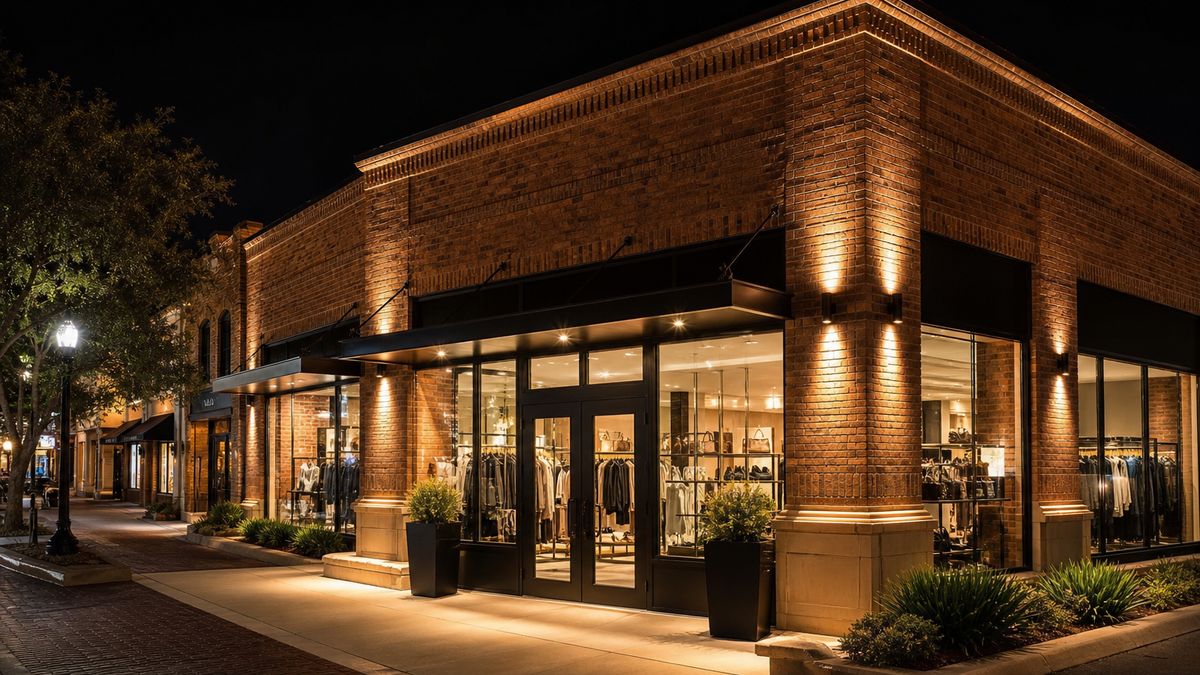
LED systems need far less attention than older lighting, but they are not maintenance-free. Drivers can fail, especially after lightning storms; sensors can be bumped or blocked by new furniture; and schedules drift when business hours change. A simple service plan keeps everything performing: periodic walk-throughs, quick repairs, control adjustments, and storm checks for exterior lighting. Our repair and service team also maintains existing LED, architectural and facade systems installed by others.
Why choose Fort Worth LED Lights
We manage commercial LED installation from the first site walk to the final commissioning check: audits, design, product selection, permits, scheduled installation, controls programming, and ongoing service. Our team brings 15+ years as an authorized architectural lighting dealer and project coordinator. Our licensed installation partner has completed over 200 major sports and commercial projects across the US and Canada — NFL, NBA, NHL, MLS, NCAA and NASCAR. We serve Fort Worth and Tarrant County, including Downtown, Sundance Square, the Cultural District, the Stockyards, West 7th, Near Southside, Clearfork, Alliance, Keller, Southlake, Arlington and Grapevine. See our full list of commercial lighting services, including commercial retrofits, architectural lighting, LED video walls and signage, or check our service areas.
Frequently Asked Questions
How long does a commercial LED light installation take?
How much does LED light installation cost in Fort Worth?
Do I need a permit to install LED lights in a commercial building in Fort Worth?
Should I use LED retrofit kits or replace the fixtures?
Can LED lights be installed without closing my business?
What energy code applies to commercial lighting in Fort Worth?
Are there incentives for commercial LED upgrades in Fort Worth?
What color temperature should I choose for my business?
What happens to my old fluorescent lamps and ballasts?
What areas do you serve for LED installation?
Let's plan your LED installation
Request a consultation and we will follow up to schedule a site walk.
Related
Our DFW lighting network: Dallas commercial LED lighting, Arlington LED lighting, Irving LED lighting, Plano LED lighting, statewide Texas LED lighting, wholesale LED components, fiber optic starlight ceilings, 360° fiber optic lighting, LED signage, premium pool lighting, modular building solutions, and Dallas modular structures.