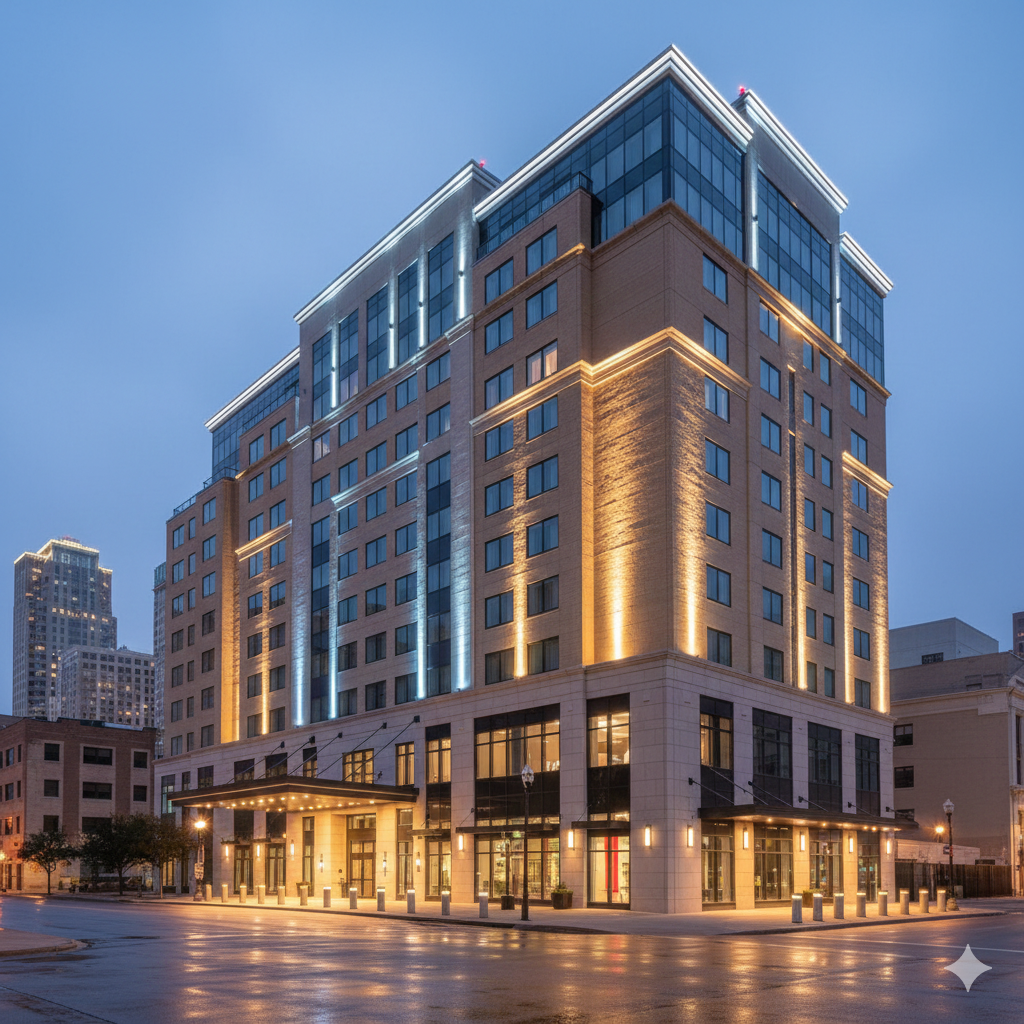
Architectural LED Lighting in Fort Worth: The Complete Guide for Commercial Projects
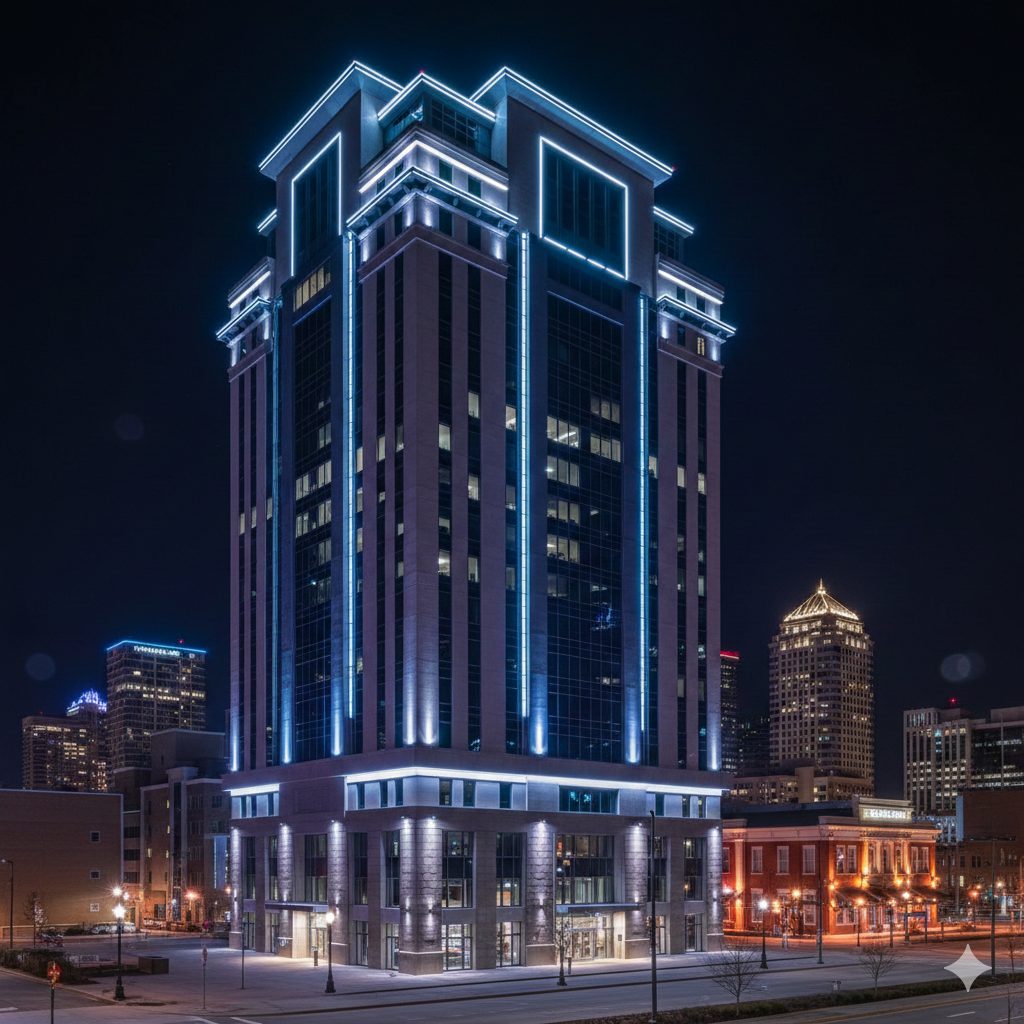
When the sun sets over Fort Worth, the city transforms. The Stockyards glow with warm western charm. Downtown towers become beacons against the Texas sky. And the buildings that truly stand out? They're the ones with professionally designed architectural LED lighting.
If you're an architect, developer, property manager, or business owner planning a significant commercial project in Fort Worth, you already know that lighting isn't just functional—it's strategic. The right architectural lighting design can increase property values by 10-20%, reduce energy costs by up to 75%, and create an unforgettable visual identity that sets your building apart from every other structure on the skyline.
This guide covers everything you need to know about architectural LED lighting for large-scale commercial projects in the Dallas-Fort Worth metroplex. Whether you're planning a new hotel, corporate headquarters, mixed-use development, or retail center, you'll find the technical specifications, cost breakdowns, and design strategies that transform good buildings into landmarks.
Quick Answer: What Is Architectural LED Lighting?
Architectural LED lighting is the strategic use of LED technology to enhance a building's design, highlight structural features, and create visual impact. Unlike standard commercial lighting that simply illuminates spaces, architectural lighting transforms buildings into visual experiences—both inside and out.
Key Takeaways:
- Energy Savings: LED architectural systems use 75% less energy than traditional lighting
- Lifespan: Quality commercial LEDs last 50,000-100,000 hours (15-25 years of typical use)
- ROI Timeline: Most large-scale projects see full payback in 2-4 years
- Property Value: Well-designed facade lighting can increase property values by 10-20%
- Project Scale: Architectural lighting projects in Fort Worth typically range from $50,000 to $500,000+
Why Fort Worth's Commercial Buildings Need Architectural LED Lighting
Fort Worth is experiencing unprecedented growth. The city added over 19,000 new residents in 2023 alone, and commercial development is keeping pace. From the $1 billion Panther Island project to the continued expansion of the Cultural District, competition for attention—and tenants—is fierce.
Architectural lighting gives commercial properties a competitive edge that extends far beyond aesthetics. Here's what the data shows:
According to recent market research, the global architectural LED lighting market reached $15 billion in 2025 and is projected to grow at 8% annually through 2033. This growth is driven by smart building integration, energy efficiency mandates, and the increasing recognition that lighting directly impacts tenant satisfaction, employee productivity, and customer behavior.
For Fort Worth property owners and developers, this means architectural lighting isn't optional—it's expected. Buildings without sophisticated lighting systems are increasingly seen as outdated, regardless of other amenities.
Types of Architectural LED Lighting for Commercial Projects
Large-scale commercial projects require multiple lighting strategies working together. Here's how each type contributes to a comprehensive architectural lighting design:
Facade Lighting
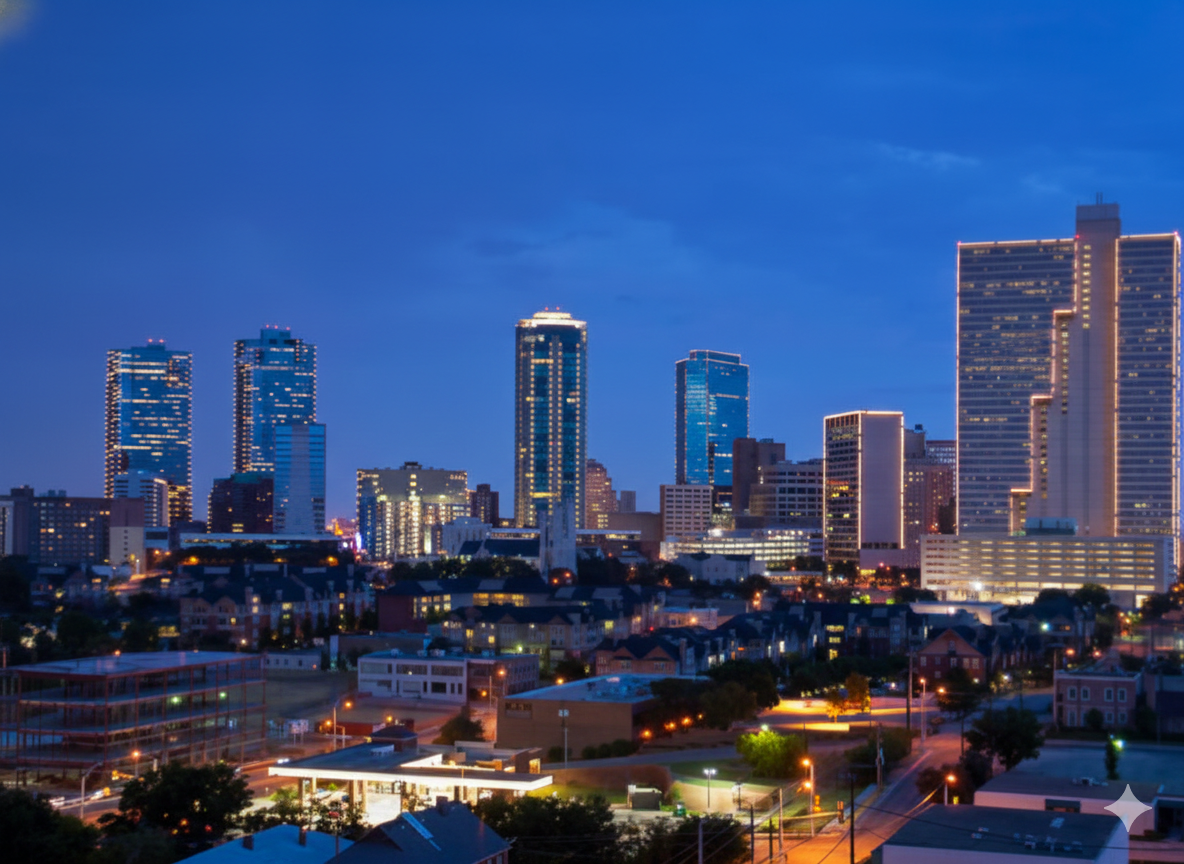
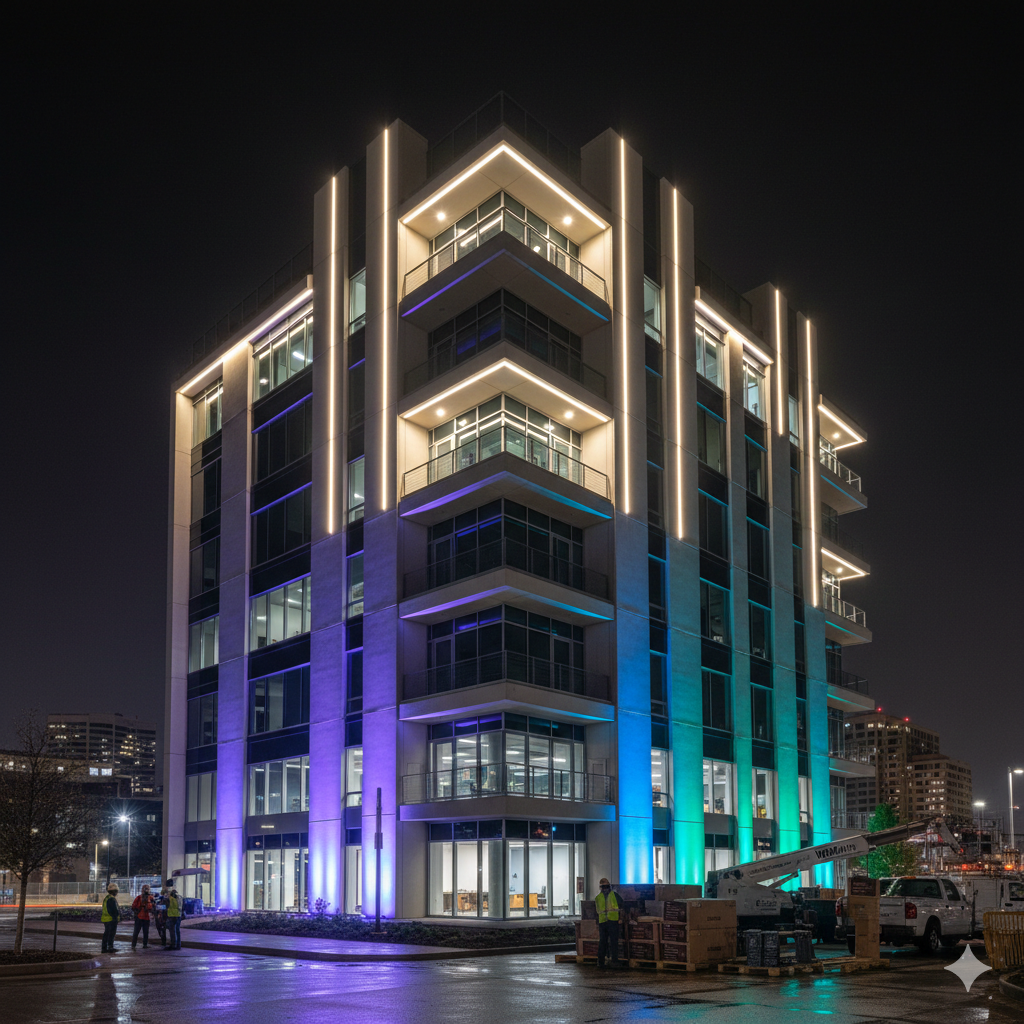
Facade lighting transforms building exteriors into nighttime landmarks. This includes wall washing (even illumination across surfaces), wall grazing (dramatic shadows that emphasize texture), uplighting (ground-mounted fixtures aimed upward), and silhouette lighting (backlighting architectural elements).
For Fort Worth's mix of modern glass towers and historic brick buildings, facade lighting must be carefully calibrated. Our team at Fort Worth LED Lights specializes in designs that complement both contemporary architecture and the city's western heritage aesthetic.
Interior Architectural Lighting
Inside commercial spaces, architectural lighting creates hierarchy, guides movement, and establishes atmosphere. This includes cove lighting (hidden sources that wash walls or ceilings), linear LED systems (continuous runs that define spaces), pendant installations (decorative focal points), and recessed architectural downlights.
Human-centric lighting design has become essential for corporate and hospitality projects. Research shows that properly designed LED lighting can boost workplace productivity by 6% and creative output by up to 15% by supporting natural circadian rhythms.
Landscape and Site Lighting
The areas surrounding your building matter just as much as the structure itself. Architectural landscape lighting includes pathway and walkway illumination, tree and vegetation uplighting, water feature lighting, and monument and signage illumination. For properties with pools, fountains, or water features, premium pool lighting solutions create stunning nighttime environments that extend usable hours and enhance guest experiences.
Specialty and Feature Lighting
High-end commercial projects increasingly incorporate specialty lighting elements that create truly unique experiences. Starlight ceiling installations transform lobbies, restaurants, and entertainment venues with fiber optic systems that mimic the night sky. Premium fiber optic lighting systems enable effects that traditional LEDs cannot achieve, particularly in spaces where minimal heat generation and maximum design flexibility are priorities.
Architectural Lighting Applications by Building Type
Hotels and Hospitality
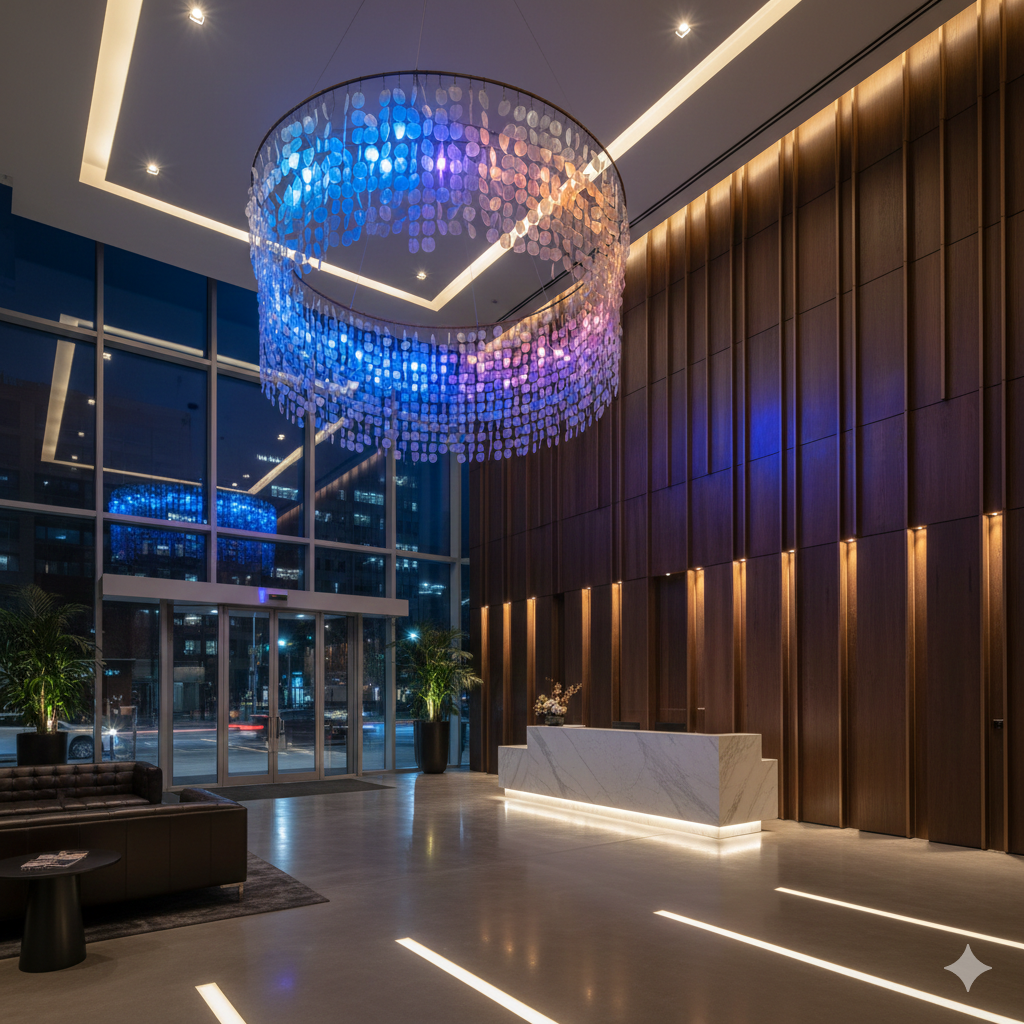
Hotel lighting must accomplish multiple goals simultaneously: create welcoming first impressions, support guest comfort, enable flexible event spaces, and reinforce brand identity. LED technology excels in hospitality because it offers precise color control, smooth dimming to below 1%, and the ability to create dramatically different atmospheres in the same space.
The facade lighting for hotels should be warm and inviting—research from Brigham Young University and Purdue found that entrance lighting color is the single biggest factor in reinforcing desired emotional responses in guests. Inside, lobbies benefit from layered lighting with dramatic focal points, while guest rooms require flexible systems that adapt to different activities and times of day.
Fort Worth's growing hospitality sector—from boutique hotels near Sundance Square to convention properties downtown—demands lighting that competes with the best in Dallas and beyond. Our Dallas LED lighting services and Fort Worth installations have equipped properties throughout the metroplex with hospitality-grade architectural lighting systems.
Corporate Headquarters and Office Buildings
Modern office lighting has evolved far beyond rows of fluorescent troffers. Today's corporate spaces use architectural lighting to attract top talent, support productivity, and communicate company values. This includes tunable white systems that adjust color temperature throughout the day, luminaire-level lighting controls for personalized workspace environments, branded lighting in common areas and lobbies, and energy-efficient designs that support sustainability certifications.
The BlackRock headquarters project in New York demonstrates the scale possible with modern LED technology: over 9,000 wireless control nodes managing lighting across 15 floors. While most Fort Worth projects are smaller, the same principles apply—intelligent lighting systems that adapt to occupant needs while minimizing energy consumption.
Retail Centers and Mixed-Use Developments
Retail lighting directly impacts sales. Studies consistently show that well-designed lighting increases time spent in stores and positively influences purchasing decisions. For mixed-use developments, lighting must transition seamlessly between retail, restaurant, residential, and common areas while maintaining a cohesive architectural vision.
The outdoor shopping centers and entertainment districts gaining popularity throughout DFW require lighting that extends usable hours into the evening, creates safe and inviting pedestrian environments, and differentiates individual tenants while maintaining overall design coherence.
Industrial and Manufacturing Facilities
Large-scale industrial projects demand lighting that prioritizes safety, productivity, and energy efficiency. High-bay LED systems for warehouses and manufacturing floors deliver superior illumination at a fraction of traditional operating costs. For industrial clients throughout the region, our Arlington LED lighting and Irving LED lighting teams have completed projects ranging from distribution centers to advanced manufacturing facilities.
Architectural LED Lighting vs. Standard Commercial Lighting
Understanding the difference between architectural and standard commercial lighting helps clarify why large-scale projects require specialized expertise:
| Feature | Standard Commercial LED | Architectural LED |
|---|---|---|
| Primary Purpose | Functional illumination | Design enhancement + illumination |
| Design Approach | Fixture selection based on output | Custom design integrated with architecture |
| Color Rendering (CRI) | 80+ CRI typical | 90+ CRI standard, 95+ available |
| Control Systems | Basic on/off, simple dimming | Wireless, IoT-integrated, scene programming |
| Color Options | Fixed color temperature | Tunable white, RGBW, dynamic color |
| Fixture Aesthetics | Utilitarian, visible | Minimal, hidden, or decorative focal points |
| Project Cost Range | $5,000 - $50,000 | $50,000 - $500,000+ |
| Best For | Warehouses, basic retail, parking | Hotels, corporate HQ, luxury retail, landmarks |
Architectural LED Lighting Costs: What to Expect in Fort Worth
Large-scale architectural lighting projects require significant investment, but the returns—in energy savings, property value, and competitive positioning—typically justify the expense. Here's what Fort Worth commercial projects can expect:
Project Cost Ranges
Facade Lighting Only: $50,000 - $150,000 for mid-rise commercial buildings. High-rise or complex facades can exceed $300,000. This includes fixtures, controls, installation, and design.
Complete Exterior Package: $100,000 - $300,000 for facade, landscape, parking, and site lighting combined. Large campuses or hospitality properties often exceed $400,000.
Interior Architectural Lighting: $15 - $35 per square foot for comprehensive architectural lighting in lobbies, common areas, and feature spaces. Standard commercial areas run $5-10 per square foot.
Full Building Systems: $250,000 - $750,000+ for complete interior and exterior architectural lighting with advanced controls. Major projects like hotels or corporate headquarters can exceed $1 million.
Cost Factors
Several factors influence architectural lighting project costs including building height and access requirements (high-rise projects require specialized equipment), fixture quality and specifications (architectural-grade fixtures cost 3-5x more than standard commercial), control system complexity (basic dimming vs. full IoT integration), design complexity and custom fabrication, local permitting and inspection requirements, and integration with existing building systems.
ROI and Energy Savings
LED architectural lighting delivers compelling returns. Energy reduction of 50-75% compared to traditional lighting systems is typical. Maintenance cost reduction of 80%+ due to extended lamp life compounds over time. Utility rebates through Oncor and other Texas programs can offset 10-30% of project costs. Property value increases of 10-20% have been documented for buildings with sophisticated lighting systems.
For wholesale LED solutions in Texas, volume pricing on fixtures and controls can significantly reduce project costs for large installations. Our relationships with major manufacturers enable competitive pricing on architectural-grade products.
The Architectural Lighting Design Process
Successful large-scale lighting projects follow a structured design process that ensures the final installation meets both aesthetic and functional requirements:
Phase 1: Discovery and Goal Setting
Every architectural lighting project begins with understanding the client's objectives. What impression should the building make? How will spaces be used? What are the energy and sustainability targets? This phase includes site surveys, stakeholder interviews, and review of architectural drawings.
Phase 2: Concept Development
Lighting designers develop concepts that align with the architectural vision. This includes identifying key features to highlight, establishing light level targets for different areas, selecting color temperatures and palettes, and creating preliminary fixture layouts.
Phase 3: Technical Design
Concepts are translated into detailed technical specifications including photometric calculations and lighting simulations, fixture specifications and cut sheets, control system architecture, electrical load calculations, and coordination with other building systems.
Phase 4: Procurement and Installation
With designs approved, the project moves to execution. This includes fixture ordering and logistics, installation scheduling and coordination, testing and commissioning, and final adjustments and focusing.
Phase 5: Documentation and Training
Completed projects include comprehensive documentation and staff training on control systems. This ensures the lighting performs as designed for years to come.
Smart Controls and Building Integration
Modern architectural lighting systems don't operate in isolation. Integration with building automation systems enables energy optimization through occupancy sensing and daylight harvesting, scene programming for different events and times of day, remote monitoring and management, and predictive maintenance alerts.
IoT-enabled lighting is projected to grow significantly as connected lighting systems were estimated at only 0.2% of total installed lighting in recent baseline studies—indicating enormous unrealized potential. Buildings that invest in smart lighting infrastructure now position themselves for future technology integration.
For clients requiring both lighting and structural solutions, our partners at America Modular Buildings and Dallas Modular Structures offer integrated approaches that coordinate lighting design with construction from the earliest project phases.
Serving the Entire Dallas-Fort Worth Metroplex
While this guide focuses on Fort Worth, our architectural lighting capabilities extend throughout the DFW region. We've completed major projects in Dallas, Plano, Irving, Arlington, and surrounding communities.
Our Plano LED lighting team has worked with corporate campuses along the Telecom Corridor. In Irving, projects near the entertainment district and Las Colinas have showcased what architectural lighting can achieve. And across the metroplex, Wiedamark LED provides wholesale solutions for contractors and developers managing large-scale installations.
This regional presence means we understand local codes, utility rebate programs, and the specific aesthetic expectations of North Texas commercial development.
Frequently Asked Questions About Architectural LED Lighting
How much does architectural LED lighting cost for a commercial building?
Architectural LED lighting for commercial buildings in Fort Worth typically ranges from $50,000 to $500,000+, depending on building size, complexity, and scope. Facade-only projects start around $50,000-$150,000, while comprehensive interior and exterior systems for large properties like hotels or corporate headquarters can exceed $750,000. Interior architectural lighting runs $15-35 per square foot for premium installations.
What is the difference between commercial lighting and architectural lighting?
Standard commercial lighting focuses on functional illumination—providing adequate light levels for safety and tasks. Architectural lighting goes further, using light as a design element to enhance building features, create atmosphere, and establish visual identity. Architectural lighting typically uses higher-quality fixtures (90+ CRI), sophisticated controls, and custom designs integrated with the building's architecture.
How long do commercial LED architectural lights last?
Quality architectural-grade LED fixtures typically last 50,000-100,000 hours, which translates to 15-25 years under normal commercial use. This is 25-50 times longer than traditional incandescent bulbs and significantly longer than fluorescent or HID alternatives. Extended lifespan dramatically reduces maintenance costs and disruption.
What is facade lighting and why is it important?
Facade lighting illuminates building exteriors to highlight architectural features, create visual impact, and establish nighttime presence. Techniques include wall washing (uniform illumination), wall grazing (emphasizing texture), uplighting, and silhouette lighting. Facade lighting increases property values, enhances brand visibility, improves security, and differentiates buildings in competitive markets.
Are there rebates available for commercial LED lighting in Fort Worth?
Yes. Oncor offers rebates for qualifying commercial LED lighting projects in the Fort Worth area, typically covering 10-30% of project costs. Additional incentives may be available through federal programs, particularly for projects incorporating advanced controls or achieving specific energy reduction targets. We help clients identify and secure all applicable rebates.
How much energy can architectural LED lighting save?
LED architectural lighting typically reduces energy consumption by 50-75% compared to traditional lighting systems. When combined with smart controls (occupancy sensors, daylight harvesting, scheduling), total lighting energy use can be reduced by up to 85%. For large commercial buildings where lighting represents a significant portion of operating costs, these savings translate to substantial annual dollar reductions.
What is human-centric lighting design?
Human-centric lighting (HCL) designs lighting systems that support occupant health and wellbeing by aligning with natural circadian rhythms. This typically involves tunable white LED systems that adjust color temperature throughout the day—cooler, energizing light in the morning and warmer, relaxing light in the evening. Studies show HCL can improve productivity by 6% and creative output by up to 15%.
How long does an architectural lighting project take?
Timeline varies with project scope. Small facade projects may complete in 4-8 weeks from design approval to commissioning. Large-scale projects involving comprehensive interior and exterior systems typically require 3-6 months. Complex installations for new construction coordinate with overall building schedules and may span 12+ months. Design phases typically require 4-8 weeks regardless of project size.
Can you retrofit existing buildings with architectural LED lighting?
Absolutely. Many architectural lighting projects involve retrofitting existing buildings rather than new construction. Retrofits can be phased to minimize disruption, and existing infrastructure (conduit, electrical panels) can often be reused. LED retrofits typically deliver faster payback than new construction projects because they're replacing inefficient existing systems with immediate energy savings.
What should I look for in an architectural lighting company?
Look for companies with demonstrated experience in large-scale commercial projects, not just residential or basic commercial work. Key qualifications include a portfolio of completed architectural projects, in-house design capabilities, relationships with architectural-grade fixture manufacturers, familiarity with local codes and utility rebate programs, and the ability to coordinate with architects, contractors, and building systems. Request references from comparable projects.
Ready to Transform Your Commercial Property?
Our architectural lighting specialists work with architects, developers, and property managers throughout Fort Worth and DFW on projects from boutique hotels to corporate campuses. Let's discuss your vision.
Free consultation for commercial projects over $50,000